Print Story
X




Control over the Strait of Hormuz is central to Iran’s strategy; the recent Houthi involvement has strengthened Tehran’s asymmetric defence
| O |
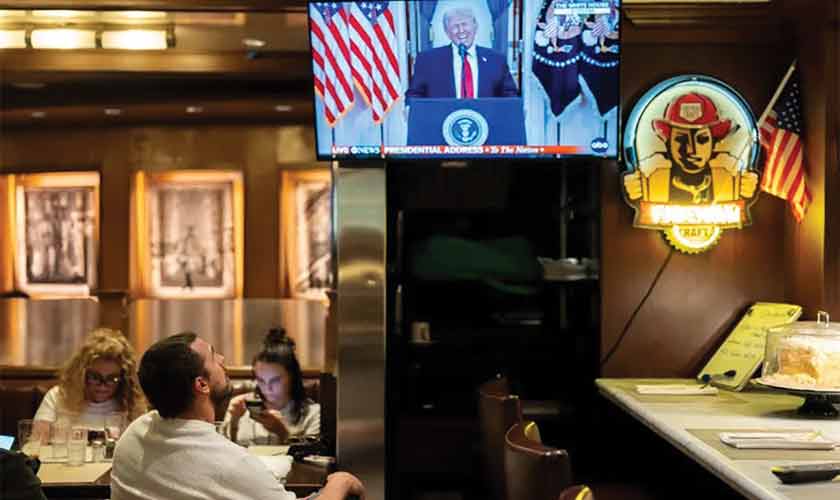
n April 2, President Donald Trump addressed the US public on the month-long war with Iran.
He said the military campaign would conclude even if the Strait of Hormuz remained blocked.
US petrol prices have recently exceeded $4 a gallon, the highest since 2022. This has contributed to Trump’s declining approval ratings.
Analysts say that the ongoing conflict has disrupted global energy markets, stoked economic uncertainty and underscored the political cost of sustained military involvement.
For his part, President Pezeshkian has asked whether the US administration can justifiably claim to be prioritising the interests of ordinary Americans.
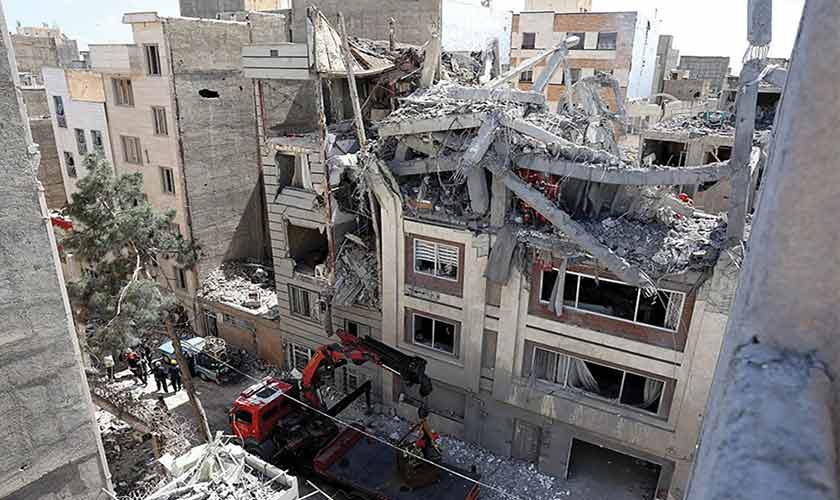
There is a perception that even if a ceasefire is agreed quickly, the underlying conflict may remain unresolved. Some military experts fear that hostilities, including missile and drone strikes, could continue; even escalate. Meanwhile, Iran retains control over strategic sea routes including the Strait of Hormuz. This can create a strategic vacuum. If US involvement diminishes but military clashes persist, energy markets will remain volatile.
Journalist Tucker Carlson has criticised the US president’s speech for its “conspicuous absence of any coherent strategy or timeline for ending the war, leaving its conclusion dangerously undefined.” He says Trump’s remarks “reveal a continued subservience to Netanyahu and the influence of the Israeli lobby, undermining any claim of independent American leadership.” He says the presidential address amounted to a de facto surrender on the Strait of Hormuz.
Talking to The News on Sunday, Mushahid Hussain Sayed, chairman of the Pakistan-China Institute and Pakistan-Africa Institute for Development and Research, said he believed that Trump’s decision was driven by mounting domestic opposition, reflected in falling approval ratings and nationwide protests. The unrest, he said, could deliver major setbacks to his party in the November mid-term elections, sharply limiting his political leverage and strategic room for manoeuvre.
“Weakness at home constrained US policy in the Middle East, limiting its capacity for sustained military engagement and undermining credibility in confronting Iran,” he said. He argued that the conflict was shaped not only by Iranian resistance and strategic calculations but also by the fragility of American political will at home.
Syed said US-Israeli strikes had removed restraining statesmen, including Ayatollah Khamenei and his appointees, and replaced them with more aggressive and combative commanders picked by his successor Mojtaba Khamenei. He said moderate voices advocating de-escalation with Arab neighbours had been largely sidelined. President Pezeshkian had previously warned that escalating tensions could prompt his resignation and had sought to reassure neighbours. However, his no longer appeared to be the dominant voice.
Having lost some of its regional allies in Hamas, Syria and Hezbollah, Iran remains focused on “raising the cost of future attacks to make war politically and economically untenable for the enemy.”
Pakistan - along with Saudi Arabia, Egypt and Turkey - is mediating between Washington and Tehran.
Control over the Strait of Hormuz is central to this strategy. Recent involvement of the Houthis has strengthened Iran’s asymmetric defence.
As long as there is no ceasefire, Tehran is likely to retain its influence over key energy routes.
Ambassador Asif Durrani, Pakistan’s former envoy to Iran, says the United States has exhibited a “real estate broker mentality” in flooding the media with information, creating false urgency and its manipulating partners for a perceived advantage. Such tactics tend to undermine credibility and have weakened US influence in the Middle East. Its regional partners are beginning to realise that hosting US bases has not provided security. It has instead made them targets for retaliation.
Syed says, “The conflict represents a turning point in the Middle East. Israel is facing sustained high pressure. For the first time, there are questions over its long-term future.” He says the Iranian strikes on Ben Gurion Airport and the Dimona nuclear facility have been unprecedented. The widespread damage and disruption was causing members of the Israeli elite to flee the country. Thousands of people were forced to spend nights in bunkers.
Linking the ongoing conflict to Israeli Prime Minister Benjamin Netanyahu’s political survival, he argued that Netanyahu was leveraging the war to remain in power and deflect attention from allegations of corruption against him.
Durrani highlighted that despite considerable resources and military power, “America and Israel have failed miserably to achieve their war objectives.”
He said geographical, political and domestic constraints severely limited Washington’s military options.
He said Iran had leveraged escalation to force negotiations aimed at securing its independence and prevent further losses. The war had somewhat paradoxically, strengthened Iran’s position with regard to sanctions. “Iran is exporting more oil now than it was before the conflict, and at twice the price.”
Even as US officials signal a drawdown, the IMF, the World Bank, and IEA have highlighted the urgent need for coordinated economic and financial measures to mitigate the fallout.
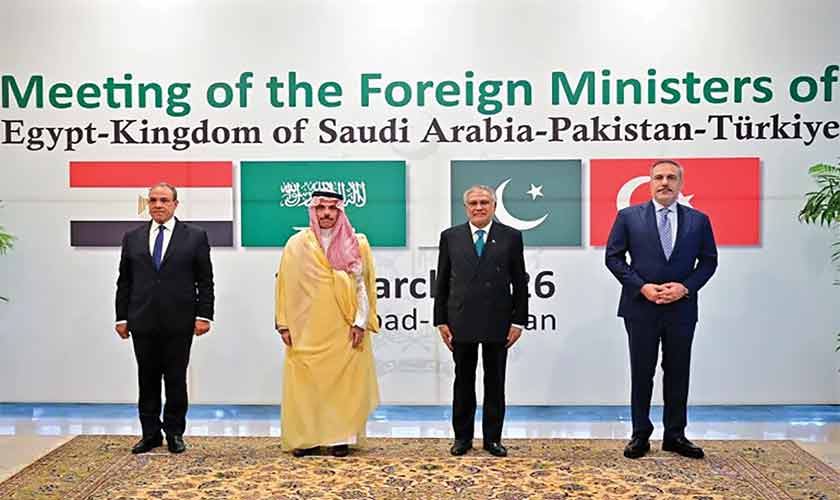
Pakistan, along with Saudi Arabia, Egypt and Turkey, is mediating between Washington and Tehran. While it desires an end to the conflict, Iran has said it does not seek a mere ceasefire. It is also demanding the removal of US military bases, economic relief—including the freedom to sell its oil—compensation for damages and the lifting of international sanctions. Finally, it wants full control over the passage of ships through the Strait of Hormuz.
Earlier, the US had sent Iran a 15-point proposal via Pakistan. The framework included demands such as dismantling of Iran’s nuclear programme, halting support for regional allies and reopening of the Strait of Hormuz.
Pakistan has managed Iran’s diplomatic interests in Washington since 1979. Mushahid Syed says that Pakistan’s unique diplomatic position affords Islamabad rare leverage. It could help President Trump find a face-saving exit and de-escalate the highly volatile situation. Islamabad has already helped Saudi Arabia and Iran to defuse tensions caused by recent attacks. He acknowledged a persistent trust deficit between Iran and the United States.
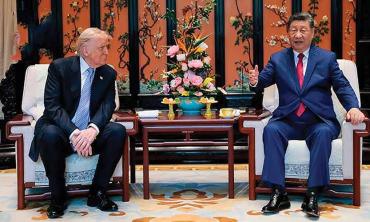
China has become a key stakeholder in the Gulf. It is the main trading partner of Iran, Saudi Arabi, and the United Arab Emirates.
Beyond immediate military considerations, Mushahid sees a deep global shift: the longstanding petrodollar system is increasingly under pressure and giving way, at least in part, to a rising petro-yuan dynamic.
“With Donald Trump scheduled to visit China in mid-May, Beijing is pushing for a resolution before the visit, effectively imposing a deadline.”
Foreign Minister Ishaq Dar’s visit to Beijing signalled convergence on key regional and global issues. “The joint statement was carefully drafted. It did not criticize any country. Instead, it emphasised key principles such as the primacy of the United Nations, rule of law, ending hostilities and safeguarding civilian infrastructure,” said Mushahid.
The writer is a senior The News staffer in Karachi.