Print Story
X

| O |
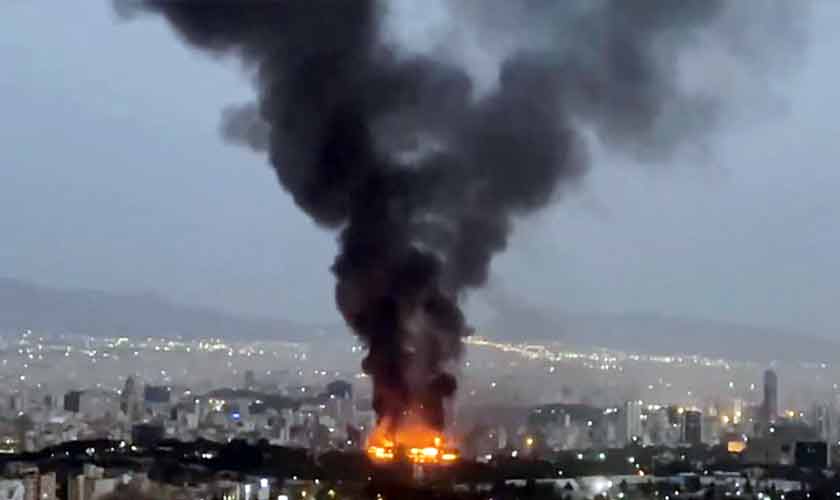
n February 28, a coordinated attack by the United States and Israel on Iran marked a dramatic turning point in Middle Eastern geopolitics. The strikes killed Iran’s Supreme Leader Ali Khamenei, who was 86 years old and had served as the central pillar of Iran’s political system since 1989. As the ultimate authority over the state, military and foreign policy, Khamenei was not merely a leader but the embodiment of the Islamic Republic’s ideological continuity. His assassination was therefore not just a tactical strike—it was an attempt to reshape the Iranian state.
The US and Israel appear to have launched this war in pursuit of regime change. Shortly after the initial strikes, President Donald Trump urged Iranians, in a televised address, to rise against their government and replace it with one aligned with American interests. But instead of triggering collapse, the killing of Khamenei has ignited a wide and dangerous war—one that threatens to engulf the region and destabilise the global economy. What was apparently intended to be a swift decapitation strike has produced a prolonged and escalating conflict, exposing the limits of military coercion.
To understand how this turbulent region arrived at this moment, it is necessary to revisit the Iranian Revolution of 1979. Before the revolution, Iran under Mohammad Reza Shah Pahlavi was closely aligned with the US. The revolution transformed Iran into a state that defined itself in opposition to both the United States and Israel. This ideological divide became a durable feature of regional politics.
The confrontation deepened during the Iran-Iraq War, when Saddam Hussein’s Iraq received support from Western powers. Despite immense losses, Iran survived and consolidated its political system. By the 1990s, some policymakers in the West viewed Iran through a more complex strategic lens in terms of broadly seeing it as a Shia counterweight to the Sunni Arab countries. After 9/11, the American attention shifted to Iraq. Diplomacy with Iran eventually produced the Joint Comprehensive Plan of Action under Barack Obama.
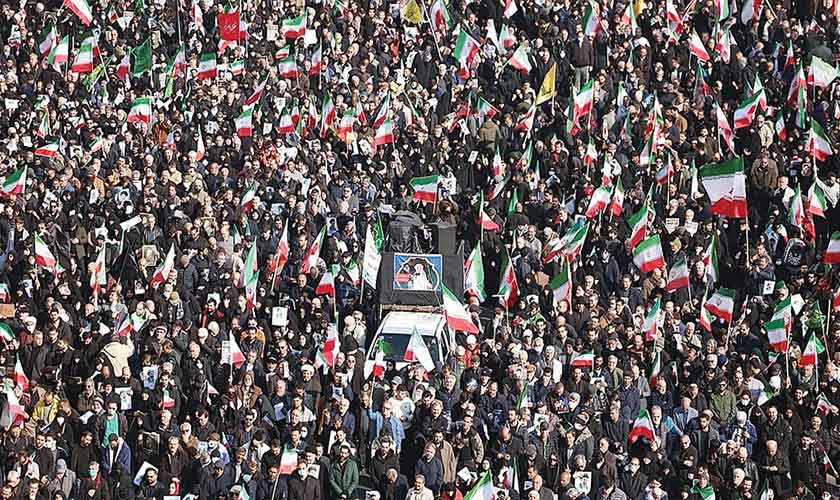
That diplomatic opening collapsed when the US withdrew from the JCPOA during Donald Trump’s first presidency and re-imposed sanctions. Benjamin Netanyahu, an ultra-conservative Israeli prime minister, consistently advocated a harder line, including military strikes. Contextually, Trump avoided full-scale war against Iran due largely to political compulsions. In his second presidency, however, such restraints appears to have disappeared.
What is unfolding now bears all the hallmarks of a war of choice, rather than necessity. There has been no convincing evidence of an imminent Iranian attack that would justify such a large-scale use of force. Dissent has emerged even within the US administration. Joe Kent, director of the National Counterterrorism Center, has resigned in protest, arguing that Iran posed no immediate threat and that the war had been driven by political pressure linked to Epstein files rather than strategic necessity. In addition, Trump’s close aides Pete Hegseth and Jared Kushner seemingly convinced Trump to wage war on Iran. They see this as part of their ideological worldview, grounded in an Armageddon scenario to neutralise threats against a ‘Greater Israel.’ Kent’s resignation the other day has intensified debate over the rationale behind the war. Scholars such as John Mearsheimer and Robert Pape have similarly questioned both the logic and the likely consequences of this war.
From the standpoint of international law and legal conventions, the US-Israeli attack on Iran is illegal. The United Nations Charter clearly prohibits use of force against the territorial integrity and political independence of any state except in two narrow circumstances: self-defence against an armed attack or authorisation by the United Nations Security Council. Neither condition has been met in this case. There was no Security Council authorisation and no credible evidence of an imminent Iranian attack that would justify self-defence. As such, the strikes constitute a violation of one of the most fundamental principles of the international legal order—the prohibition on aggression. The explicit aim of regime change further violates the principles of sovereignty and non-intervention that underpin international law. The targeting of political leadership, too, raises serious legal and ethical concerns, given longstanding prohibitions on assassination and the protections afforded to state sovereignty.
What is unfolding now bears all the hallmarks of a war of choice, rather than necessity. There has been no convincing evidence of an imminent Iranian attack that would justify such a large-scale use of force. Dissent has emerged even within the US administration.
The human cost of this war has already been devastating and continues to rise. In Iran, estimates suggest that between 4,000 and 5,000 people have been killed so far, including over 1,300 civilians. Entire neighbourhoods have been hit. Reports of strikes on civilian infrastructure—including schools—have shocked observers. In Israel, Iranian retaliatory attacks have killed at least 25 civilians and injured thousands, exposing the limits of even the most advanced missile defence systems. Across the Gulf region—including Saudi Arabia, the United Arab Emirates, Bahrain and Kuwait—casualties remain lower but still significant, with around 20 reported deaths linked to missile and drone strikes targeting military installations. These numbers, while uneven, reflect a widening war that is no longer confined to one country.
The consequences extend far beyond casualty figures. The killing of Khamenei has not weakened Iran; it has hardened its resolve. Tehran has expanded the conflict geographically, targeting US bases and allied infrastructure. Much of this response is being coordinated by the Islamic Revolutionary Guard Corps, which has assumed a central role in both military operations and internal consolidation. Rather than fragmenting, the Iranian state has demonstrated resilience under pressure.
Inside Israel, signs of strain are becoming visible. While information remains tightly managed, reports of infrastructural damage, civilian disruption and growing unease are emerging. Even in a highly securitised environment, prolonged war carries political and social costs that cannot be fully contained.
Globally, the economic impact is already being felt. Disruptions in the Strait of Hormuz have shaken oil markets, pushing prices upward and fuelling inflation. For countries such as Pakistan, heavily dependent on imported energy, the consequences are immediate: rising fuel costs, fiscal pressure and broader economic instability.
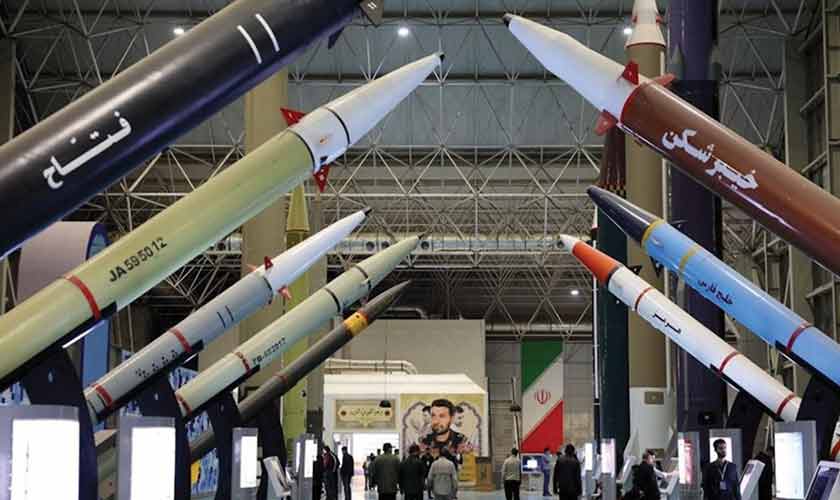
Now in its fourth week, the war has failed to achieve its stated objectives. Despite intense bombardment and the killing of senior leaders, the Iranian state remains intact. The expectation that military force alone could engineer political transformation has proven deeply flawed. The US-Israeli strategy appears to rest on the assumption that sustained military pressure will weaken Iran from within and eventually trigger political collapse. History offers little support for this belief. External aggression often strengthens national cohesion rather than weakening it. Instead of collapse, Iran has responded with defiance, demonstrating both strategic depth and the capacity for sustained retaliation.
At this critical moment, restraint is urgently needed. The United States must reverse course before the situation spirals further. Major powers such as China and Russia should use forums like the United Nations Security Council and the Shanghai Cooperation Organisation to press for an immediate ceasefire. The Organisation of Islamic Cooperation needs to convene an emergency session to coordinate a collective diplomatic response.
Pakistan’s role as a bridge between Iran and Saudi Arabia is particularly important. Its diplomatic engagement reflects an understanding that wars in this region rarely remain contained. They spread across borders, deepen divisions and leave lasting scars. Ending this war will require more than military calculus. It will demand political courage, renewed diplomacy and a willingness to step back from escalation. The alternative is a conflict that grows wider, deadlier and more difficult to end—a war that should never have been fought in the first place.
The writer has a PhD in political science from Heidelberg University and post-doc experience in University of California-Berkeley. He is a DAAD and Fulbright fellow and an associate professor. He can be reached at [email protected].