Print Story
X




How war alters minds and how to ensure it does not alter the future
| W |
ar does not erupt suddenly; it gathers like a slow, dark weather. Long before the first missile arcs across a border or the first soldier crosses a frontier, something shifts in the collective imagination. A story begins to take shape, quietly at first, then insistently, until it becomes the lens through which entire nations see themselves and their enemies. The true origins of war lie in this realm of narrative, fear and emotional manipulation. The battlefield is prepared in the minds long before it is drawn on a map.
In moments like the present, when Iran, Israel and the United States stand locked in a dangerous choreography of provocation and Pakistan and Afghanistan continue to live in the long shadow of mistrust, it becomes impossible to ignore the psychological machinery that starts and sustains conflict. The world watches troop movements and diplomatic statements, but the deeper story is the one unfolding in the minds.
Every war begins with a story. Narratives, slogans, half-truths and convenient lies become the scaffolding upon which aggression is built. They reduce the complexity of human societies into stark binaries of us and them, good and evil, civilisation and barbarism. Religion, cultures, nationalities and regional conflicts are manufactured faultlines for occupation and financial gains. Once these stories take hold, they become self-fulfilling. They harden into beliefs; the beliefs become permission.
In the age of digital media, these narratives travel with unprecedented speed. Fear becomes viral. Outrage becomes entertainment. The subtleties of history and human experience are flattened into a single, emotionally charged storyline.
The psychological impact of war does not end with the acceptance of these narratives; it deepens as conflict unfolds. The loss of life and resources is visible and devastating, but the emotional wounds, fear, insecurity and the slow corrosion of trust are far more enduring. Communities living under the threat of violence inhabit a different emotional climate. Their days are shaped by uncertainty, their nights by the uneasy knowledge that the world can change in an instant, as if by the flick of a messiah’s wand.
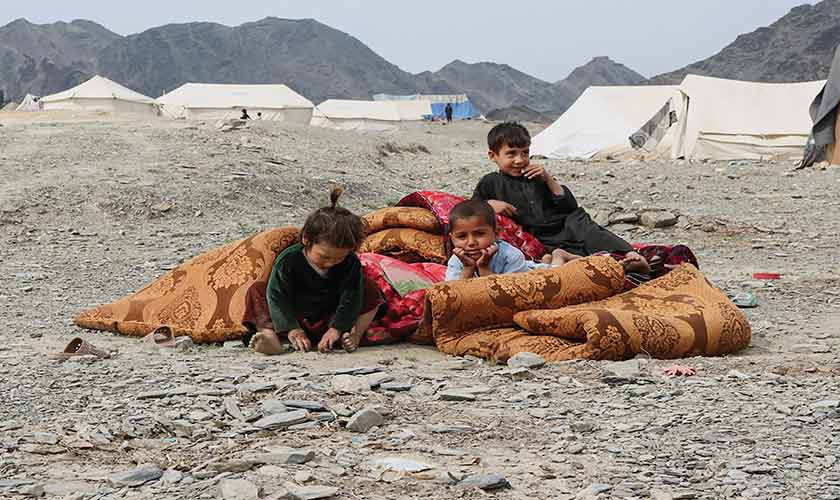
In Pakistan and Afghanistan, entire generations have grown up with this instability woven into daily lives. Children learn early that safety is fragile; adults carry the weight of unpredictability in their bones. Over time, this chronic insecurity becomes an unwanted inheritance passed from one generation to the next.
The Iran-US confrontation has produced a similar atmosphere of dread. It is not only the possibility of war that unsettles people, but the sense of being pulled toward conflict by forces indifferent to human cost. The fear of a single miscalculation spiralling into catastrophe hangs over the region like a storm cloud. In such an environment, political actors find fertile ground for manipulation. Leaders who speak the language of strength and make grand promises of security through force are often rewarded. Fear narrows the imagination; it makes aggression seem like clarity and diplomacy like weakness. Underhand deals become preferable to transparent negotiations.
War reshapes the psychology of nations long before it reshapes their borders. It thrives on fear, on the illusion of strength, on the stories we tell ourselves about who we are and who we must fight.
This dynamic helps explain one of the most troubling paradoxes of modern political life: the tendency of populations to elect war prone leaders even after witnessing the devastation of previous conflicts. The Iraq War remains a haunting example. George W Bush, Tony Blair and John Howard, all architects of a war launched on false pretences, were re-elected by many of the same citizens who had marched against the invasion. Part of the answer lies in the emotional reflexes of societies under stress. When people feel threatened, they gravitate toward leaders who project certainty. The rally-around-the-flag effect compresses political diversity; fear turns nuance into danger. Cognitive dissonance reinforces this. Once a nation commits to war, admitting error becomes painful; re-electing the very leaders who led them into conflict becomes a way of avoiding that shame. The same mechanism can be weaponised internally as hate mongers manufacture threats and turn citizens against their own people for political gain. Narratives of moral purpose, eliminating evil, ensuring security and fulfilling national destiny further entrench loyalty. Rejecting the leader then feels like rejecting the nation’s story itself.
Media amplifies these tendencies. Repetition normalises jingoistic rhetoric. The extraordinary becomes ordinary. The language of war seeps into everyday conversation until it feels natural, even inevitable. In such an environment, the illusion of control projected by firebrand leaders becomes psychologically seductive. Diplomacy, with its ambiguities and compromises, sounds like weakness to a public conditioned by fear.
These patterns are starkly visible today in the Iran-Israel-US standoff and in the fraught Pakistan-Afghanistan relationship. Each side casts the other as irrational, dangerous or fundamentally untrustworthy. Every border clash, every drone strike, every diplomatic slight is absorbed into a growing narrative of hostility. The result is not just regional unease but a global atmosphere of chronic vulnerability, an emotional pressure that political actors and profit makers exploit with remarkable ease. The world becomes a tinderbox, its air thick with fear and suspicion, waiting only for the smallest spark to ignite it.
War reshapes the psychology of nations long before it reshapes their borders. It thrives on fear, on the illusion of strength, on the stories we tell ourselves about who we are and who we must fight. And it persists because populations, caught in emotional currents, often empower leaders who promise protection through aggression. In a world once again teetering on the edge, from Iran to Afghanistan, the greatest challenge is not only geopolitical but deeply human. Understanding how war alters minds may be the first step toward ensuring it does not alter the future.
Since war begins in the minds, peace must be planted there with equal resolve. This demands that societies refuse the narcotic comfort of simple stories; that they tear apart the narratives that shrink human beings into convenient caricatures; and that they expose the emotional manipulation that so often marches ahead of the tanks. Peace requires a fiercer honesty: political leaders held to account; media interrogated rather than consumed; and a willingness to recognise the other not as an enemy but as a reflection of our own unspoken fears. For communities trapped in the long shadow of insecurity, peace cannot be delivered through drones or doctrines; it requires the psychological room to breathe, to recover and to imagine a life not governed by threat. Without this inner disarmament, no treaty will hold and no border will truly quieten.
Weapons have never guaranteed peace; they merely postpone the next catastrophe. Deterrence is a myth sold by those who profit from its upkeep. A war free world will not be built over stockpiles of steel and explosives but by minds disciplined toward peace. The heaviest responsibility lies not with generals or governments, but with the voters of nations whose economies are nourished by conflict. It is they who must decide whether to keep buying war mongering and feeding the machinery of war or to finally bring it to a halt. Otherwise, the world will keep becoming more unliveable, not just for the people of vulnerable countries but for everyone.
The writer, a principal clinical psychologist, lives in Ireland. He can be reached at [email protected].