Print Story
X




Failure has frequently proved the hidden engine of artistic innovation
| U |
mberto Eco, in his book Serendipities, invokes cases of famous failures. One that affected the entire planet was Christopher Columbus’s inability to find the western sea passage to India; instead, he made landfall in the Americas. The Italian author and philosopher mentions several such examples of inability that eventually contributed, in one way or another, to important discoveries.
Yet all of us are wary of being unsuccessful. Self-help books, motivational literature, business guides and examination guides, are, in reality, defences against failure. All of us are brought up to achieve what we need, or rather what we are told we need: good grades, a respectable job, a lucrative business and personal possessions such as a house, car, jewellery and cash; a husband or a wife, children, friends, perfect health and some extra pleasures like cinema, eating out, shopping, travel…
What happens if one defies this model of success and chooses, or ends up being, a failure? In our ordinary lives, a failure is a failure. Period. It is seen as a journey downhill, reducing the individual to an outcast. However, in the world of art, failure can be a fanciful position. There have been artists who either did not gain admission to an art school or could not complete their degree, yet they were able to turn their defeat into a huge triumph.
For instance, the British artist Gavin Turk did not produce anything for his Royal College of Art degree show in 1991 except Cave, a blue English Heritage plaque commemorating the artist with the text: “Gavin Turk, Sculptor, worked here 1989-1991,” placed in an otherwise empty room. His examiners, finding no notable work in the space, failed him. Later, however, Turk rose to such fame that he was included in the much-hyped landmark exhibition Sensation (1997). He is now one of the leading contemporary artists.
On the other hand, not many people have heard of Ben Painting, a classmate of Turk who was also pursuing an MA in sculpture. He not only received his degree from the RCA but was also awarded a distinction. Immediately afterwards, his work was everywhere - in the press, on television, in people’s homes and on their tongues. Today, however, the once-admired fellow is merely a memory, whereas Gavin Turk is Gavin Turk.
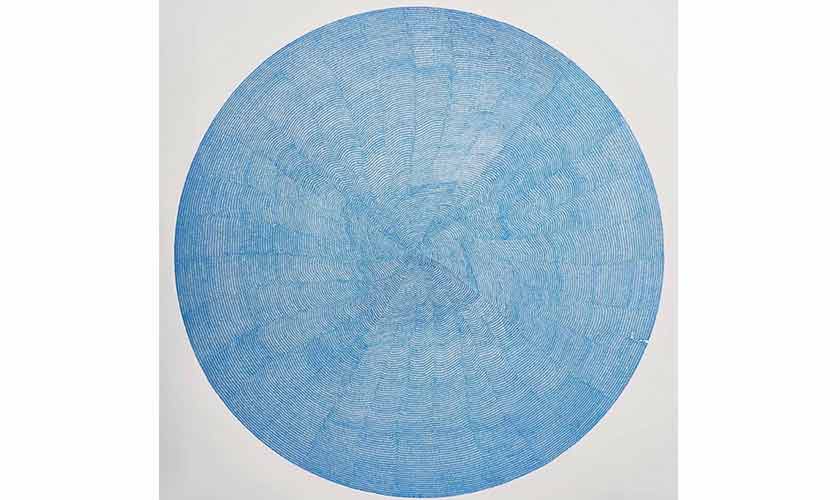
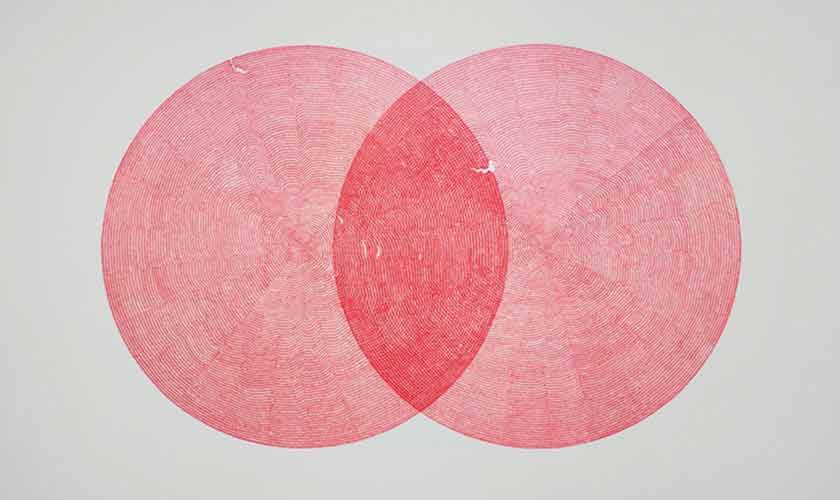
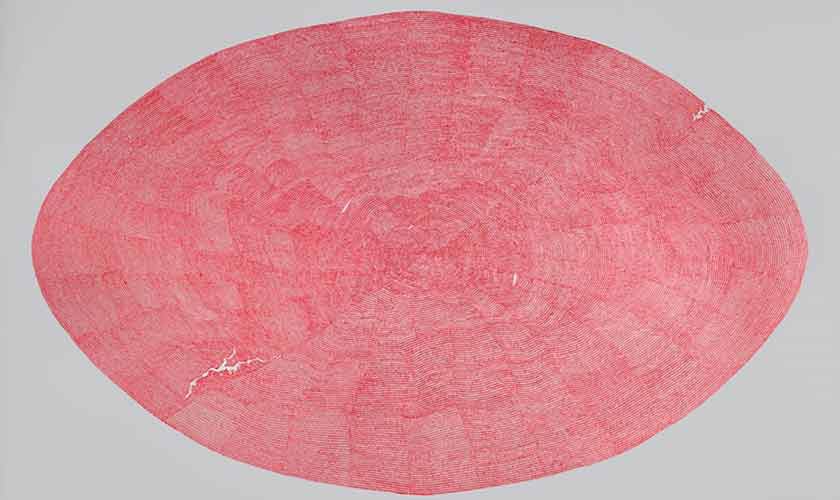
In Pakistan’s context, there is the striking case of Waqas Khan, the artist who, while he did not fail his course at the National College of Arts, remained on the verge. Today, he is one of the most sought-after artists, both in Pakistan and internationally. His work has been displayed in galleries around the world, including a show at Manchester Art Gallery, UK, in 2018.
These names, characters and histories, in a sense, certify the power of failure. If one probes further, in the context of art-making, often the aborted products, abandoned experiments and discarded attempts are more exciting than what is perfectly executed. Projects that were rejected by the artist at some stage may later hold a great fascination for him and others.
When it comes to the world of art, there are three kinds of failure: objects, personalities and society. In a number of artists’ studios, you find dysfunctional products, decayed items and destroyed pieces, actually failed things, which they lovingly keep, hoping to utilise them in future artworks. And not only in studios: an artist would any day prefer eroded, defaced and tarnished coins to a new and luminous set from the mint (like one pound sterling). They know it will not be possible to circulate these tiny discs of metal, because you cannot buy anything with disfigured, blackened and blurred coins, yet they adore them as beautiful entities.
We avoid failure, even though we know full well that it is often the only qualification that pays off in the future.
Probably there is an internal wiring in artists that makes them attracted to what is not ‘applicable, useful, dependable.’ In their homes, torn dresses, exhausted toothbrushes, empty boxes, rusty cans, irrelevant cards and purposeless correspondence wait to be transported to the studio for a reincarnated existence. Ironically, nobody dares pick a pristine piece of garment, a fresh dental article, a filled container or a recent bank statement for its potential as a work of art. Not usually. It is only things that have grown out of their function - a broken-down electric kettle, a leaking coffee mug, a consumed ice-cream container - that appeal to a creative person to be collected and transformed.
There could be various reasons for being attracted to the depilated stuff. The primary one is to find unique meaning in this bunch of disbanded trinkets. On another level, it could be about identifying with these mundane things, which may signify something more serious: the personality of an artist who has experienced an array of defeats just before avoiding the bin: a cold shoulder from the gallery, cruel reviews from the critic, controlled distance from the collector, contempt from contemporaries.
There is an old tale about Sultan Mahmood Ghaznavi and his slave minister Ayaz Tughlaq (whose tomb stands today in a narrow alley of Anarkali Bazaar, Lahore), about courtiers suspecting Ayaz of storing valuable treasures in his trunk. Responding to their complaints, the ruler of Ghazni called his favourite follower to explain, rather reveal, the contents of the box. Ayaz opened his case, which contained his patchy, threadbare and humble outfit from his days as a slave. In the same way, artists connect to their point of origin. Even if you do not rise like Ayaz Tughlaq, you could still be content in contemplating your past: sparse chances, rejected proposals and refused exhibitions.
The real question is: what is more important, success or failure? Imagine an artist who was given a solo exhibition right after graduation, held a few group shows and participated in art fairs, but later faded away. On the other hand, another artist was unable to obtain a degree but continued working and was eventually invited to exhibit at a premier gallery, drawing immense admiration for work that had initially been rejected by academia, the art market, critics and collectors.
If we gather all these examples, starting from Gustave Courbet, Paul Cézanne, Paul Gauguin and Vincent van Gogh to several other misfits of our age, we could write the entire history of art as a history of failure, a chronicle of desolation. Still, we avoid failure, even though we know full well that it is often the only qualification that pays off in the future. Rereading the lives of artists from modern times to our era, one finds that many great names were refused entry to exhibitions, were unsuccessful in acquiring jobs and could not sustain a regular supply of art materials; yet the coming years proved them to be masters. This stands in contrast to those who once tasted the hot pudding of success, fame and fortune.
With this glamorous, or inglorious, history of artists, it is not easy to find failures until you are lucky enough to come across them in mundane and mediocre surroundings.
The writer is a visual artist, an art critic, a curator, and a professor at the School of Visual Arts and Design, Beaconhouse National University, Lahore. He can be contacted at [email protected].