Print Story
X




The arrival of Eid and Nowruz reminds communities of the enduring power of culture and hope
| I |
t is an irony of the present moment that, amid a climate of gloom and uncertainty, three events of deep religious and cultural importance are falling within days of each other. For millions of people in Iran, the coming days will mark both Eid and Nowruz, a convergence that would ordinarily be a cause for joy and public celebration. This year, however, the atmosphere is shaped by the rumble of conflict and the shadow of war.
Across the region, the sounds of celebration are mingling uneasily with the reality of violence. Bombs are falling across parts of the country, yet the calendar moves forward with its ancient rhythms. For the people of Iran, the arrival of Eid and Nowruz raises an inevitable question: what form can celebration take when uncertainty and danger loom so close?
The situation echoes the fears experienced elsewhere in recent years. Many observers have drawn parallels with the suffering endured by the people of Gaza, where everyday life has been punctuated by the threat of sudden destruction. The current climate of conflict appears to be erasing, or at least threatening to erase, a century-long effort to build a discourse grounded in norms of engagement and the protection of civilian life.
Those rules, painstakingly developed through international conventions and humanitarian debate, are now increasingly disregarded. Hospitals, schools, care centres and religious sites have become part of the battleground. Tragically, places of worship, once seen as sanctuaries beyond the reach of violence, have also become targets. The erosion of these boundaries signals a troubling shift in the nature of modern warfare.
Against this background, the arrival of Nawruz carries a powerful symbolic weight. The festival is one of the oldest in the world. It is celebrated across a vast geographical region that may be described as the home of Persianate cultures. From Iran to the Central Asian republics, from Afghanistan to Turkey and parts of western China, Nowruz marks the beginning of a new year.
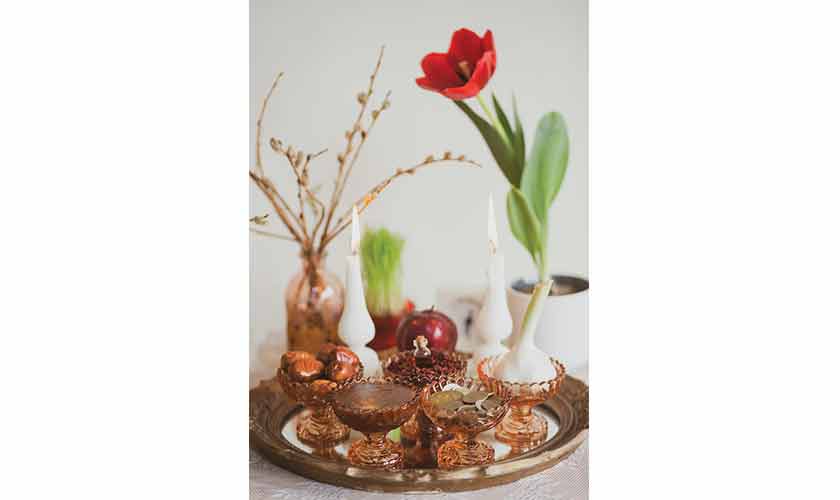
The festival coincides with the spring equinox, when day and night stand in balance. For centuries, this moment has been regarded as a sign of renewal and harmony. Families gather around traditional tables; homes are cleaned and decorated; and rituals are performed in the hope that the coming year will bring prosperity and peace.
In ordinary times, these ceremonies are filled with colour and anticipation. Yet when bombs and missiles overshadow the landscape, the meaning of the festival inevitably changes. What remains constant, however, is the hope that the turning of the seasons will also bring a turning of fortunes. In times of adversity, Nawruz becomes not merely a celebration but a quiet declaration of resilience.
For many Iranians today, that resilience may be the most important aspect of the festival. The New Year offers a moment to reaffirm the belief that difficult days will eventually give way to better ones. Such hope is often accompanied by a determination that peace should not come at the cost of national honour or personal dignity.
In times of adversity, Nawruz becomes not merely a celebration but a quiet declaration of resilience.
Historically, Nawruz has also played a significant role beyond Iran. During the centuries when dynasties of Central Asian origin ruled the Indian subcontinent, the festival became an important feature of courtly culture. The period of the Delhi Sultanate saw the introduction of several new cultural practices from the Persianate world and many of those were further formalised during the Mughal era.
Under the Mughals, Nawruz developed into an elaborate court festival. While its origins lay in pre-Islamic Persian traditions, it became closely associated with the ceremonial life of the ruling elite. The celebrations were marked by displays of royal grandeur, processions, courtly gatherings and the exchange of gifts. In many ways, the festival symbolised the splendour and authority of the imperial court.
With the decline of these Central Asian dynasties and the eventual establishment of British rule, many of these traditions faded from official life. Colonial administration introduced its own calendar of ceremonies and rituals. Yet in the northern regions of the subcontinent and in communities with strong cultural ties to Central Asia, some aspects of Nawruz continued to be observed.
Another seasonal marker of the New Year in South Asia was Chet, according to the solar calendar. Mid-March traditionally signalled the beginning of the year in several regional traditions. Over time, however, this date has largely receded from popular awareness.
What remains more widely remembered is Basant, the festival that marks the end of winter and the gradual unveiling of spring. In many cultures, the arrival of spring has long been associated with renewal and the beginning of the year. Nature itself appears to endorse this symbolism as flowers bloom and the earth emerges from the dormancy of winter.
Europe took a different path. In the modern calendar adopted across much of the world, the New Year begins in the depths of winter, on the first of January. Through the expansion of European influence and the spread of the Gregorian calendar, this date gradually became the global marker of the New Year. Today, it is seen as the repository of universal greetings, resolutions and hopes for the future.
Among Muslims, the lunar New Year carries a very different emotional resonance. The Islamic calendar begins with Muharram, a month closely associated with the remembrance of tragedy, particularly the martyrdom of Imam Hussain (with whom Allah was pleased) at Karbala. As a result, it is not a time of festivity but of reflection and mourning.
Within this complex web of calendars and traditions, the arrival of Nawruz during a period of crisis assumes a profound meaning. It reminds people that culture and history provide an anchorage even when circumstances appear bleak. Rituals, however modest, reaffirm a continuity that war cannot easily erase.
For Iranians facing the pressures of geopolitical conflict and the might of powerful adversaries, this cultural continuity may prove a vital source of strength. The spring embodies the promise of renewal and the possibility of change.
Perhaps that is the most fitting way to understand the celebrations this year. In a time overshadowed by violence, Nawruz may become less a festival of outward festivity and more a quiet affirmation of endurance. In the turning of the seasons lies a reminder that hardship, like winter, cannot last forever.
The writer is a culture critic based in Lahore.