Print Story
X




In recent years, the information technology sector has shown clear potential
| P |
akistan is one of the youngest countries in the world. Around 60 percent of its population is under the age of 30. The country has more than 240 million people; every year nearly two million youth enter the job market. This youth bulge is not just a demographic fact; it is either Pakistan’s biggest strength or its biggest risk. The difference depends on how the country uses digital technology, IT exports, freelancing, artificial intelligence and entrepreneurship to create opportunity.
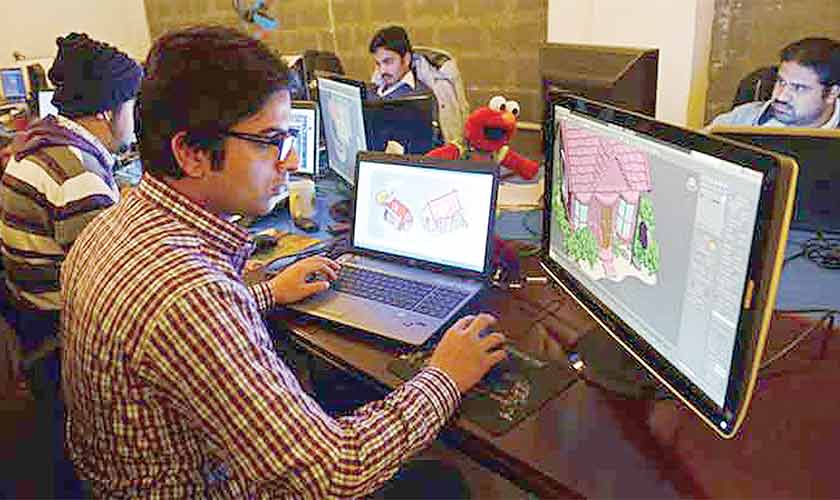
Over recent years, Pakistan’s information technology sector has shown clear potential. Exports of IT and IT-enabled services crossed $2.6 billion in FY2023, compared to less than $1 billion a decade ago. Even with economic uncertainty, foreign clients continue to hire Pakistani software engineers, developers, designers and digital marketers. The global demand for tech services is strong and Pakistani youth are competitive in terms of cost and skills. The State Bank of Pakistan has reported steady inflows from IT exports. The sector remains one of the few that consistently bring in foreign exchange without a large import bill.
Freelancing is another powerful story. Pakistan ranks among the top freelancing countries in the world. On global platforms like Upwork and Fiverr, Pakistani freelancers provide services in software development, graphic design, content writing, digital marketing and video editing. Estimates suggest that Pakistan is among the top five freelance markets globally in terms of active workers. Thousands of young people thus earn dollar-denominated wages while living in Lahore, Karachi, Islamabad, Faisalabad and many small towns. This income requires no factories, large infrastructure and heavy government spending.
However, freelancing has also exposed some policy gaps. Many freelancers struggle with payment gateways, taxation clarity and access to international banking systems. Internet shutdowns and inconsistent broadband quality directly affect their income. In a digital economy, stable connections are as important as electricity was in the industrial age. If a freelancer loses a project due to internet disruption, the loss is not just personal. It affects national export earnings.
Artificial intelligence and automation are now shaping the next wave of global change. Countries like the United States and China are investing billions of dollars in AI research and development. India has launched national AI missions and integrated digital identity, payments and data systems to build a large tech ecosystem. Pakistan cannot afford to stay behind. AI is not only about robots and complex algorithms. It is also about using data to improve agriculture, healthcare, logistics and governance.
AI tools can help farmers predict crop diseases, optimise water use and increase yields. In a country where agriculture contributes around 19 percent to GDP and employs a large swathe of the workforce, digital solutions can directly raise productivity. In healthcare, AI-based diagnostics can support doctors in rural areas. In taxation and governance, data analytics can reduce leaks and improve transparency. Automation will replace some low-skill jobs, but it will also create demand for new digital skills. The key question is whether Pakistan’s education system is preparing its youth for this shift.
Freelancing has also exposed policy gaps. Many freelancers struggle with payment gateways, taxation clarity and access to international banking systems. Internet shutdowns and inconsistent broadband quality directly affect their income.
The startup ecosystem in Pakistan has seen remarkable growth. In 2021 and 2022, Pakistani startups raised hundreds of millions of dollars in venture capital. Although global funding slowed after 2022, the ecosystem has not disappeared. Fintech, e-commerce, logistics, health-tech, and ed-tech startups continue to expand the horizons. Incubators and accelerators in major cities are mentoring young founders. Several universities are now hosting innovation centres. A new culture of entrepreneurship is emerging where young graduates do not only look for government jobs but also try to build companies.
Some serious challenges remain. Venture capital funding is still limited compared to regional competitors. Regulatory uncertainty discourages investors. Currency volatility creates risk for foreign funds. Many startups struggle with compliance issues, taxation complexity and sudden policy changes. Without predictable policies, long-term digital investment becomes difficult.
There is also a skills gap. While Pakistan produces thousands of IT graduates every year, industry leaders often complain that only a fraction are job-ready. Soft skills, advanced coding abilities, AI training and product development experience are often missing. Countries like Singapore and Estonia invested early in digital literacy from school level. Estonia, with a population of just 1.3 million, built a fully digital government system and became a global model of e-governance. Pakistan, with a population more than 180 times larger, has even greater potential if similar reforms can be sustained.
Digital payments and financial inclusion are another critical area. Platforms like mobile wallets have expanded and millions of Pakistanis now use digital transactions. This shrinks the informal economy and increases transparency. A stronger digital payments network also supports e-commerce, freelancers and small businesses. When digital systems work smoothly, they reduce corruption and increase trust.
The future of Pakistan’s economy will not depend on improvements in traditional sectors alone. It will also depend on whether its young population becomes digitally skilled, globally connected and innovation-driven. If a significant fraction of the 60 percent youth population becomes part of the digital workforce, export earnings can multiply. If policies remain inconsistent and skills development is ignored, the same youth bulge can turn into unemployment pressure.
The world is moving fast. Automation is reshaping manufacturing. AI is transforming services. Remote work is breaking geographic barriers. Pakistan does not need to re-invent the wheel. It needs stable policies, strong digital infrastructure, better education alignment and investor confidence. The main ingredient is already there: millions of ambitious young people.
The writer is a chartered accountant and a business analyst.