Print Story
X




How does the recent escalation in the conflict between Pakistan and Afghanistan impact Khyber Pakhtunkhwa?
| T |
he escalating tensions between Pakistan and Afghanistan have once again pushed the region into uncertainty, with gun clashes, border closure, diplomatic tensions, economic paralysis and rising militancy creating a volatile mix.
Some analysts are now calling the ongoing tensions with Afghanistan a “new great game.” Both the neighbouring countries are caught in a complex web of regional rivalries and security dilemmas.
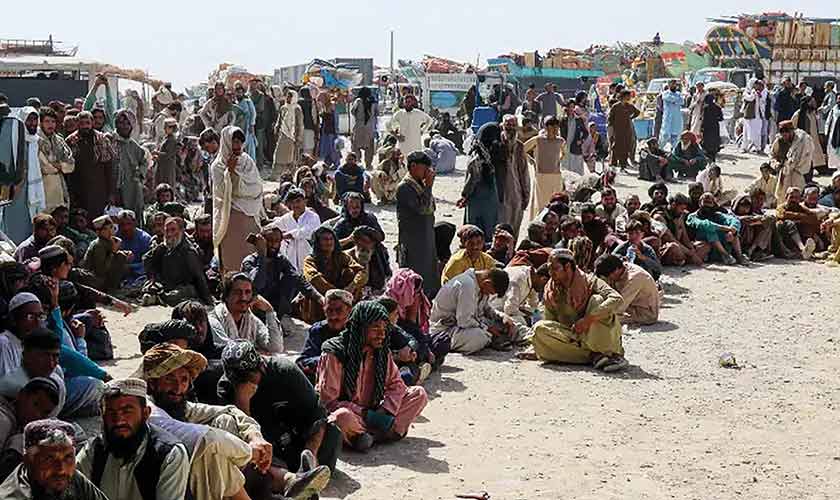
The consequences are already being felt most acutely in Khyber Pakhtunkhwa, particularly in the tribal districts bordering Afghanistan.
Some political observers say the Afghan regime has harmed its long-term interests by opening a new front against Pakistan, a country, which they say, helped Afghan citizens for over four decades.
Hassan Khan, a political commentator, says, “The truth is that the Afghan regime has struck an axe on its own feet. Instead of trading corpses, it would have been better to promote bilateral trade. A war will devastate both nations.”
Islamabad insists that Afghanistan must shut down “centres of terrorism,” which have triggered the current security crisis in Pakistan. The presence of militant groups, especially the Tehreek-i-Taliban Pakistan, inside Afghanistan is not only a concern for Pakistan. It has also raised alarms in Russia, China, Central Asian states and Iran.
“Countries in the region and beyond are using their own pawns to advance their interests. Pak-Afghan tensions are not in the interest of the two neighbouring countries. A conflict will only breed hatred. Most of all in Pakistan, Khyber Pakhtunkhwa, especially its tribal districts, will suffer,” adds Khan.
Security implications of this escalation are profound.
Journalist Noor Bahram, from Waziristan, says, “In recent months, terrorism has increased in tribal areas,” he says. “The devastation from explosion in Mir Ali Bazaar looked like the aftermath of a war. Attacks on public property are very unfortunate.”
A senior police officer, speaking on condition of anonymity, warns that the impact of recent tensions may be long-lasting.
“If unrest continues, pressure on security forces will increase. Instead of a return to routine policing, emergency operations will intensify.” He cautions that terrorist elements in border districts could reorganise and pose a threat not only to the province but to the entire country.
“Continuous tensions disrupt educational and business activities and daily life. Investment declines, unemployment rises and a sense of insecurity deepens among the public giving rise to social unrest.” He says the youth, in particular, fall into despair due to increased uncertainty.
Tahir Malang, a political analyst, draws parallels with the US war in Afghanistan.
“Just as the US fought in Afghanistan for twenty years, with both sides enduring heavy losses, Pakistan risks being entangled.”
Lawyer Muhammad Qubais Shinwari says that Pakistan and Afghanistan are both economically weak. He says war will harm both their economies. “In such conditions, further losses will occur. Resolving the situation through dialogue is the need of the hour.”
“Both these countries have suffered from terrorism and instability. They have few friends and many enemies. Afghan soil has long been used by outsiders against Pakistan and other countries in the region.” If the conflict continues, Shinwari says, it will have broad implications. “Economic conditions will worsen and unrest will spread further. Enemies of both these countries do not want peace in this region.”
Tribal elder and social activist Mumtaz Mehsud claims that Afghan nationals have been involved recently in 90 percent of crimes across Pakistan. “If conditions worsen in Afghanistan, crimes in Khyber Pakhtunkhwa will increase further.” He says militants typically conduct terrorist operations with local support. “Target killings increase in such an environment,” he says counting government officials, tribal elders and journalists among likely targets.
“In any war with Afghanistan, the first casualty will be Pashtuns on either side,” he says, “because Pashtuns are closest to the border, they will be harmed first,” Mehsud fears.
He adds that promotion of hate speech on social media risks ethnic and linguistic riots. Due to tensions with Afghanistan, he says, the entire country, especially Khyber Pakhtunkhwa, faces greater risks.
Mehsud also notes rising street crime and targeted killings. He says that the government is facing difficulty in maintaining its writ. He urges the Afghan government to act against hate propaganda and calls for dignified repatriation of Afghans, in accordance with the UN charter.
“In any war with Afghanistan, the first casualty will be Pashtuns on either side,” he says. “Because Pashtuns are closest to the border, they will be harmed first,” Mehsud fears.
Journalist Sher Alam Khan Shinwari says recent clashes escalating into airstrikes on Kabul and Kandahar have disrupted law and order in the province. He notes that attacks on Pakistani positions in Chitral, Khyber, Mohmand, Kurram and Bajaur have intensified due to activities by the TTP.
Border closures since October 2025, he says, have caused a 53 percent revenue drop in the province. “Businesses in Peshawar markets reliant on Afghan trade have faced a sharp decline, impacting merchants, transporters and menial workers.
Before the closures, bilateral trade between Pakistan and Afghanistan averaged $2-2.5 billion annually, with a significant share passing through Khyber Pakhtunkhwa. He says that over four months of closure had slashed export volumes by more than half. Conservative estimates suggest Pakistan that may have lost over $800 million in trade revenue during this period. The province’s own tax and transit revenues have dropped sharply, contributing to a reported 53 percent decline in provincial revenue, Shinwari says.
Journalist Ibrahim Shinwari says Khyber Pakhtunkhwa’s industries dependent on exports of pharmaceuticals, cement, construction materials, vegetables, fruits and poultry have been hit particularly hard. He says dozens of small factories are on the verge of closure.
“For decades, due to poor relations with Afghanistan, Khyber Pakhtunkhwa has suffered. This is particularly true of tribal districts and the south region. Peshawar has seen a lot of terrorist crime,” he says. “Business suffers when there is terrorism,” he says. He says the youth face increasing unemployment due to poor economic and security conditions. “They are in despair.”
FATA Loya Jirga chairman Bismillah Khan Afridi says tribal people are suffering the most. “If a bullet is fired from Afghanistan or someone dies, local tribes are the first to be hit because they live closest to the border,” he says.
Afridi says shelling in Bajaur and Landikotal has killed tribesmen and forced displacement. He says the closure of bazaars in Torkham and Landikotal has caused severe losses.
“From Bajaur to Waziristan, terrorist attacks have caused deaths and destruction,” he says. Afridi says that the tribal jirga has offered to mediate between Pakistan and Afghanistan.
“We have proposed to the government that the FATA Loya Jirga can play a role in bringing about peace with Afghanistan,” Afridi says.
Bismillah Khan Afridi says an empowered tribal jirga should be formed. “No matter how much Afghanistan and Pakistan fight, ultimately all issues can be resolved through dialogue because war is never a solution.”
“We must understand that the tense situation with Afghanistan and the unanswered questions regarding terrorism will have far-reaching social, security, political and economic consequences that will be felt first in Khyber Pakhtunkhwa,” says Iqbal Khattak, head of the Freedom Network.
The deepening crisis between Pakistan and Afghanistan has already inflicted heavy security and financial costs, particularly on Khyber Pakhtunkhwa’s fragile economy, security and social fabric. A sustainable path forward requires immediate ceasefire mechanisms, structured diplomatic engagement, intelligence-sharing against militant groups, revival of cross-border trade and the activation of tribal jirgas as confidence-building platforms. Only through dialogue, mutual respect and economic interdependence can the two countries step back from the brink and rebuild a peaceful relationship that benefits their peoples.
The writer is a freelance journalist and social worker.