Print Story
X

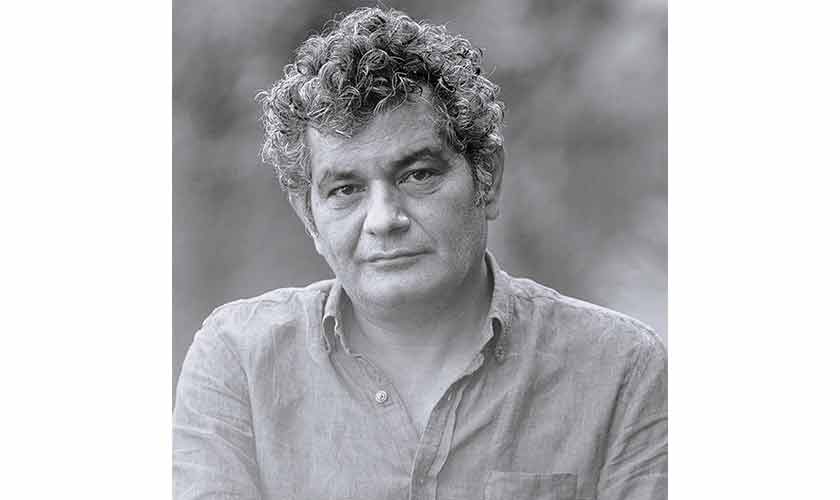
Born in Okara, award-winning author Mohammed Hanif has penned four novels, known for their sharp, satirical take on Pakistan’s complex and volatile political landscape. His first novel, The Case of Exploding Mangoes, won the 2008 Shakti Bhatt Award and the 2009 Commonwealth Book Prize. Hanif’s debut was also long-listed for the Man Booker Prize in 2008 and nominated for the 2008 Guardian First Book Award. Our Lady of Alice Bhatti, his second novel, was shortlisted for the 2012 Wellcome Prize. Red Birds, Hanif’s third book, clinched the KLF-Getz Pharma Prize for English Fiction in 2020.
In this exclusive interview with The News on Sunday, the London-based author discusses his much-awaited fourth novel, Rebel English Academy, which evokes the execution of former premier Zulfikar Ali Bhutto and examines its impact on the conscience of a fictitious small town. Excerpts:
| T |
he News on Sunday: What led you to explore the aftermath of Zulfikar Ali Bhutto’s execution in Rebel English Academy? Did personal memories of that phase in the country’s history set the emotional tone of the book?
Mohammed Hanif: There weren’t many personal memories, just this moment that I remembered: when I came out of the examination hall after the last Class 8 paper, expecting the good times to roll and was shocked to see deserted streets. I had heard stories of people who had bought into the ‘Bhutto dream’ and others who hated him.
I thought I was writing about growing up, education and bad romance. Bhutto’s execution was just a random point to start. You have to start somewhere and that moment, when, for the first time, I saw fear cruising the streets seemed like an okay moment to begin the story.
TNS: What prompted you to set the novel in the fictitious, relatively remote, OK Town instead of a major city?
MH: I grew up in a village and went to high school in a small town. For me it was the biggest city I had ever seen. That culture shock must have stayed with me. I have lived in some big cities. They are unknowable. In small towns you can see change; people’s secret histories litter the street corners.
TNS: OK Town appears loosely inspired by Okara – a childhood landscape you haven’t explored in your earlier fiction. Would you describe this novel as a kind of literary homecoming?
MH: I wish I was on that kind of a grand journey. I was struggling to find a setting, so I went back in time and stayed a safe distance from my real home. As a boy growing up in a village, commuting to the city for high school had been a fascinating experience. People had doorbells and drawing rooms; they bought milk and vegetables from shops. Although it doesn’t figure much on Pakistan’s political map, Okara occasionally comes up with unexpected stories. Once it had very strong labour unions. For more than twenty years now, Pakistan’s longest-running peasant resistance movement has been going on in Okara.
TNS: Rebel English Academy simultaneously critiques authoritarianism, religiosity and patriarchy. How did you balance humour with such heavy themes? How do you decide when humour should undercut intensity and when it should intensify it?
MH: Talking about humour and its uses is very unfunny business. I think it arises out of situations where powerful people are trying to assert their authority and stumble, or when people don’t know how to communicate their intimate desires. Increasingly, I am told by my children that everything is not funny. I reluctantly agree with them.
TNS: Captain Gul is both comical and disturbing. How did you construct such a morally conflicted character?
MH: He is quite an average young man with some power and some desires. I find young people with privilege quite fascinating; it’s not about his rank and uniform – actually, he doesn’t wear one, which is also a kind of privilege. I think this idea of a powerful man trying to assert his power and bungling is a comical but also scary moment.
TNS: Sabiha’s ‘homework’ chapters are striking. What inspired the choice of that narrative device?
MH: I have been lucky to have some very good, very dedicated teachers – civilians as well as people in uniform. I am always curious about what motivates them. ‘Homeworks’ come from the homework that we were given in primary and high school in Urdu and English classes: the essays where we write about our best friend or our summer holidays. You are expected to write them to a specification – the language is formal and flowery. If you want to be a good student, you stick to the formula. So, I went back to my primary school essays to have some fun with them.
“Our suffering is continuous. As the kids say these days, that light at the end of the tunnel is a train hurtling towards you.”
TNS: Do you see any of your characters as morally redeemable?
MH: They are all working towards it, faltering maybe, but everyone has a moral vision that they are trying to fit into. I have never in my life heard anyone call themselves a liar, a thief or zaalim (oppressor). Even the most depraved ones think they have worked out a moral code.
TNS: The academy teaches English as a tool for survival and rebellion. What does English symbolise in the novel? If the Rebel English Academy existed today, what would it teach differently?
MH: The novel is written in English, so I hope it symbolises that it’s okay to tell a story in any language that you wish. It does dance around the notion that English somehow is the language of power, rationality and universalism. We all know that it’s also the language of genocidal lies and dictatorship.
Today the academy would probably be teaching AI prompts.
TNS: The novel engages boldly with religion and power. How did you approach writing about faith without either romanticising or dismissing it?
MH: With a lot of love for religion; a lot of respect for power; and some disdain where both overlap or try to use each other. I am very scared of being called ‘bold’ because it implies that you are doing something a sensible person shouldn’t be doing.
TNS: In what ways has your satirical voice evolved since your debut novel, A Case of Exploding Mangoes?
MH: I have no idea. One can’t measure one’s own evolution – or at least I can’t. My guess is that the Mangoes era was violent but had a happy ending of sorts. Although we should worry if our idea of a happy ending is a plane exploding and killing half the military command.
Now our suffering is continuous. As the kids say these days, that light at the end of the tunnel is a train hurtling towards you.
TNS: The novel suggests ordinary people absorb the shocks of history more than the elite. Was this a deliberate reframing?
MH: Everything in a novel is deliberate. I don’t really know if they absorb the shock, but they have no option other than to go on with the struggle of earning their daily bread. Grief is interwoven into their lives.
I lived in Karachi during some very violent times, and reporters and pundits would call us resilient. I was tired of telling them that most of us don’t have the option to stay home; we have to go out and earn our daily wages.
TNS: How do you think younger readers, distant from the Bhutto era, will interpret the story?
MH: I have no idea. I hope they find it ‘cool’ or whatever the word for ‘cool’ is these days.
I have written it as a love story. I hope they’ll find some echoes from their own broken hearts in it.
TNS: Do you see parallels between the 1979 political climate and contemporary Pakistan?
MH: I don’t see many parallels, except for the minor fact that we again have a former elected prime minister in jail. But then, we always have a former elected prime minister in jail or exile.
TNS: Do you believe literature can meaningfully challenge authoritarian narratives?
MH: No. This novel has been written keeping in mind all the clauses of the Prevention of Electronic Crimes Act.
TNS: What kind of ‘rebels’ do you hope readers will become after finishing the book?
MH: The idea of putting away your phone and picking up a book is a small rebellion in itself. If they actually finish it, I’ll tell myself that’s what a peaceful revolution feels like.
The interviewer is the critically acclaimed author of No Funeral for Nazia and Typically Tanya.