Print Story
X




A conversation with historian and author Dr Waleed Ziad
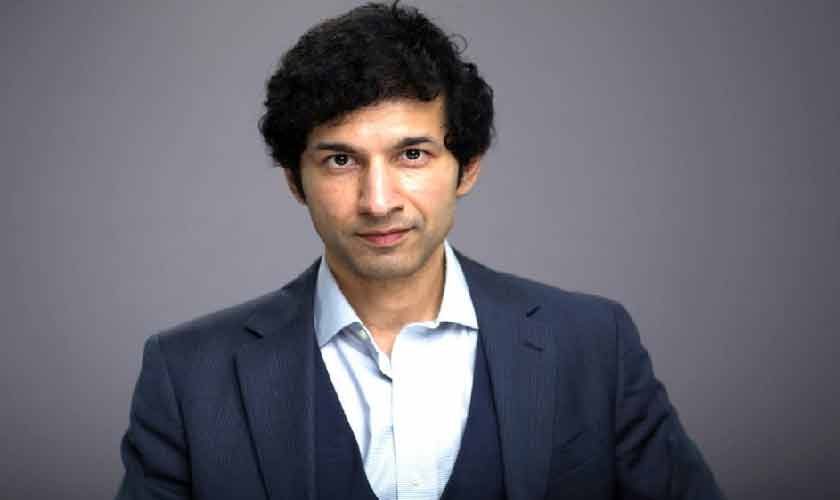
A polyglot and inveterate traveller of the Muslim world’s forgotten landscapes, Dr. Waleed Ziad received his PhD in history from Yale University. His dissertation on Trans-Regional Islamic Revival in the Age of Political Fragmentation and the Great Game won the Theron Rockwell Field Prize, one of the two highest Yale dissertation prizes across disciplines. He is now an Associate Professor of History at Georgetown University. Previously, he was Associate Professor of Religious Studies and Ali Jarrahi Fellow in Persian Studies at the University of North Carolina at Chapel Hill, and a Research Scholar in Law, and Islamic Law and Civilization Research Fellow at Yale Law School.
Ziad is the author of Hidden Caliphate: Sufi Saints Beyond the Oxus and Indus (Harvard, 2021), for which he was awarded the 2022 Albert Hourani Prize, the most prestigious award in Middle Eastern Studies worldwide, and the American Institute of Pakistan Studies annual book award; and In the Treasure Room of the Sakra King: Votive Coinage from Gandharan Shrines (American Numismatic Society, 2022).
In this interview with The News on Sunday, Dr. Ziad speaks with Aasim Akhtar about his interest in trans-cultural research, his deep engagement with the history of Sufism, and his forthcoming book, Second Fatima: The Extraordinary, Enchanted Lives of the Female Sufi Masters in the Afghan Empire. Excerpts:
The News on Sunday: Why did you feel inclined to study and research the history and tradition of the Sufi orders?
Waleed Ziad: From a very young age, I took a keen interest in history, archaeology and mysticism. I had the good fortune of travelling each year with my family to various Muslim countries, from the Maghreb all the way to India and Central Asia. We often visited archaeological and historic sites, among them, madrasas and shrines of the great Sufi masters. When I was in my teens, I lived alone in Pakistan for four years. Disenchanted with the high-school social environment, I began spending days at a stretch with local historians and antiquarians, travelling by bus to historical and sacred sites across Khyber Pakhtunkhwa and Punjab. This is how my interest in off-the-beaten-path travel and history began to gestate and develop into a passion.
The other reason was academic. Shaykh Ahmed Sirhindi, the pivot point of the Naqshbandi-Mujaddidi order, is an absolutely fascinating yet greatly misunderstood figure. I had noticed that social movements across the Muslim world, from Indonesia to Bosnia, often cited Sirhindi as a seminal influence, yet each region seemed to read him differently. I became interested in his philosophy, and it soon became apparent that he was among the most misrepresented Muslim thinkers today.
In the past, academic scholarship on Sufism has often focused on poetry and esoteric texts. Yet Sufi orders also exerted a defining influence on social and political life. There has therefore been a gap between understanding the theological foundations of Sufism and examining how Sufi traditions function as social movements. My research seeks to bridge that gap by exploring how Sufi networks operated within society and what pre-modern Muslim societies looked like when the Islamic system of knowledge was at its height.
TNS: What exactly is a khanaqah and how does it function?
WZ: In traditional Muslim societies, someone who wished to pursue scholarship would typically begin their education at a maktab, roughly equivalent to an elementary school. From there they would move on to a madrasa, where they studied the outward or zahiri sciences—subjects such as law, medicine, mathematics, grammar, and tafsir. At a more advanced stage, when a student was ready, they would join a khanaqah, or Sufi centre, where they would be initiated into a Sufi order and begin training in the inward or batini sciences—something like the equivalent of a doctoral programme.
Life in a khanaqah involved a range of spiritual disciplines. These would include rigorous meditative practices, contemplation exercises, and forms of service. A disciple might be asked to perform menialtasks such as sweeping or washing dishes, meant to cultivate humility and overcome the ego-self. Eventually, the student would receive an ijazah, or authorization, in Sufi practice from a master, and would then teach their own students.
TNS: How did the NM order spread across national borders?
WZ: One of the questions that animated my research was this: what did the Muslim world look like when Sufi shaykhs stood at the pinnacle of the social hierarchy, when cities such as Kabul hosted dozens of khanaqahs, while Bukhara counted hundreds—sources speak of 365 khanaqahs and madrasas as 19thcentury. To understand how these institutions functioned and how their networks spread, I travelled to over 140 towns across Uzbekistan, Afghanistan, and Pakistan, drawing on sources in multiple languages. What emerged was a picture of a vast transregional network of Sufi institutions and individuals spanning Central and South Asia.
At the centre of my first book, Hidden Caliphate, is a largely forgotten 18th-century Sufi master, Hazrat Fazl Ahmad Peshawari. His network comprised roughly 600 deputies, including some of the leading scholars of the time, stretching from Siberia and Dagestan to Xinjiang. Members of his own family were deeply embedded in this world: one son became thepatron-saint of the kingdom of Khoqand in today’s Ferghana Valley, another was a spiritual giant in Bukhara. Yet another,based in Peshawar, helped mobilize resistance when the Sikhs attacked the Peshawar Valley. Through these connections, his circle intersected with major social and intellectual movements across Asia.
What this reveals is a world that existed before the political ruptures of Russian and British imperialism. The regions we now describe separately as South Asia, Central Asia, and the Middle East were once part of an integrated cultural space. Sufi networks were among the key forces sustaining that connectivity. In fact, the 18th century appears as a period of remarkable interconnection—a kind of connective renaissance—linking places such as Peshawar, Bukhara, Khoqand, Delhi, Nasarpur, and Thatta, and extending far beyond. The Naqshbandi-Mujaddidis were among the important catalysts of this interconnected world. This book thus dramatically overturns the colonial narrative that assumes this region was in decline before the European conquest, and dismisses Sufis and ulama as backward or stagnant.
TNS: What distinguishes the Naqshbandi-Mujaddidis from other Sufi orders?
WZ: Every Sufi order has its own pedagogy—a distinctive set of practices aimed at disciplining the ego (nafs). These can range from social service and contemplative exercises to music and breathwork. The Naqshbandi tradition, which emerged in Central Asia in the thirteenth and fourteenth centuries, developed a particularly systematic approach to meditation. One of its distinctive features is the science of the lataif, the subtle centres, metaphysical sensory organs mentioned in the Quran and Sunnah (like the qalb, ruh, and sirr) which can be mapped upon the physical human frame. The idea is that the human being is a microcosm reflecting the larger structure of the macrocosm. Through specific meditative disciplines—think of it as a training programme—these subtle centres are gradually activated, allowing the seeker to cultivate heightened spiritual perception and to progress along the path toward the divine presence. It’s almost like you’re turning on receptors of divine energy through certain meditations that allow you to see with other ‘eyes.’ It’s like you have senses beyond the physical five.
A second hallmark of the Naqshbandi-Mujaddidi tradition is its insistence that sharia and tasawwuf are inseparable—akin to two wings. A genuine Sufi, in this view, must also be grounded in the disciplines of Islamic law and hadith. This is how it was prior to the 20th century, whether in North Africa or Afghanistan or Sindh. Sirhindi repeatedly stresses that the outward and inward dimensions of Islam must reinforce one another: a jurist without spiritual refinement risks becoming a self-serving detail-obsessed pedant, while spirituality without grounding in the law risks losing its moral foundation. Sirhindi’s writings place particular emphasis on articulating the philosophical framework that binds these two inner and outer dimensions together.
At the same time, Sirhindi reframes a key question in Sufi metaphysics. Rather than emphasizing mystical union with God as the ultimate end, he argues that the highest station for a human being is that of perfect servanthood to God. The human being should strive to become a barzakh, or isthmus, between the divine presence and the created world. The Naqshbandi map of sayr o suluk—the spiritual journey—is like an arc: the seeker ascends toward the divine presence but must ultimately return to the world, becoming someone capable of guiding humanitytoward God-consciousness.
One of the most spectacular features of Shaykh Ahmad Sirhindi’s legacy is the encyclopedic nature of his work, laying out and analyzing different spiritual experiences, meditations,and states. His writings bring together insights and practices from a wide range of earlier Sufi traditions, weaving them into a coherent framework. In this sense, the Naqshbandi-Mujaddidipath becomes a tradition that harmonizes multiple strands of Sufi thought. As the order spread, this harmonization allowed it to resonate with diverse spiritual communities—from Siberia and Xinjiang to the Pamirs and the Himalayas. It became a conduit for scholarly and spiritual exchange across the wider Muslim world.
TNS: How do you piece together disparate social, political and intellectual currents in a single narrative?
WZ: In the pre-modern Muslim world, authority was often conceived as having two tiers. There was the zahiri khilafat, the outward authority of sultans and khans who governed states. Alongside it existed a batini khilafat—a vast network of Sufi masters and scholars who provided spiritual guidance but also performed a large range of social welfare functions. They ran educational institutions and soup kitchens, mediated family and community disputes, offered psychological counselling, and sometimes even acted as diplomats between rival states. In moments of crisis they could mobilize society—for example, when the British invaded Afghanistan, many Sufi networks helped raise auxiliary forces to defend their homeland. At the same time, these figures were scholars, jurists, and poets. The core of my book is about this batini khilafat within the Naqshband-Mujaddidi tradition.
One of the ways the book reorients our understanding of the Muslim world before colonialism is by foregrounding connectivity. The colonial framework that separates “South Asia” from “Central Asia” makes it difficult to see the dense networks of movement, scholarship, and exchange that once linked these regions. By tracing these networks, the book shows how intellectual and spiritual life circulated across a much larger Persianate cultural space. The book also shifts attention to regions that are treated as peripheral backwaters today—places that fall within Afghanistan, Pakistan, and Uzbekistan. Rather than being frontier zones, these were in many respects civilisational centres.
Structurally, the book adopts a trans-regional lens rather than focusing on a single place. Over the past 15 years, through my own journeys from South Asia into Central Asia, I have traced and, in many ways, retraced the routes of the great shaykh at the centre of the book—one of Sirhindi’s successors—and the movements of his sons and disciples over a span of roughly 250 years. In telling this story, from the 18th century to the present, each chapter focuses on a different location: Peshawar, Kabul, Swat, Dera Ismail Khan, Bukhara, Siberia, Mazar-i-Sharif, and others. Each location offers a different vantage point from which to view this vast network and the world it sustained. At the same time, the narrative shows how this phenomenal interconnected world gradually came apart, as British and Russian imperial expansion—and the geopolitics of the Great Game—systematically fractured the networks that had once bound these regions together.
The term “Mujaddidi” itself derives from Shaykh Ahmad Sirhindi’s laqab, Mujaddid-i-Alf Thani—the “Reviver of the Second Millennium” of Islam. There are different interpretations of why he received this title. Some attribute it to his distinctive teachings on spiritual practice and meditation; others emphasize his role in reviving the Sunnah and reshaping intellectual and spiritual life in the late 16th and early 17th centuries. From his time onward, his followers and spiritual descendants came to be known as the Mujaddidis.
TNS: What is the Modern Endangered Archives Program about?
WZ: One of the last great shaykhs within the Sufi tradition I study in my book was Hazrat Abdullah Jan Faruqi of North Waziristan. From the 1940s until the early 2000s he ran two khanaqahs, as well as two publishing houses, and wrote extensively—epistles and poetry in Pashto, Persian, Urdu, and Arabic on subjects ranging from metaphysics and philosophy to history and fiqh. He was a Sufi master, an elementary schoolteacher, an activist in the Khudai Khidmatgar movement, and as early as the 1940s he advocated for women’s education in the tribal areas. I became interested in his work and approached his family with the idea of compiling his materials—not only his own writings, but also the correspondence he maintained with his contemporaries, along with the manuscript collections in their libraries, some of which go back several centuries.
What began as a modest effort grew into a four-year archival project involving three major khanaqahs across the region—in Waziristan, Peshawar, and Malakand. The project concluded last year. Over the course of the work, we digitized, catalogued, and produced metadata for rare manuscripts as well as later Sufi writings. One of the key goals was to begin documenting the intellectual and cultural vibrance of this region from the vantage point of the communities themselves, rather than through security-centric frameworks that have largely shaped the narrative of the tribal areas for over a century and a half.
Many of Hazrat Abdullah Jan’s letters to his disciples (including women) contain detailed discussions of meditative practices and spiritual discipline, demonstrating that the Sufi tradition remains very much alive even in the supposedly “ungovernable” tribal belt. At the Peshawar khanaqah of Hazrat Amir Shah Qadri,which houses one of the largest libraries in KP, the resident librarian Syed Taqi Hassan helped train a dozen librarians and technicians within the first two months of the project. He also created a WhatsApp network that eventually grew to around 100 participants—people who either hold manuscript collections themselves or are connected to Sufis, scholars, and local historians interested in preserving these materials.
TNS: What has been Abdullah Jan Faruqi’s contribution in promoting the NM order?
WZ: Abdullah Jan Faruqi had a fascinating career. He was trained by some of the most respected scholars across the tribal belt and later became an important voice pushing back against extremism. To me, his most significant contribution was his ability to build and expand Sufi madrasas in a regionproblematically reduced to “the most dangerous place in the world” during some of the most violent conflicts of the late twentieth century. He had appointed eighty khulafa on both sides of the border—leading scholars and Sufis in places such as Ghazni, Kabul, Swat, Bannu, Waziristan, and Kohat. Through this network he sustained the intellectual and spiritual life of the Naqshbandi-Mujaddidi tradition across a wide and difficult terrain.
Because many people who knew him are still alive today, I have been able to collect oral histories across this belt that illuminate the vitalrole Sufi shaykhs played in the region, especially during periods of conflict. In many cases, when a Sufi shaykh arrived to mediate, fighting would immediately cease. Beyond mediation, these figures educated their communities and helped preserve long-standing knowledge traditions in a modern world that often values only what is materially visible or immediately useful. Faruqi also maintained deepties with the ulema and Sufi communities of Sindh.
Such was the authority these figures commanded that, on two occasions when his mosque in Waziristan was attacked, armed groups sent delegations to apologize, acknowledging that their actions had violated the principles of Islam.
TNS: What led to your interest in coinage that became the subject of In the Treasure Room of the Sakra King: Votive Coinage from Gandharan Shrines?
WZ: There are large stretches of the history of Pakistan and Afghanistan for which written sources are few and far between. This is partly because relatively little scholarly attention has been paid to them, but also because of the vicissitudes of time. In such contexts, coinage becomes an extremely valuable historical source. Coins can tell us the names of forgotten kings and ancient religious affiliations, and even help us reconstruct the sacred landscape of our region.
For more than twenty years, I have been studying the site of a cave-temple in northern Gandhara that functioned like an independent shrine-state from the fourth century onward, continuing well into the Ghaznavid period. What makes this site remarkable is that it maintained its own system of coinage. Pilgrims visiting the shrine would purchase large numbers of copper coins and distribute them as offerings to the temple. Over a span of roughly seven to eight centuries, around five hundred different types of coins were minted around the cave-temple complex and nearby shrines. These coins carry legends in several scripts and iconography that draws simultaneously from Zoroastrian, Buddhist, Saiva, Vaishnava, and Islamic traditions. Through them we can glimpse the extraordinary cultural and religious exchanges that characterized this region.
One particularly fascinating series of coins, issued during the Ghaznavid period and clearly intended for Hindu pilgrims, bears Hindu Shahi images on one side and the Kalima-i-Tayyaba on the other. Through these coins, it becomes evident that Mahmud Ghaznavi incorporated this temple complex into hisadministrative and economic framework – overturning the colonial fabrication about Mahmud Ghaznavi laying waste to Hinduism. We are told about Mahmud coming and destroying key politically important temples in north India (the proverbial“clash of civilisations” narrative) but we fail to recognise that a vast majority of local holy sites continued to flourish under Ghaznavid protection. The coins from this particular complex give us material proof of that historical fact.
The scripts found on these coins reflect the cosmopolitan nature of the region. They include scripts such as Brahmi, as well as Pahlavi, Bactrian, Sarada, and Kufic Arabic. The imagery is equally eclectic: coins depict sacred symbols that would have been recognizable to pilgrims arriving from places such as Multan and Kabul. The iconography ranges from Middle Iranian deities such as Nana to Vaishnava and Saiva symbols like the trishul and chakra. In one striking example, a coin shows the Byzantine emperor Justinian holding Shiva’s trident. We also find repurposed Greek deities, astrological symbols, and emblems of kingship spanning nearly eight centuries. Together, these coins offer a vivid record of the religious exchange and cultural blending that defined the Gandharan world.
TNS: What is the crux of your upcoming book, titled Second Fatima: The Extraordinary, Enchanted Lives of the Female Sufi Masters in the Afghan Empire?
WZ: During my fieldwork over the past 15 years, I discovered that the two largest religious networks that emerged during the Afghan Durrani Empire were led by women in the late 18th and 19th centuries. One is the Shor Bazaar network based in Kabul, which remains one of the most influential spiritual networks in Afghanistan today and played a leading role during the Soviet–Afghan War. The other is the Chamkani network near Peshawar. As I began investigating this, an entire world of female spiritual leadership gradually came into view.
My latest book – which should be out soon (inshallah) - focuses on the 250-year history of female spiritual leadership within the Mujaddidiorder. It traces a network that stretched across Peshawar, Kabul, Qandahar, Kalat, Sindh, and Tharparkar. At the centre of the story is Bibi Sahiba Kalan, whose given name was Amat al-Masuma. She was the khalifa-i-awwal—the foremost deputy—of the largest scholarly and Sufi network in Afghanistan. Her shaykh, Khwaja Safiullah, had performed the dastarbandi of the Durrani ruler and appointed thirty deputies whose influence extended from Central Asia to the Arabian Sea. Bibi Sahiba was the greatest among these deputies.
A central part of the book reconstructs her life and work: her education, her daily responsibilities, the scholars and seekers who visited her, and the wider intellectual and spiritual world she helped sustain. As I continued my research, I discovered that at a certain point her descendants—prominent Sufi figures in Qandahar and the Kabul highlands—sought refuge in Sindh, where many other female Sufi shaykhs led parts of their network.
The writer is an art critic based in Islamabad