Print Story
X




Literature remains humanity’s fiercest defence against the colonisation of memory
| W |
hile literature’s relationship with society, politics, nationalism, aesthetics, as well as with language, consciousness and imagination is continuously debated, the connection between literature and memory has been less navigated.
Our bodies are complex aggregates of molecules, but we, as individuals and as a nation, are made of memories. We are distinct from others because our memories are distinct. We are similar to others because our memories are shared. Memories are the architect and guardian of our personal individuality and collective identity.
Memories are like leaves scattering in autumn, dispersed, disordered, merely a heap. We connect them, bring them into a sequence -that is, we create a story. The story formed from our own memories is our identity. Whether personal, national, or global, our identity is anchored in that story. If you alter the events of that story or change their sequence, your identity will change. By constantly repeating our memories and the stories born from them, we essentially protect our identity. Those who disagree with or feel threatened by our identity disrupt our memories and stories; they silence us in our stories, or expel us, or kill us within our own stories. Then they write our stories so that we are vanished and exiled from our own narratives.
When we do not live with our own identity, we endure an identity imposed by others. A person cannot live another’s life; they can only bear the dead weight of a life already lived by someone else.
Memories and the stories based on them give us much more than just identity. It is thememories that bring us joy, sorrow, melancholy, nostalgia, the desire to return; sometimes even guilt and inner conflict. Memories can thoroughly bruise and batter a person. Memories are for us both a corner of joy and a territory of grief. Memories grant us wings and can become chains on our feet. Memories spread to every corner of a person’s being.
Orature and the music of existence
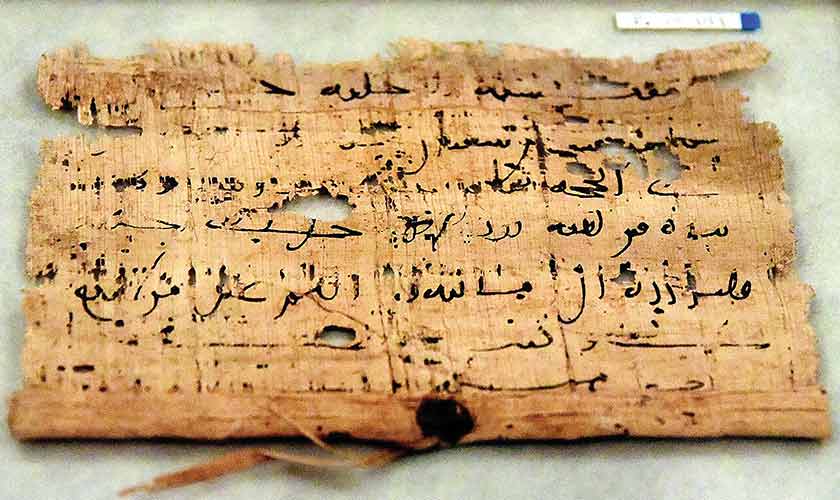
There is a story to the relationship between literature and memory. The first chapter of this story predates the invention of writing and the recording of literature on clay tablets or papyrus. The world’s oldest literature is oral literature. Its form is poetry. Poetry, according to the German philosopher Georg Hamann, is the mother tongue of the human race. Poetry has transferred the music flowing in human existence and the cosmos into words. This music is deeply connected to human memory. A thought cannot preserve its original form in our memory, but a thought moulded into verse achieves eternity in human memory. Poetry is humanity’s great triumph against ordinary forgetfulness.
Homer’s Odyssey and Iliad, the four Vedas of Hinduism, the Mahabharata, the Ramayana, Panini’s Ashtadhyaya (the first book on grammar in the world), the Zoroastrian Avesta and One Thousand and One Nightswere all remembered by heart; they were orature. They were written down later, becoming literature. Some even say there was no single Homer but many, and that the word Homer also means ‘to tell.’
It is astonishing today to imagine that such long narratives and thousands of verses were memorised. The reason is simple: these stories were not a burden on the memory. They were the products of collective memory, helping people carry the burden of life, understand both its meaning and its absurdity, and navigate both. These stories were an inheritance;a living, breathing one.
Deciding what to remember and what to forget has been one of life’s most crucial decisions. It is, in a way, the decision that determines one’s personal and national destiny. In ancient times, this was decided by prophets, sages, philosophers, religious leaders, priests, tribal chiefs and storytellers. (In our time, this role is played by writers, intellectuals, the media, and educational or state discourses). They would rewrite and re-edit old tales. As these stories passed from the memory of one generation to the next, they transmitted not just a tribe’s identity, but also a complete worldview, a moral system and a framework of aesthetics. There was no discontinuity or rupture in the memory.
The digital fracture
The invention of writing began to create a fracture in memory, though writing also took upon itself the responsibility of filling that gap. Writing has attempted to apply a balm to the wound it inflicted. Previously, the prevailing sentiment was that memory is not a dark, damp warehouse of clutter, but a creative and effective reality active in the present. In Plato’s dialogue Phaedrus, it is recorded that Socrates warned that people would stop using their memory because they would rely on the written word. They would forget their inner self to remember things, looking only outward. Socrates’ prediction is coming true. Today, we mostly look outward, having forgotten the interior. Today, our memory (especially for Gen Z) resides not within us, but in our pockets, in our cell phones.
The cell phone has become a locker not just for our memories, but also for our knowledge and treasures of every kind. We are forgetting everything else, remembering only to protect this locker and its code. We suffer from a deep fear: if the phone is lost, our entire memory is lost. Today, losing a phone is not just the loss of an expensive object; it is the trauma of losing a repository of memories. This reminds one of the Insomnia Plague in Gabriel GarcíaMárquez’sOne Hundred Years of Solitude, where the people of Macondo begin to forget the names and uses of things. They stick labels on objects, tagging a cow with a note: “This is a cow, you must milk it to drink.”
Imagine if that tag, or the cow itself, were lost?
The fear of losing written memory is far greater than the fear of losing oral memory.
This problem of vanishing and re-emerging memory led Kazuo Ishiguro to write The Buried Giant, where the people of an entire region forget their past. The government ensures this forgetfulness, so people forget the bitterness of past wars. But, they then experience a new kind of bitterness when their memories are restored.
This is external
interference in
memory; its
consequences are
harrowing.
A tradition regarding the first meeting between Rumi and Shams Tabrizi reflects Socrates’ point. In one version, Rumi was sitting by a pond with books before him. Shams asked what they were. Rumi replied, “This is mere talk (qil-o-qal); what is it to you?” Shams threw the books into the water. Rumi was grieved, lamenting the loss of irreplaceable knowledge. Shams reached into the water and pulled the books out, completely dry. Rumi was astonished. Shams said, “This is the ‘state of being’ (alam-i-haal); what do you know of it?” There are two fundamental points here: First, mere talk(qil-o-qal) relates to the word written on paper, while “the state of being” (haal) relates to what is inscribed on the heart—the living memory. Knowledge is what becomes part of a living memory andinforms all one’s affairs. Second, the pond from which Shams retrieved the books was the reservoir of his memory. According to Rumi: Sanduq-i-her bahunar, seena-i-oost (The chest of every skilful man is his casket.) The treasure of a master is his heart (memory)—not the one that merely stores data (declarative memory), but the memory that keeps meaning and values alive.
Colonialism and the cultural battlefield
The transition from orature to literature was a monumental event in human civilisation. Written literature has not only preserved human memory but has also expanded it infinitely. One could even say that written literature is a magnificent collective struggle against human forgetfulness and the destructive power of time. We must also acknowledge that it is the written literature that gave birth to the concept of world literature. This world literature is like a grand feast, where you can select any scrumptious dish according to your own will, taste and preference. However, all this written literature is an external memory or an exo-cortex; one must establish a deep, heartfelt connection with it.
The challenge lies in turning this external memory into an internal and spiritual one. We read thousands of books, yet only a few manage to become a part of our living, inner memory. We all have inner memory that is seldom discussed. It has two sides: one luminous, the other dark. The luminous side is a kind of unseen one within the human being, a herald of deep silence. Here, forgotten truths are preserved like points of light; and our highest feelings and dreams reside. Within the dark recesses of inner memory, many turmoil, uproars, haunts and monsters lie hidden. Memory was maligned in the modern world. Instead of distinguishing between different types of memory and understanding their unique roles, memory was dismissed as rote learning and deemed an enemy of critical and creative faculties. Rote learning is a mechanical process, our declarative memory. It is a minor part of memory that should be given its due importance. The greater part of memory preserves the experiences that our imagination utilises and upon which we apply our intelligence and critical thinking. A limited memory inevitably limits the imagination.
It would not be wrong to call the modern era an age of the reconstruction of memory. In this era, some discarded the past and tradition as an unbearable burden, accepting in exchange loneliness and the responsibility of creating their own meaning. Elsewhere, certain elements of tradition were selected while others were rejected. In some instances, the memory of the past was called an agony: Yaad-i-maaziazaabhaiYa-rab / Chheen laymujh sayhaafizamera (Memory of the past is an agony, O Lord! / Strip me of my memory). The process was systematically initiated by colonialism. They discovered human memory as a vast treasury. This is why they collected the myths, parables and oral tales of Asia, Africa and Latin America; they compiled the grammars of their languages, standardised their scripts and wrote their histories for them. This was an attempt to access the semantic memory of the local people. Through the colonisation of memory, the souls of the locals can be reconstructed. To achieve this, their myths, stories and history were removed from their curricula. They were instead given the stories of the white world. At the end of the 19th Century, Akbar Allahabadi captured this sentiment:
Chhorr literature ko, apni history kobhoolja / Sheikh-o-masjid sayta’alluqtarkkar school ja / Char din kizindagihaikoft saykiafayda / Kha double-roti, clerkikar, khushi sayphoolja
[Leave literature, forget your history. Sever ties with the sheikh and the mosque, go to school. Life is but four days, why seek a headache? Eat bread, do your clerical job and swell with joy]
The living wound
The struggle against the colonisation of memory also takes place on the field of memory itself. True freedom is the freedom of memory. Thus, in the words of Iqbal, the entire life story of a colonised person becomes a khowayhuwonkijustaju (search for the lost ones.). According to the African novelist Chinua Achebe, accounts are settled through stories, a balance of stories. One’s disgraced stories and lost cultural symbols are reclaimed. One’s lost memory is restored and balm is applied to the wounds inflicted upon that memory. The civilisational soul is reconstructed. But this is never easy. I am reminded of Mushafi:
Mushafi hum to yehsamjhaythaykehhoga koi zakhm / Tairaydilmein to bahutkaamrafukanikla
[Mushafi, I thought there would be a single wound. But your heart turned out to need a great deal of darning]
The freedom of memory is far more difficult than political freedom. Human memory is not a slate where one can erase one text and write another at will. Reconstructing a collapsed memory is no easy feat. Literature, in its effort to liberate memory from colonial constructs, rewrites old local tales in a new style and in the language of the contemporary era. It fills the cracks that have appeared in the cultural soul. Literature uses memories to expand the imagination, not to restrict it. Migration, exile and homelessness have produced a vast treasure of memory-based literature. First, a person lives in houses, settlements and cities; then, all these places live inside the person. A house that makes a home inside a person is never desolate or silent.
Ek anokhi basti dhyan
mein hai
Isbasti kay baasi mujhay
bulatay hain
— Nasir Kazmi
[A strange settlement is in my thoughts.The inhabitants of that settlement call out to me]
Tamam khanabadoshon mein mushtarik hai yeh
baat
Sab apnay apnay gharon ko palat kay dekhtay
hain
— IftikharArif
[All nomads have this one thing in common. They all look back at their respective homes.]
If human memories are a settlement, then the one house that is always smouldering, from which smoke always rises, is named trauma. Personal and collective traumas cannot be forgotten. In the words of Mian Muhammad Bakhsh: Kis sang pholandukhsajan day, soolhaddanvichwariya (With whom can I share the pain of the beloved? This agony has entered my bones). Trauma is like a deep wound in the bones. Trauma screams, yet those responsible for it impose silence upon it. There were countless experiences of trauma in 1857, 1947 and 1971 that were silenced in history that Ghalib, Manto, KrishanChander, Bedi, QurratulainHyder, IntezarHussain, Abdullah Hussain and MustansarHussainTarar wrote about. Palestinians are passing living through similar trauma today, but they know that even if one falls silent, the story of their pain must not. If the story remains, the person remains on the map of memory. I conclude with RefaatAlareer’s poem, If I Must Die:
If I must die, you must live to tell my story.
* This is a slightly edited English translation of the writer’s keynote speech delivered at the 17th edition of OUP’s Karachi Literature Festival concluded recently. The speech was originally written and delivered in Urdu. Translation from Urdu to English has been done by the writer.
The writer is a Lahore-based critic and short story writer. He edits LUMS’ Urdu journal Bunyad. Mera Daghestan-i-jadeed is his latest book.