Print Story
X




A ban on musical performances in KP’s educational institutions reignites debate regarding the place of culture in modern education
| T |
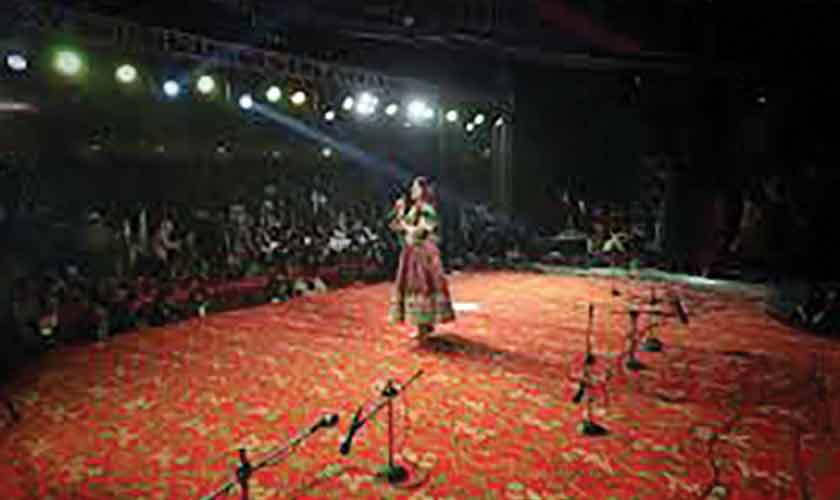
he government of Khyber Pakhtunkhwa recently issued a circular banning musical and theatre performances in educational institutions across the province. The stated rationale was rooted in concerns about morality. Officials argued that such activities carried greater social risks than benefits, particularly due to fears of interaction between male and female students. The directive has revived longstanding debates about culture, education and the role of the arts in Pakistani society.
While the order may appear sudden, it follows a familiar pattern. Periodically, provincial authorities — in KP but also in the Punjab — have introduced restrictions on extracurricular activities in response to perceived moral or cultural alarm. Often these measures are triggered by reports of isolated incidents or by public pressure framed through religious or social critique. In some cases, governments have softened or temporarily suspended such directives following criticism, yet the underlying policies are rarely formally withdrawn. As a result, they leave behind an enduring suspicion about the legitimacy of artistic expression in educational settings.
The targeting of music and theatre is not new. Cultural performance has long been vulnerable to political and ideological shifts in the region. During the rise of the Taliban in Afghanistan in the mid-1990s, artistic activities faced significant suppression. Its effects were also felt across the border. Later, in the early 2000s, the Muttahida Majlis-i-Amal government in the KP imposed similar bans on cultural performances. These policies contributed to a steady migration of artists between Pakistan and neighbouring countries over the past three decades, as performers sought environments where their work could continue without restriction.
This history is particularly striking given the region’s cultural legacy. The KP and surrounding areas have produced some of the subcontinent’s most celebrated actors, musicians and performers. Yet many of these figures achieved recognition beyond Pakistan’s borders, often because creative growth required an open and supportive environment. For artists, restrictive social norms and recurring official prohibitions have sometimes limited opportunities for development at home, encouraging relocation to places perceived as more receptive to artistic expression.
The debate over extracurricular activities also intersects with broader social transformations, especially regarding women’s participation in education and public life. Compared with the years immediately following independence in 1947, access to education for women has expanded dramatically. Today, female students frequently secure top positions in academic examinations and increasingly enter professions once considered exclusively male domains. Their contributions across fields – from medicine and law to media and public service – reflect profound shifts in social expectations and aspirations.
However, progress has not always been accompanied by universal acceptance. While women’s participation in education and professional life has grown, certain elements in the society remain hesitant to fully embrace these changes. Reservations rooted in traditional interpretations of gender roles continue to shape public discourse. Policies restricting cultural activities, particularly those involving mixed-gender participation, are frequently interpreted in this context of unease about evolving social norms.
Compared with the years immediately following independence in 1947, access to education for women has expanded dramatically.
Critics argue that framing artistic expression as a moral threat risks overlooking the educational value of creative engagement. Music and theatre can foster critical thinking, collaboration and emotional expression, qualities widely recognised as essential components of holistic education. For many students, extracurricular activities provide a structured environment in which to develop confidence and communication skills, complementing formal academic learning. Restrictions, therefore, raise questions about whether educational institutions are narrowing the scope of student experience rather than protecting it.
The current debate also reflects deeper historical currents. Over the past four decades, Pakistani society has grappled with the consequences of adopting increasingly conservative interpretations of culture and religion within political and social frameworks. Policies justified as temporary expedients have sometimes left long-lasting effects on institutions and public attitudes. Observers note that repeated cycles of restriction followed by partial relaxation can create uncertainty, discouraging sustained investment in cultural initiatives and undermining the stability of artistic communities.
Supporters of stricter regulations argue that governments have a responsibility to respond to public concerns about morality and social cohesion. Yet critics counter that blaming women or the arts for perceived societal decline risks simplifying complex social challenges. They suggest that focusing on prohibition rather than engagement may overlook opportunities to address underlying issues such as educational reform, youth development and cultural dialogue.
At the heart of the controversy lies a question about the direction of society. As Pakistan continues to navigate rapid social change – driven by demographic shifts, technological transformation and expanding educational access — the balance between tradition and modernity remains contested. For some, restrictions on cultural expression represent a defence of established values. For others, they symbolise resistance to evolving realities that demand new forms of understanding and adaptation.
Whether the recent circular will remain in force or follow previous directives into partial retreat remains unclear. Past experience suggests that public debate, institutional pressure and practical challenges often shape the implementation of such policies over time. Meanwhile, each new restriction contributes to an ongoing conversation about identity, creativity and the role of education in shaping the next generation.
Ultimately, the controversy surrounding the ban on music and theatre performances reflects more than a policy dispute. It highlights tensions within Pakistani society about gender, culture and the purpose of education itself. As stakeholders continue to debate the merits of such measures, the outcome may influence not only the future of artistic expression in educational institutions but also the wider trajectory of cultural life in the country.
The writer is a Lahore-based culture critic.