Print Story
X




Washington, Tehran hold talks as US warships approach the Persian Gulf
| T |
he US and Iran are edging closer to talks, but doubts linger. A history of US interventions, entrenched geopolitical rivalries and tactical mistrust have bred scepticism on both sides. Can they break the mould and find common ground?
The US approach, marked by an unpredictable and fluctuating strategy, has eroded its credibility as a reliable negotiating partner. In Venezuela, calls for peace were followed by Maduro’s seizure. With Iran, the US abandoned the JCPOA to pursue a highly controversial policy. More recently, it attacked Iran in June 2025 while talks were going on in Oman. Trump’s public stance doesn’t necessarily mean he’s open to finding a middle ground on nuclear enrichment or ballistic missiles.
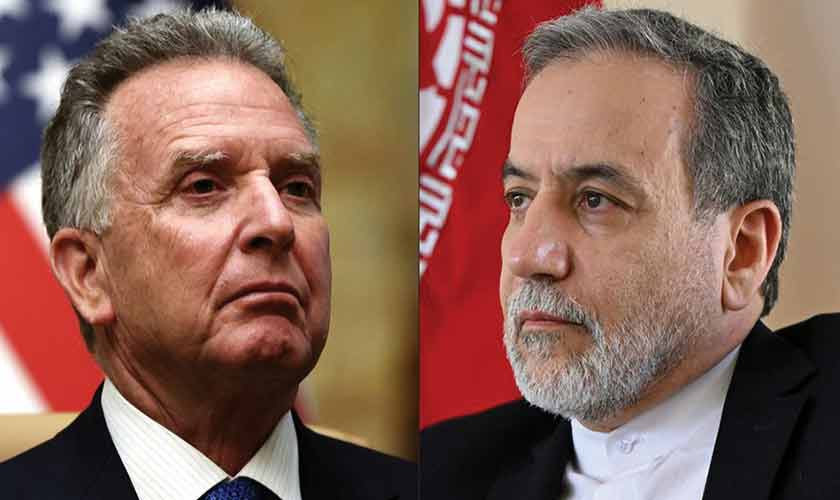
Despite the bleak scenario, Pakistan’s former ambassador Abdul Basit says the proposed talks can ‘ultimately’ be turned into a win-win situation for both the US and Iran. He says the latter could possibly agree to a moratorium, say 10 years of no nuclear enrichment. It could similarly agree to certain adjustments in the number and range of ballistic missiles. The JCPOA template can be refined to suit the present-day requirements, he says.
“With Israel lurking in the region and given the Trump factor, permanently giving up on nuclear enrichment and the missile programme is out of the question for Iran,” Basit argues. “If diplomacy is given a chance, Iran may agree to curtail the number and range of missiles given that a lot of fence mending has taken place with the Arab neighbours who are no more seen as its nemesis. Iran may be prepared to reconsider missile configurations initially meant for them.”
“Tehran, however, will require some face-saving for domestic reasons. This should be perfectly fine.”
On the issue of regional proxies, Basit says: “There has been a sea change in the wake of October 7, 2024, Hamas attack. Syria, Iraq, Hamas and Hezbollah no longer represent a serious threat to Israel. “Iran can reach some tacit understanding regarding Hezbollah,” he says.
Regarding the already enriched fissile material, a solution around the lines of the Abu Dhabi Consortium can be replicated so that Tehran would keep getting the fissile material for its requirements, Basit argues.
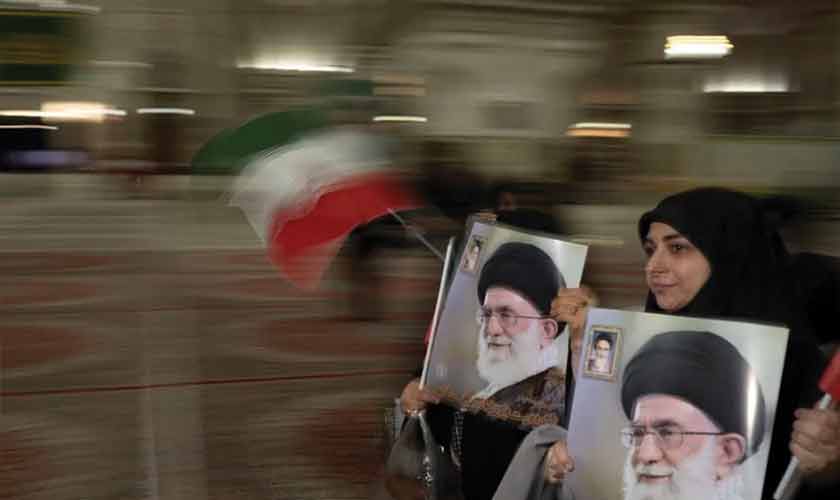
Former ambassador to Iran, Asif Durrani, reflected in the Ambassador’s Lounge: “A potential path to de-escalation is available if Iran can publicly and verifiably reaffirm the pledge by Supreme Leader Khamenei against nuclear weapons.”
However, Iran’s experience with the US has left it wary. From Iran’s perspective, the US withdrawal from the JCPOA and the “maximum pressure” campaign as well as continued threats from Israel validate its stance that a robust deterrent capability is inevitable for regime survival. Iran justifiably questions how it can trust security guarantees from nations that have consistently threatened it.
This complicates a compromise, Durrani argues: “Israel’s primary concern is not merely a nuclear device but the combination of a nuclear weapon with Iran’s advanced ballistic missile programme. If a revived agreement can ensure Iran’s missiles remain conventionally armed—it could provide a foundation for negotiation. This will also address Israel’s most critical security concern.”
“Alongside, the Iranians want real sanctions relief and a real “promise” that the United States will not attack them. So, a kind of cessation of hostilities, sanctions relief and assurances from the United States that it would not renege on the deal will address concerns of all sides,” says Durrani.
“Given the deep-seated concerns, the stakes are high for both sides. A failure to reach an agreement could have ominous consequences for all parties. Iran or its allies may retaliate against US bases in the Gulf states. Bahrain, hosting one of the largest US bases in the region, could bear the brunt, apprehends Basit.
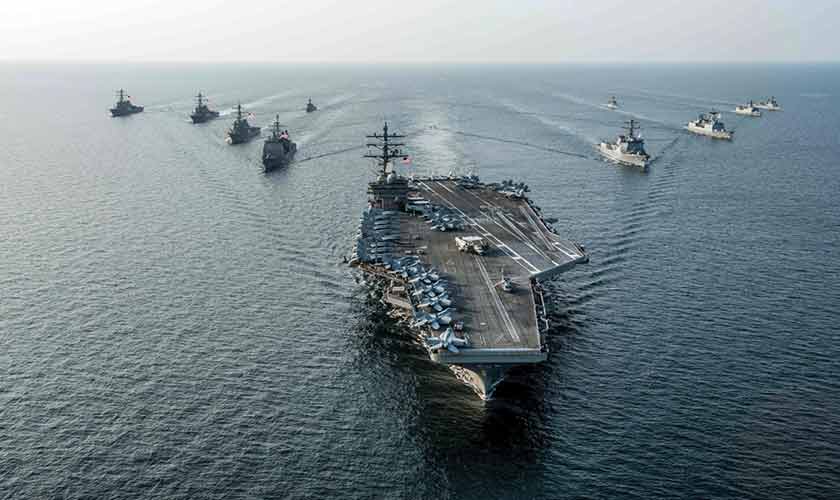
This essentially explains why despite deploying naval armada to the Persian Gulf and Trump’s warning of consequences if a deal isn’t reached, serious force has not been used against Tehran so far. Durrani says: “There’s a strategic reason behind Trump’s restraint. US is aware that Iran can cause significant damage to the US and might trigger a wider regional conflict.”
Iran’s past experience with the US has left it wary. From Iran’s perspective, the US withdrawal from the JCPOA under the “maximum pressure” campaign and continued threats from Israel validate its stance that a robust deterrent capability is inevitable for regime survival. Iran justifiably questions how it can trust security guarantees from nations that have consistently threatened it.
Of late, “Iran has shown that it can absorb US-Israel attacks. The same cannot be said Israel-US,” he says. During the June war about 20 percent of Iran’s missiles went through the multiple-layer Iron Dome and hit Tel Aviv and Haifa. Now, the United States has deployed 35,000-50,000 US personnel in closer proximity to Iranian missiles. “Not only do they remain in Iranian cross hairs; in a desperate scenario, Iran can also choke the Persian Gulf the way it did in 1980 and in 2019,” when the US withdrew from JCPOA. Such an action would send profound shockwaves through the global economy. The resulting energy crisis and market volatility could have a cascading effect, rattling financial markets and creating significant economic instability worldwide. “This will have a prohibitive cost for both the US and Israel,” says Durrani.
The regional landscape adds another layer of complexity to the situation. The Gulf states and Pakistan have refused to allow their territories to be used against Iran.
Chinese or Russian support to Iran will be calculated and limited. “China and Russia are likely to provide Iran with defensive weapons and economic support rather than engage in direct military confrontation or supply arms that risk severe retaliation by the US. This approach will allow them to counter US influence without escalating conflict,” says Durrani.
Meanwhile, Iran faces significant internal challenges, including widespread protests and economic hardship. Some observers say that Iran is at an inflection point. At the same time, now is also a pivotal juncture for the United States. A major conflict in the Middle East will not only shape the legacy of the Trump administration but could also profoundly affect America’s strategic priorities—including its approach toward China, its relations with Europe and its handling of numerous global challenges.
Precisely because the potential for such a destabilising conflict is so high, a pragmatic focus on Iran’s internal stability becomes not just a domestic issue for Tehran, but also a matter of urgent international security. Basit says the Iranian government should shift its focus toward addressing the critical domestic crises of rampant inflation and acute water scarcity.
A continued preoccupation with external pressures, at the expense of these foundational economic and environmental challenges, serves only to prolong the duress on the Iranian people—an outcome demonstrably against the state’s own long-term stability and interests. Ultimately, Basit’s position frames this not merely as a policy choice, but as a strategic imperative for national resilience. Allowing foundational domestic crises to fester can undermine long-term stability, creating vulnerabilities that far outweigh any perceived benefits of an exclusively external focus.
The street protests seem to have subsided but they were a significant expression of public discontent. The economic woes can be attributed to mismanagement and impact of severe US sanctions that have exacerbated the domestic challenges. However, the widespread public disillusionment with Iran’s regime has not yet given rise to a unified opposition movement.
Durrani says alternatives such Reza Pahlavi or the Mujahideen-i-Khalq lack popular legitimacy, remain fragmented, weak and organisationally unprepared to assume power. Instead, he is of the view that political expression occurs within the revolutionary system, as seen in the recent election of moderate President Pezeshkian over hardline conservative Raisi. “This constrained but meaningful alternation of power provides an outlet for societal pressure and reflects limited political progress.” The lack of viable political leadership has crystalised the perception among the citizens that without a credible and inclusive Iranian alternative, overthrowing the current system could lead to chaos, civil war or foreign intervention like Libya, Iraq and Syria.
“Elements in the White House would be watching with bated breath. If the current regime falters, the resulting power vacuum could lead to instability that runs counter to long-term US interests. While, this might offer a short-term strategic advantage to Israel, it will likely sabotage its long-term security interests,” says Durrani.
The ball remains in the US court. Regional instability will be to Israel’s disadvantage, warns Durrani.
Regional stability typically creates more favourable conditions for diplomacy and peaceful resolution of conflicts. Persistent chaos tends to exacerbate tensions and reduce opportunities for constructive engagement, Durrani says.
The US-Iran dynamic is a complex web of competing interests and deep-seated fears. Navigating this complexity will require strategic patience and a willingness on all sides to compromise.
The writer is a senior The News staffer in Karachi.