Print Story
X




While the city administration has set strict standard operating procedures to safeguard lives, the first 48 hours of the three-day festival have already tested the limits of enforcement
| A |
fter a two-decade hiatus, the skies of Lahore are once again dotted with colour. Following the Punjab government’s decision to lift the long-standing ban on the spring festival, citizens are celebrating Basant with a familiar zeal. However, the festivities remain shadowed by a familiar fear: the lethal legacy of the chemical string.
While the city administration has set strict standard operating procedures (SOPs) to safeguard lives, the first 48 hours of the three-day festival have already tested the limits of enforcement. Despite the Lahore Police claiming to be on high alert, over two dozen people — including several children — have reportedly been injured in kite-related incidents, raising urgent questions about the efficacy of the ban on manjha (chemical-coated twine).
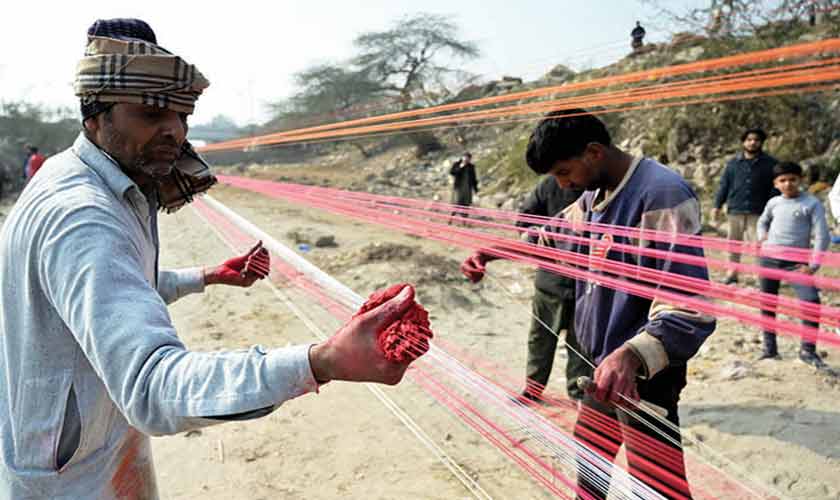
For many, the sight of crowded rooftops and the roar of Bo-Kata represents a reclaimed identity. Basant was never just a pastime; it was a communal ritual that cut across economic divides. The tradition did not disappear without reason. The commercialisation of the sport introduced metal wires and chemical strings that turned the sky into a hazard, causing fatal throat-slittings, power outages and infrastructure damage.
“By imposing a blanket ban years ago, the state transformed a cultural challenge into a law-and-order issue,” says Raja Zulqarnain, an advocate of the Supreme Court. “Rather than addressing the causes — unsafe materials and poor oversight — the response was to eliminate the practice. This placed the police at the forefront of managing what should have been a regulated activity, not a criminal one.”
| T |
he Lahore Police are currently caught between facilitating a celebration and enforcing a crackdown. Speaking to TNS, Farhan Ali, spokesperson for the CCPO Lahore, emphasised that “zero tolerance” is the order of the day.
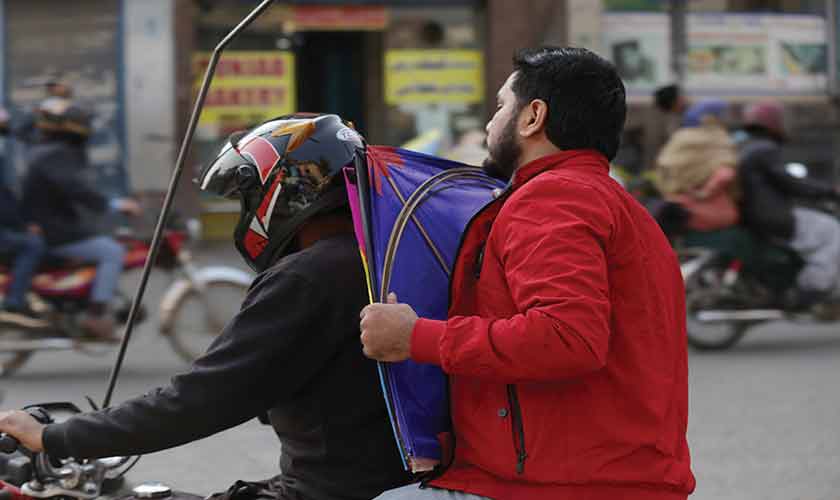
“Saving citizens’ lives is our priority,” he stated. “Before the festivities began, we launched a rigorous campaign to install safety rods on motorcycles and distributed awareness pamphlets.”
The scale of the crackdown is significant. According to Ali, 1,078 cases have been registered this month alone. 1,115 individuals have been arrested for violating kite-flying laws. Over 133,000 kites and 3,000 spools have been seized.
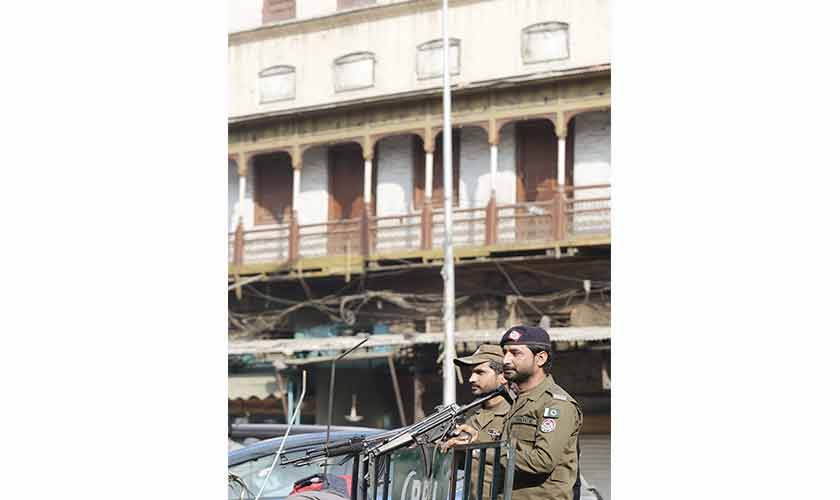
To monitor the city’s labyrinthine streets and high-rise rooftops, the police are utilising drone technology and CCTV feeds from the Safe City Authority.
Despite these efforts, social activists argue that policing is a band-aid on a deeper governance failure. Maryam Mamdot, a prominent social activist, says that while the tragedies associated with Basant were “real and devastating,” the state’s reliance on prohibition reflected a lack of imagination.
“Safety and culture are not inherently incompatible,” she says. “Societies worldwide adapt traditions through regulation. We failed to explore certified materials, licensed vendors or designated flying zones, opting instead for eradication.”
The economic toll has also been heavy. The disappearance of Basant decimated a seasonal economy that supported thousands of artisans, string-makers and small vendors.
As the third (and final) day of festivities approaches, the tension between nostalgia and public safety remains taut. For the Lahore Police, the challenge is to prevent casualties; for the citizens, it is to prove that they can celebrate without turning a festival into a funeral.
For now, the triumph of Basant’s return remains as fragile as the kites drifting over the Walled City.
Ahsan Zia is a print and broadcast journalist