Print Story
X




Faiz’s afterlife reveals how culture continues to negotiate space in Pakistan
| W |
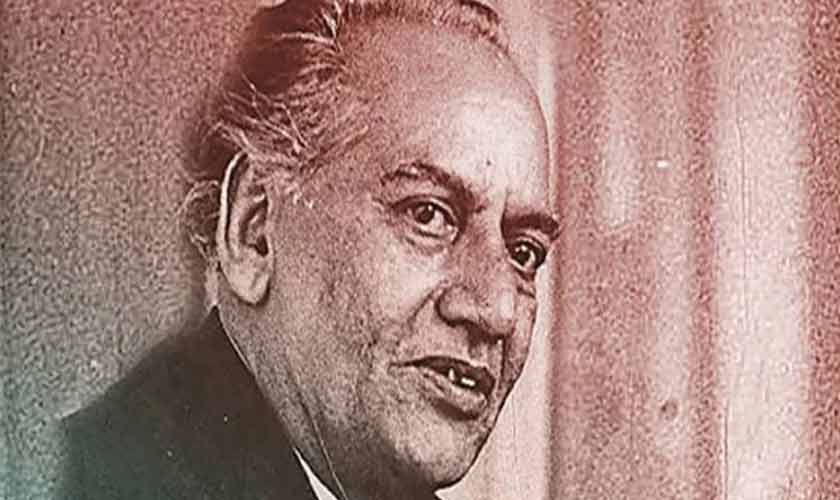
hen Faiz Ahmed Faiz passed away in 1984, a quiet but telling decision followed. Instead of marking his death anniversary every November, it was agreed that his birth would be celebrated in February, a symbolic shift that said as much about our cultural discomfort with dissent as it did about our reverence for poets. In Pakistan, remembrance has always been an uneasy negotiation between grief and celebration, between silence and song.
Death anniversaries here are rarely subdued. In the Sufi tradition, they are marked as urs, a union with the divine. Among musicians, they become barsis, occasions to sing not only in memory of the ustad but to keep the practice of live performance alive. These rituals are not about mourning alone; they are acts of continuity. To remember is to perform, to recite, to gather; to insist on presence.
The state’s relationship with literary memory, however, has followed a different rhythm. For decades, the death anniversary of Muhammad Iqbal was observed with a public holiday. Conferences were organised, speeches delivered and reverence performed with near-military discipline. Iqbal was praised as poet, philosopher and political visionary, the man whose dream culminated in Pakistan. Admiration often eclipsed critique. Evaluation gave way to adulation.
Later, the commemorative focus shifted from Iqbal’s death to his birth. Even that transition was uncertain. His exact birth date had been unclear, a reminder that he was born in a time when births took place at home and records were sporadic, especially for those who were not yet famous. Eventually, November 9 was fixed as his birthday and declared a holiday, though that status, too, has since been withdrawn. Today, it remains an annual guessing game whether the day will be marked officially or pass quietly, unacknowledged.
Faiz was never afforded that honour. Branded a communist, he became a persona non grata in his own country. Yet, Faiz survived in private collections, in handwritten notebooks, in recordings carried across borders. His name endured abroad. He returned home only intermittently, most notably when the Pakistan Peoples Party was in power, when he became just legitimate enough to appear on radio, television and in newspapers.
It is against this history of erasure and return that the Faiz Festival must be understood. What began as a modest act of remembrance gradually evolved into a template, one that would be emulated across the country. Today, Pakistan hosts a proliferation of festivals dedicated to literature, theatre, music, film and ideas. In a country where books are often printed in small numbers and readership remains limited, these gatherings respond to a different hunger: the desire for proximity. People want to see writers speak, hear poets read, watch musicians perform, to encounter art not as an object but as a presence.
Early years of the Faiz Festival were particularly luminous. Performances by Iqbal Bano remain etched in collective memory, her voice defiant and tender in equal measure. Poets such as Ali Sardar Jafri, Kaifi Azmi and Majrooh Sultanpuri shared space with critics like Shams-ur Rahman Faruqi. Filmmakers including Muzaffar Ali and Deepa Mehta appeared alongside actors such as Naseeruddin Shah, Shabana Azmi and Nandita Das. These were not merely performances; they were acts of solidarity across borders made increasingly harder by politics.
In Pakistan, the performing arts have long existed under threat. Expression is routinely challenged in the name of morality, religion or national security. Censorship, both formal and informal, has shaped what can be said, sung or staged. In this landscape, festivals offer a rare counter-space, temporary zones where speech loosens, where art breathes more freely. For a few days, the air feels less constricted.
That such freedoms, once celebrated as milestones of human progress, are now being questioned, even discarded, is not unique to Pakistan. Across the world, expression is increasingly framed as disruptive and inconvenient, even dangerous. All the more reason, then, that festivals in countries like ours must be protected and valued. They are not indulgences. They are safeguards.
Celebrating Faiz in February rather than mourning him in November was never just a scheduling choice. It was a quiet insistence on life over silence, on birth over erasure. In a culture where memory is often curated by power, festivals remain one of the few places where remembrance can still be reclaimed, collectively, critically and aloud.
The writer is a culture critic based in Lahore.