Print Story
X




The current border closure is causing a monthly loss of around Rs 50 billion. Border area traders and farmers are bearing the brunt of this loss
| T |
he disruption or border trade between Pakistan and Afghanistan has entered its most uncertain phase, wreaking havoc on the fruit trade in Khyber Pakhtunkhwa. The situation has become a severe challenge for farmers, traders and consumers. The region’s fruit industry is bearing the brunt of the conflict.
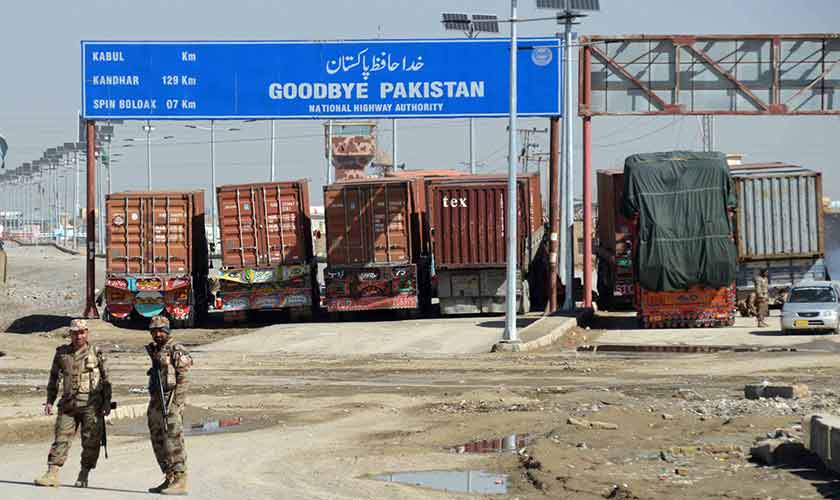
Unlike some other commodities. e.g cement or steel, fruit has a short post-harvest life. The countdown begins the moment it is harvested. Delays in transportation or border crossing disruptions can cause serious degradation of quality. For traders and farmers in Khyber Pakhtunkhwa, this translates into significant losses. Pakistan-Afghanistan Joint Chamber of Commerce has reported that 10,000-12,000 containers are stuck at key border crossings. This disruption has resulted in losses estimated at Rs 50 billion per month (about $6 million a day).
The border crossings at Torkham in KP and Chaman in Balochistan have been closed for trade since October 2025 following rising cross-border tensions and security concerns. The impact on trade, especially in perishable goods like fruit, has been catastrophic.
When the border route is unreliable, surplus fruit follows one of three paths. First, many consignments are trapped in the supply chain, with trucks waiting at crossings for clearance. The shipments don’t reach their destinations on time.
Second, fearing further uncertainty, many traders choose to sell fruit quickly in wholesale markets in KP or other domestic markets. This leads to an over-supply of fruit in local markets, pushing prices down and leading to financial losses.
Third, for consignments that don’t make it even to the local markets, the inevitable result is waste. The degradation starts soon and the fruit loses its export-grade quality, transitioning from premium to second or third grade. In the end, it becomes unsellable. Even small delays can render fruits like grapes, peaches and plums worthless. Apples and citrus have a slightly longer shelf life but are still vulnerable.
The fate of fruit largely depends on storage. Without proper facilities, soft fruits deteriorate rapidly, especially when transportation and handling are poor. Cold storage, however, is a partial solution. It comes at a cost, requires reliable electricity and needs careful handling. In a crisis, the availability of cold storage becomes a significant bottleneck. Some businesses are able to store their products, but others cannot. The spoilage occurs in several stages, with quality decline being visible first—softness, bruising, and skin damage—before the fruit eventually rots and is rejected.
Every disruption of border trade causes avoidable misery. A crate of fruit stranded at a crossing ends up decayed, dumped or lost. This represents a loss for everyone involved.
The loss caused by the border trade disruption stretches across the entire supply chain. Farmers lose because they are forced to sell their produce at reduced prices, sometimes at a loss, after having invested in labour, packaging and inputs like fertilisers and pesticides. Traders suffer when goods get stuck in transit and the capital is tied up in shipments. This makes it harder for them to continue their business. Transporters lose out as trucks sit idle for days, missing trips, increasing indirect costs and reducing incomes. Daily-wage workers involved in loading and unloading are also hit by the slowdown in operations.
Two terms have gained prominence in discussions of the crisis: demurrage and detention. Demurrage refers to the daily parking fee for containers left too long at a port terminal; detention is the fee for not returning containers on time. These charges continue to accumulate as shipments remain stuck, escalating the financial strain on businesses.
Trade bodies estimate that the overall economic damage from these disruptions has already crossed $4.5 billion. Demurrage and detention fees are rising rapidly. In some cases they reach $150 to $200 per container per day. Exporters alone are losing around Rs 50 billion per month, or about $177 million.
This crisis has also caused disruptions in the local markets. In areas where fruit is produced, prices have fallen because there is an oversupply of produce that needs to be sold quickly. But consumers don’t always benefit from this. Irregular supply to cities causes transportation risks and raises costs. In some markets, fruit prices remain high; in others, cheaper fruit floods the market, often with lower quality.
Both consumers and producers feel the squeeze. Farmers complain that they aren’t getting enough for their produce, while consumers decry the high prices. This tension highlights the instability of the supply chain.
If the border remains closed or its operation is uncertain, the future seems bleak. More fruit will likely be diverted to domestic markets, driving the prices down. Downgrading and waste of soft fruits will continue. Irreversible market shifts may occur. Once buyers lose confidence in the Pakistan-Afghanistan trade route, they may find alternative suppliers. Regaining their trust will be difficult.
A crate of fruit stuck at a border crossing gets decayed or lost. This harms everyone involved.
The future of the fruit industry hangs in the balance. Both farmers and consumers are paying the price for a disrupted supply chain.
The writer is a freelance journalist based in Islamabad.