Print Story
X




The PML-N believes in putting development first. But will they have time to build a political narrative around it?
| T |
he political strategy of the Pakistan Muslim League-Nawaz government is to focus on governance and ignore ‘politics.’ This is not a secret either. It is an open dictum of Prime Minister Shahbaz Sharif’s. He believes that an elected government must, first and foremost, deliver on its campaign promises, particularly those related to development. Only after this has been accomplished, should the government leaders engage in the so-called ‘political’ issues and debates. The prime minister is famously of the view that civilian supremacy will never be achieved without politicians delivering better services and greater prosperity than dictators. In the meantime, he believes, they should work in collaboration with the establishment.
PML-N supremo Nawaz Sharif and his younger brother Shahbaz Sharif are famously united like body and soul. Yet, some observers have noticed and pointed out how their thinking patterns vary: the former has pursued civilian supremacy while the latter believes in collaborating with the establishment. It appears that after four decades of political ups and downs, it is Shahbaz Sharif’s strategy that is ruling supreme in Islamabad as well as Lahore.
Since the 2024 general elections, the PML-N, which is leading governments in Islamabad and Lahore, has held no party meeting or convention to take the party workers into confidence or to provide a counter-narrative to Imran Khan or his party, the Pakistan Tehreek-i-Insaf.
Insiders say that the PML-N will likely engage in traditional politics in the fourth year of their tenure. The idea is to complete substantial development and welfare projects to be able to put a show of good governance in three years; then, based on the work, to engage in full fledged politics—as we know it.
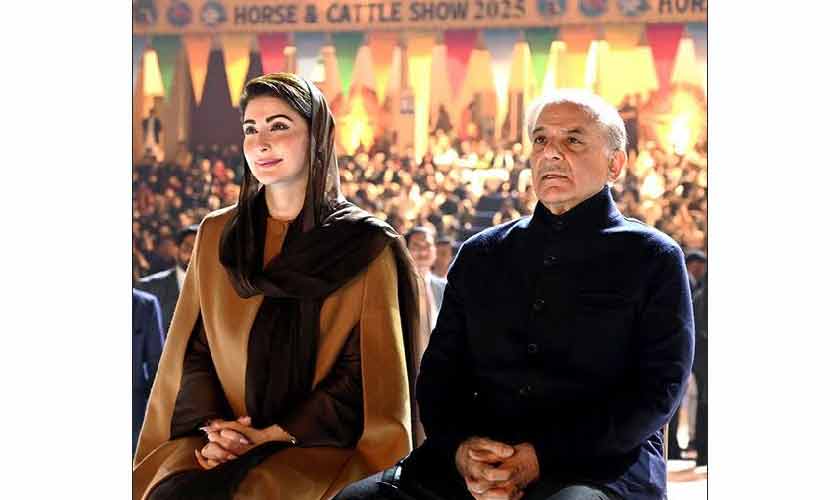
This would appear to be a sound political strategy. However, the current political system may lack the strength needed to support it. It may be noted that the average tenure of elected governments has been less than three years.
Chaudhry Parvez Elahi, a seasoned politician, understood this well. When he became the Punjab chief minister, he planned every project such that it could be executed within three years. This worked well for him and both Rescue 1122 and the traffic warden projects were completed within three years.
The Parvez Elahi example is also instructive with regard to the importance of building a political narrative. His party, the PML-Q, set new records for development work but was unable to attract voters in the sheer absence of political clout.
Chief Minister Maryam Nawaz, the first lady to have assumed the office, has launched more than a hundred projects in a very short span of time. A few of these—like the Suthra Punjab project and salaries for imams of mosques in the Punjab—have grassroots impact. However, the political landscape hasn’t changed one bit. It seems that political narratives cannot be countered through development work alone. The PML-N will need a strong narrative that is so far absent from the party’s strategy.
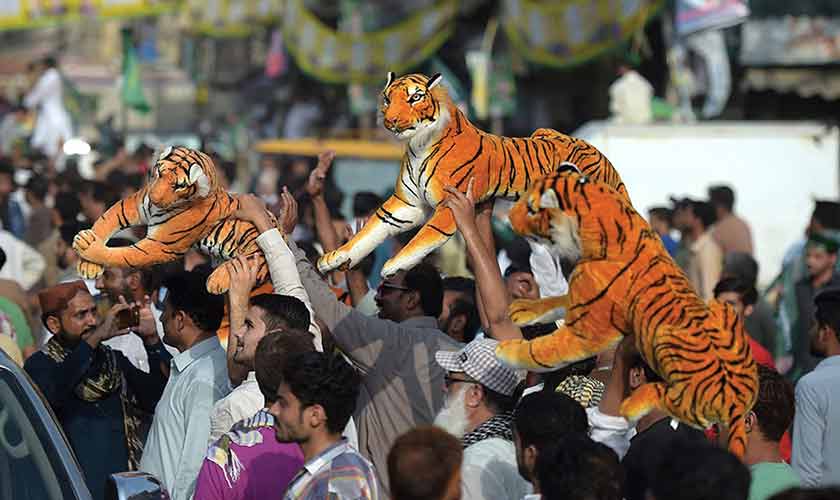
It appears that after four decades of political ups and downs, Shahbaz Sharif’s strategy is ruling supreme in Islamabad as well as Lahore.
Being a proponent of development-first strategy, Prime Minister Shahbaz Sharif has been focused on bridging the gulf between him and the establishment. He is trying hard to strengthen the relationship between him, the party and the powers that be so that they become inter-dependable. He has been deliberately playing down politics and focusing on governance alone.
So far, he has been able to keep his big ‘partner’ in the hybrid system happy. However, critics warn that this honeymoon period may end any time with an unforeseen turn of events. The first crack might appear once the dissatisfaction with the economy is publicly admitted. Eyebrows have already started rising over the economic stalemate; however, these concerns have remained restrained and not exceeded polite reminders.
The ideal situation for the PML-N will be a booming economy after three years of the hybrid set up; a recession in the PTI’s narrative; and the prime minister enjoying not just a firm hold on governance but also the confidence of the establishment. It is hoping to then initiate its ‘politics’ by drumbeating its economic and developmental achievements and capturing the imagination of voters.
However, there are many ifs and buts in the calculus including the relationship with the establishment; an economic turnaround and a political status quo.
The PML-N appears confident that elections will take place in three to four years’ time. It plans to defeat the PTI narrative through development while also strengthening its relationship with the establishment. The PML-N strategists believe that good governance and collaboration with the establishment will ensure the PTI’s defeat and a PML-N victory in the next elections. They believe that there is neither a need nor room for engaging in ‘politics’ in the first three years of their government.
Politics is an unpredictable and difficult arena. It has to deal with people’s aspirations and perceived deprivations, which are never satisfied easily. Experience has shown that development and narrative are equally important for a political government. Political narrative alone amounts to hollow sloganeering; development alone can be seen as a bribe.
Only governance wins laurels and only politics broadens public political networks. Only when both—governance and politics—work in unison, are they able to win hearts and minds.
The writer is Editor, Jang, Lahore, and a Geo TV anchor.