Print Story
X




A new loan buys one a little time, but it does not solve the problem
| T |
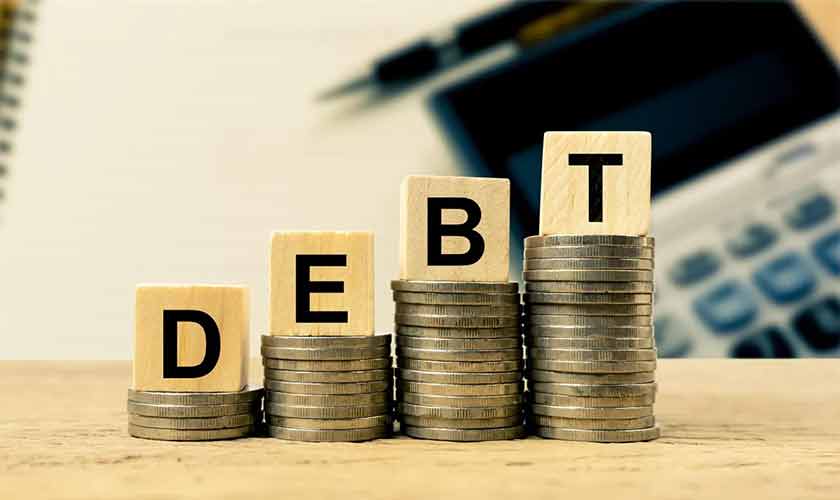
he headline landed like a credit card bill. You know exactly what you did, but you still hope the number will somehow be smaller. This time, it was not. The government plans to borrow roughly Rs 6.4 trillion this year, largely to service a public debt stock hovering around Rs 81.5 trillion. On paper, this borrowing is meant to meet financing needs. Actually, nearly 46.7 percent of the federal budget will go toward paying old bills. This is not development; it is oxygen on credit.
It is tempting to believe that we are borrowing to build something new, but the fact is hard to ignore. We are borrowing just to stay where we are. It is like making the minimum payment on a maxed out credit card and calling it a financial plan. The lights stay on, but the balance never really comes down. Pakistan has stood on the edge of default more than once, only to be pulled back by last minute emergency loans. The pattern is painfully familiar. We borrow more money to pay back what we already owe.
Rana Atif, MNA and former FESCO board member, a chartered accountant by training, put it bluntly: Pakistan accumulated nearly $200 billion in debt while GDP grew by $33 billion. His conclusion: w are in a debt trap. Academic researchers echo this concern, describing our approach to loans as easy come, easy go money. It is not a sign of progress. It is a symptom of policy failure. We have mortgaged tomorrow to make today look manageable. The only thing growing faster than our interest payments is our collective complacency.
The cost of this debt shows up in everyday life. Shahid Mehmood, an independent financial analyst, warns that when nearly half the budget is spent servicing loans, there is very little left for development, education, healthcare or infrastructure. This should worry every citizen, not just economists.
Hospitals running short of medicines are not just victims of poor management. Schools struggling with digital literacy are not simply dealing with unmotivated teachers. The rising price of vegetables at your neighbourhood vendor is not because farmers are underperforming. Behind all of this is our addiction to debt, a financial habit that keeps choosing short term relief over long term repair. If satire helps make the point, our national strategy increasingly resembles a sleep deprived student taking one more loan just to get through the semester. There is no accountability, no learning and no plan beyond survival.
Warnings have not been scarce. In 2023, Dr Hafeez Pasha said it plainly. Our reliance on expensive foreign loans has been disastrous. More loans will only deepen our problems in the long run. He was right then, and he is right now. External debt has doubled in just seven years. Instead of fixing the problem, we have simply shifted it inward, relying more heavily on domestic borrowing through banks, bonds and sukuk.
Spend where it builds capacity, not where it buys applause. Strengthen revenue collection, fix inefficiencies and be honest about the true cost of running a country. Until we do that, debt will continue to grow faster than development.
The IMF returns with unsettling regularity. Each tranche comes with conditions. Prices rise, utility bills climb and ordinary households are asked to absorb the shock in the name of stability. Families pay for this stability with thinner dinners and colder rooms in winter. We can argue about the pain, but the mathematics is unavoidable. The real question is why we keep buying time instead of fixing the house.
The answer is: real reforms hurt now and help later; later rarely wins elections. That is why the cycle continues. Problems are patched, pain is delayed and short-term calm is sold as progress. The solutions are not too complicated. However, they are politically costly: charge realistic prices for fuel and electricity, while directly protecting those who cannot afford them; broaden the tax base so that the burden does not fall on the same few; stop running state owned enterprises that bleed money year after year.
These steps require patience and political courage. Instead, every government reaches for the same shortcuts: prices are frozen for a few months; a new tax amnesty is announced; more money is borrowed at home, followed by another loan from abroad. By the time repayments come due, a new set of faces is in office, and the cycle begins afres.
This is the heart of the problem. We keep telling ourselves that loans are meant to fuel growth. In reality, they are being used simply to stay afloat. Debt is not evil per se. When used wisely, it can build roads, factories and schools. In Pakistan, however, too much of it leaks away through electricity theft, poorly targeted subsidies and an unfair tax system. Our loans do not build; they seep out through cracks we fail to seal.
We keep running, but we are not moving forward. It is like being stuck on a treadmill, burning energy without covering any ground. The economy turns inward, consuming itself in an endless loop.
This brings us back to that headline figure. Rs 6.4 trillion is not just a budget number. It is a warning about how dependent we have become on borrowing. Each new loan buys a little time, but it does not solve the problem. The pattern remains the same: borrow, spend, repay, repeat. The real way out lies in discipline: spend where it builds capacity, not where it buys applause; strengthen revenue collection, fix inefficiencies and be honest about the true cost of running the country. Until we do that, debt will continue to grow faster than development and breathing on borrowed money will remain the national habit.
The writer is an undergraduate student at the Lahore University of Management Sciences (LUMS) with a keen interest in social issues, digital culture, and public discourse.