Print Story
X




The country’s political history is replete with examples of politicking prevailing at the expense of good governance
| O |
n June 21, 1978, Zulfikar Ali Bhutto—then in military custody—wrote My Dearest Daughter: A Letter from the Death Cell. More than a personal message, the letter reflected Bhutto’s view of the moral foundations of politics and the state in Pakistan. It emphasised political rights and civil liberties. One lesson resonated most profoundly with Benazir Bhutto and, indeed, the country’s political elite: “the paradise of politics lies under the feet of the people.” Elsewhere in the letter, Bhutto reflected on his efforts to address entrenched social inequalities sustained by feudal economic interests that had long shaped Muslim League politics.
In essence, Bhutto advised his daughter never to seek power except through free and fair elections; to safeguard freedom and human rights; and to establish a political system in which leaders are removed only through periodic elections based on their performance—particularly economic development and the delivery of public services, such as education and health.
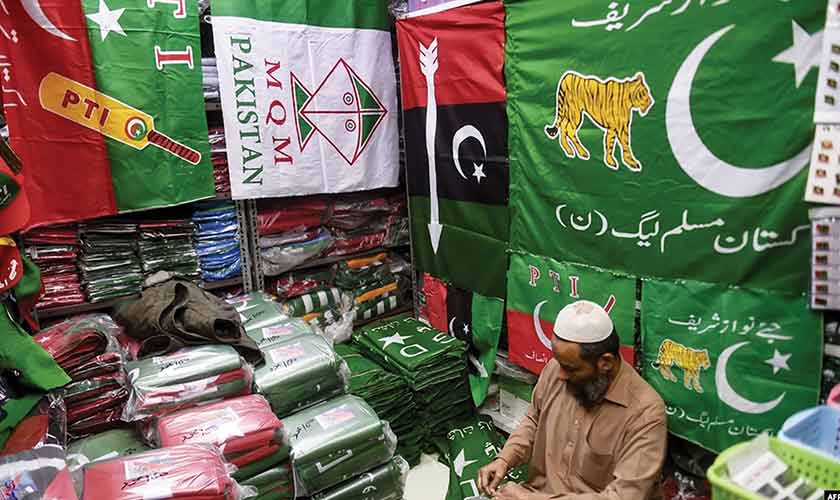
Politicking, however, departs sharply from this vision. It reduces politics to the art of winning elections through the ‘sale’ of promises, slogans and symbolic commitments rather than through sustained governance. While such politicking frequently invokes elections, rights and service delivery, it rarely translates into institutional reform or policy outcomes.
Pakistan’s political history is replete with examples where politicking prevailed at the expense of good governance. It would not be entirely misplaced to argue that elements of this tradition predate independence. Quaid-i-Azam Muhammad Ali Jinnah’s slogan, Pakistan ka matlab kya? La ilaha illallah, successfully mobilised large segments of the Muslim population—particularly the urban middle class—in support of the All-India Muslim League. While effective as a tool for mobilisation, this early fusion of religion and politics laid the groundwork for a pattern in which symbolic appeals often substituted for concrete governance agendas. Over time, religious politicking, rather than institutional consolidation, became a recurring feature of Pakistan’s electoral landscape.
This tradition continued under the Pakistan Peoples Party led by Bhutto, whose slogan Maangta hai har insaan, roti, kapra aur makaan, captured popular imagination. As noted by Chaudhary Fateh Muhammad, the slogan—rooted in the broad intellectual current of Islamic socialism prevalent among Muslims in the 1960s and 1970s—was originally coined by the Punjab Kisan Tehreek. Bhutto employed it to advocate a redistribution of power and resources from a narrow elite to the impoverished majority, helping secure a decisive victory in the 1970 elections in West Pakistan.
While state capacity is undeniably linked to resource availability, the effectiveness of Bhutto’s nationalisation policies in improving long-term governance outcomes remains a subject of ongoing academic debate.
Politicking persisted in later decades.
Mian Muhammad Nawaz Sharif and the Pakistan Muslim League-Nawaz introduced some more slogans such as Qarz utaro, mulk sanwaro in 1997, and Vote ko izzat doe in 2017. The former sought public contributions—through non-refundable donations, interest-free loans (qarz-i-hasna) and profit-based government loans—raising significant funds in each category. The latter slogan emerged in response to Sharif’s disqualification from public office and subsequent conviction in corruption cases linked to the 2016 Panama Papers. It framed judicial intervention as an affront to popular sovereignty, asserting that only voters—not courts—should determine the fate of elected leaders.
Imran Khan’s Pakistan Tehreek-i-Insaf entered the political arena with the promise of Naya Pakistan in the 2013 elections. Although the party fell short of a majority that year, the slogan resonated strongly with voters seeking systemic change. It later contributed to PTI’s electoral success in 2018, when the party secured 31.82 percent of the popular vote. Yet, once in power, the PTI government struggled to translate this vision into substantive governance reforms, leaving many of its core promises unfulfilled.
The 2024 elections once again underscored the dominance of slogan-driven politics.
The PTI shifted from Naya Pakistan to Nizam badlo, Pakistan badlo; while the PML-N campaigned under Vote ko izzat doe, wazir-i-azam Nawaz Sharif. The PPP, led by Bilawal Bhutto Zardari, promoted an Awami mu’ashi muahida, promising initiatives such as three million housing units for women and free electricity up to 300 units for low-income households. The electoral outcome produced provincial governments led by the PML-N in the Punjab, the PPP in Sindh and the PTI in Khyber Pakhtunkhwa, alongside a PML-N-PPP coalition in the Centre.
Nearly two years on, many of these pledges remain unfulfilled.
Democracies rest on two interdependent pillars: credible elections that protect freedoms and rights; and the effective delivery of public services. In Pakistan, electoral outcomes remain highly contested. Meaningful electoral reform, civil liberties and rights protection attract comparatively little political investment—even for rhetoric. Service delivery, meanwhile, depends on state capacity—intellectual, financial and technological—which remains uneven and constrained.
Under such conditions, political parties often resort to politicking as a substitute for governance. Religion remains a domain where parties most actively attempt to fulfill electoral promises. In the end, many electoral slogans function less as policy commitments and more as performative rhetoric in symbolic democracies.
Mazhar Abbas, author of The Aftermath of the Bangladesh Liberation War of 1971: Enduring Impact (Routledge, 2024), has a PhD in history from Shanghai University. He is a lecturer at GCU, Faisalabad, and a research fellow at PIDE, Islamabad. He can be reached at [email protected]. His X handle: @MazharGondal87.
Bilal Hassan is an independent researcher.