Print Story
X




Defence Minister Khawaja Asif has denied a large-scale military operation in Khyber Pakhtunkhwa’s Tirah area
| T |
he Tirah valley in Khyber district, which shares a border with Afghanistan, is once again the focus of national and international attention. Thousands of its residents have moved recently amid freezing temperatures, heavy snowfall and deteriorating security.
Images circulating on social media and reports published by national and local newspapers show men, women and children trudging through snow-covered mountain tracks, carrying their belongings on vehicles (and at some points on their backs).
The federal government maintains that the evacuation is voluntary and driven primarily by harsh winter and local lawlessness. Many political leaders and the Khyber Pakhtunkhwa government, however, have insisted that these people have been forced to leave their homes in anticipation of a military operation against militant hideouts in the area.
Tirah comprises Maidan, Rajgal and parts of Bara. The communities have long been vulnerable due to its geography and history of militancy. Heavy snowfall in recent days has blocked key access roads, cutting off entire villages. According to local journalists and rescue officials, temperatures in upper Tirah have dropped well below freezing, making mere survival difficult, particularly for children and the elderly. Tragedy struck when at least three children were reported to have lost their lives due to exposure to extreme cold. Several others have fallen ill. Dozens of families were stranded overnight on mountain routes after roads became impassable due to snow.
Locals recount harrowing experiences. “We were not prepared,” a man from Maidan told The News on Sunday in a Bara camp. “The snow was heavy. Our children were crying from cold. There was no suitable transport. If we had a choice, we would never leave our homes in such freezing weather.” Many families complained that prior arrangements for shelter, food and medical assistance had not been made. They said many were forced to lodge with relatives in Bara, Jamrud, Landi Kotal and Peshawar.
Amid the humanitarian crisis, the issue has taken a sharp political turn. The federal government has stated that residents of Tirah valley have been leaving voluntarily - due to severe cold law and order concerns. It categorically denies any pressure from state institutions. Federal Information Minister Attaullah Tarar, told the media that no large-scale military operation requiring displacement of residents had been announced. He said targeted operations were under way and that the state was facilitating people who wished to relocate temporarily on account of the security situation. “There is no forced displacement,” he said. “The government and the security forces respect the rights of local populations. The movement is voluntary and seasonal in nature.”
A spokesperson for the federal government echoed this stance on social media, emphasising that similar winter migrations have taken place in the past when snowfall cuts off Tirah’s mountainous regions. The spokesperson regretted that misinformation was being spread to politicise a humanitarian issue and badmouth state institutions.
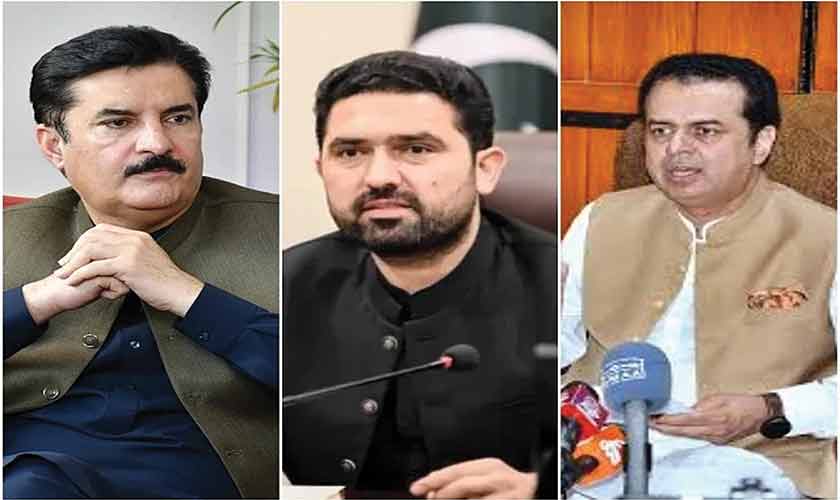
Defence Minister Khawaja Asif has said that no large-scale military operation is going on in Tirah and insisted that the recent migration has been a routine practice in the region.
However, this narrative has been strongly contested by the KP government, several leaders of Pakistan Tehreek-i-Insaf and some tribal elders. Chief Minister Muhammad Sohail Afridi, who hails from Tirah, has rejected the federal account, calling it “misleading and detached from ground realities.” Speaking at a public gathering, the chief minister said that Tirah residents are not leaving because of cold alone. “If this notification is not withdrawn within two days, I will convene an Afridi tribes jirga, followed by a grand Pashtun jirga,” he has said. The chief minister has also said important decisions about Tirah should not be taken without engaging the people who live there.
Several PTI leaders, including Asad Qaiser and Shandana Gulzar Khan, have accused the federal government of downplaying the humanitarian situation. In a statements posted on X (formerly Twitter), they claimed that militant activities had intensified in Tirah in recent months. “People do not abandon their homes in the middle of snowstorms unless they are compelled.”
Independent journalists and security analysts have also pointed to an uptick in militant presence in the region. Reports have cited local sources claiming that armed groups have established hideouts in remote pockets of Tirah and are using mosques and abandoned houses as their shelters. Security agencies have not so far announced plans for a large-scale operation. However, past pattern in the tribal districts has fuelled apprehensions among the residents, many of whom were displaced during military operations in 2014.
For the people of Tirah, the debate over description - voluntary versus forced – is not the most important. “Whether they call it voluntary or forced does not matter to us,” says Alam Jan Afridi, 60, who a shelter on Wednesday. “Our children are freezing; our women are exhausted; and we don’t know where to go.” He recalled previous displacements when some families were forced to live for several years in displaced people’s camps or with relatives and struggled to rebuild their lives after returning to their homes.
Several human rights activists and civil society organisations have urged the authorities to focus less on narratives and more on relief. Groups such as the Human Rights Commission of Pakistan have called for transparent communication, emergency shelters and compensation for affected families, particularly those who have lost loved ones during the evacuation. “The death of children due to cold is unacceptable in any circumstance,” an HRCP representative said, urging the federal and provincial governments to coordinate their response. For the people of Tirah, this displacement is neither new nor unexpected; it is a painful recurrence of a familiar cycle.
Over the past two decades, they have been forced several times to abandon their homes due to militancy, military operations and insecurity. Large swathes of the valley remain underdeveloped and vulnerable. Despite claims of improved security, locals say the area has never been entirely clear of militant influence. Each evacuation deepens the sense of loss, erodes trust and pushes another generation into uncertainty. Until lasting peace, transparent security measures and meaningful rehabilitation are ensured, Tirah’s people will continue to pay the price not just through displacement but also on account of the fading of hope that their valley will ever truly be safe again to call it home.
Social media has amplified voices from the ground. Videos shared by local journalists show long convoys of vehicles stuck on snow-covered roads; people lighting fires to keep warm; and children wrapped in thin blankets. These images have sparked outrage and sympathy. Many users have asked why evacuation routes were not identified in advance and weather forecasts factored in the plans.
Despite the conflicting accounts, one point of consensus appears to be the precarity of life in Tirah. Officials who insist that the movement has been voluntary acknowledge that the valley becomes nearly inaccessible once heavy snowfall begins. In the absence of permanent infrastructure, residents are often left with no option but to descend to lower areas until spring.
As the standoff between the federal and provincial governments continues, uncertainty looms over whether the displaced families will be able to return once the snow melts.
For now, thousands of Tirah residents are caught between harsh weather, security fears and political narratives that offer little immediate relief.
A local journalist wrote on social media: “Tirah does not need competing statements; it needs compassion, clarity and concrete action.” Until that happens, the snow-covered paths out of the valley will continue to symbolise not just a seasonal migration, but also a deep crisis of trust and governance in the tribal districts.
The writer is a freelance journalist and social worker.