Print Story
X




Pakistan Tehreek-i-Insaf’s governance test in Khyber Pakhtunkhwa
| K |
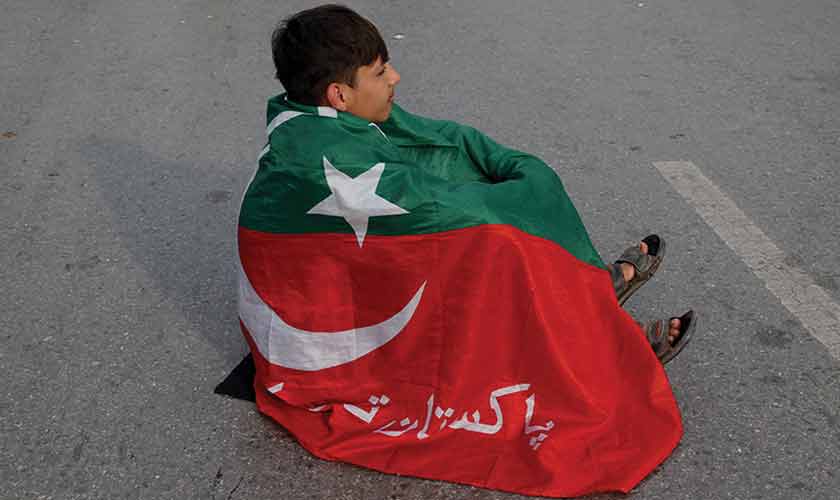
hyber Pakhtunkhwa has long been marred by decades of conflict, reform experiments and shifting power structures. Over the past decade, the province has also become the principal political stronghold of the Pakistan Tehreek-i-Insaf.
The province has served both as a laboratory for the party’s political ideology and a showcase for what it describes as an alternative model of governance. As it struggles with renewed security threats, growing terrorism and corruption, the province is facing increased instability and growing public dissatisfaction.
This raises the question: has PTI’s politics strengthened governance in Khyber Pakhtunkhwa or weakened the state institutions’ ability to deliver?
When the PTI first assumed power in the province in 2013, it promised change: transparency and good governance. The party positioned itself as a break from patronage-based politics that had dominated provincial administrations for decades. PTI leaders argued that governance could not be divorced from political reform and that dismantling entrenched interests was a prerequisite for improving public service delivery.
Over successive terms, the party highlighted initiatives such as anti-corruption measures, health insurance schemes, police and education reforms, and attempts to strengthen local government as evidence of its reformist credentials.
This framing continues to dominate PTI’s official narrative.
Chief Minister Sohail Afridi recently described his administration as part of a political mission, rather than routine government, stating that it aimed to establish a self-reliant Pakistan grounded in justice and merit. His remarks reflect the way the party continues to define governance as an extension of ideology rather than an essentially administrative exercise.
In Khyber Pakhtunkhwa, politics has increasingly turned mostly into politicking. Major political parties and their allies are locked in relentless power struggles while governance and public welfare take a backseat. As a result, the perceived neglect of citizens has been rising; militancy, lawlessness, corruption and other social evils are seen deepening their roots.
Critics argue that this blending of politics and governance has often come at a cost: PTI’s emphasis on political confrontation frequently overshadows the day-to-day demands of administration in a province caught between the politics of persuasion and the practical demands of performance.
Junaid Ismail Makda, president of the Pakistan-Afghanistan Joint Chamber of Commerce and Industry, says that “the border closure is not only hurting Pakistan-Afghanistan trade but also affecting exports to Central Asia, causing daily losses running into millions of dollars,” highlighting how political disputes and security decisions reduce regional commerce and investor confidence.
Inconsistent approaches to security and governance, particularly when provincial and federal strategies clash, create uncertainty that deters both domestic and foreign investment.
Representatives from the Chaman Chamber of Commerce and Industry have expressed serious concern that frequent and prolonged closures of the Pak-Afghan border crossings are “severely impacting export of perishable goods, rising unemployment and hardships faced by local populations.”
Khan Jan Alokozay, co-president of the PAJCCI, emphasises that peace and predictable trade are inseparable, warning that persistent disruptions and poor governance weaken livelihoods and shrink economic opportunities for millions in border regions.
This instability exacerbates poverty and allows terrorist violence to regain ground, further harming trade, investment and public welfare.
Federal Information Minister Attaullah Tarar recently accused the Khyber Pakhtunkhwa government of prioritising political posturing over governance, arguing that the PTI leadership remains preoccupied with political campaigns and symbolic gestures linked to its jailed founder instead of addressing pressing provincial challenges.
Such criticism underscores a recurring theme about the province: politics often eclipses governance.
Omair Khan from Peshawar holds a master’s degree and has spent the last three years struggling to secure employment to support his family. He says his story is no exception; it reflects the broad crisis facing educated youth in the province.
“Like me, hundreds of young people are left with no option but to leave the country in search of a better life,” he says, blaming what he describes “bad governance” at both the provincial and federal levels for shrinking employment opportunities.
Echoing similar concerns, Farman Shinwari, president of the Torkham labour union, says thousands of labourers have been directly affected by “inappropriate and illogical policies.” He says government actions are often driven by political interest rather than economic imperatives.
According to Shinwari, nearly 5,000 daily-wage workers have lost their livelihoods since the closure of key border points in October 2024. He adds that the prolonged shutdown has not only caused financial losses estimated at billions of rupees but has also created a vacuum forcing the local youth to engage in unlawful activities, including terrorism and developing drug addiction.
“When people are deprived of lawful means to earn a living, bad governance pushes them into desperation; in some cases, militancy,” says Shinwari.
A recent Gallup Pakistan survey revealed that nearly half of PTI voters in the province say that no visible development has taken place in their localities despite more than a decade of the party’s rule there. This finding is significant not only because it points to dissatisfaction among the population but because it suggests erosion of the PTI’s support base. Issues such as deteriorating infrastructure, unemployment and a perceived lack of accountability appear to be shaping public attitudes more than political loyalty alone.
Sikandar Hayat Khan Sherpao, a Qaumi Watan Party leader, accuses the PTI government of pushing Khyber Pakhtunkhwa toward economic distress. Sherpao argues that PTI’s political rhetoric has not yet translated into improved living standards.
Bilawal Bhutto-Zardari, the Pakistan Peoples Party chairman, has warned that continued political confrontation and administrative paralysis in the province could lead to extraordinary measures, including the imposition of governor’s rule—if governance continues to falter.
Security concerns add another layer of complexity. Renewed militant attacks in parts of the province, especially in merged districts, have placed additional pressure on an already stretched provincial administration. Analysts warn that fragile coordination between political leadership and state institutions risks undermining stabilisation efforts and diverting attention away from development and service delivery. In such an environment, the balance between political messaging and effective governance becomes even more precarious.
Khyber Pakhtunkhwa’s experience under the PTI illustrates a dilemma of democratic governance in Pakistan. Political rhetoric can energise supporters and challenge power structures but when politics overrides administration, governance risks becoming secondary.
The writer is a freelance journalist and social worker.