Print Story
X




Lahore district’s proposed bifurcation is a move the proponents say will help better manage the city’s explosive growth. Critics dismiss it as mere “redistribution of inefficiency”
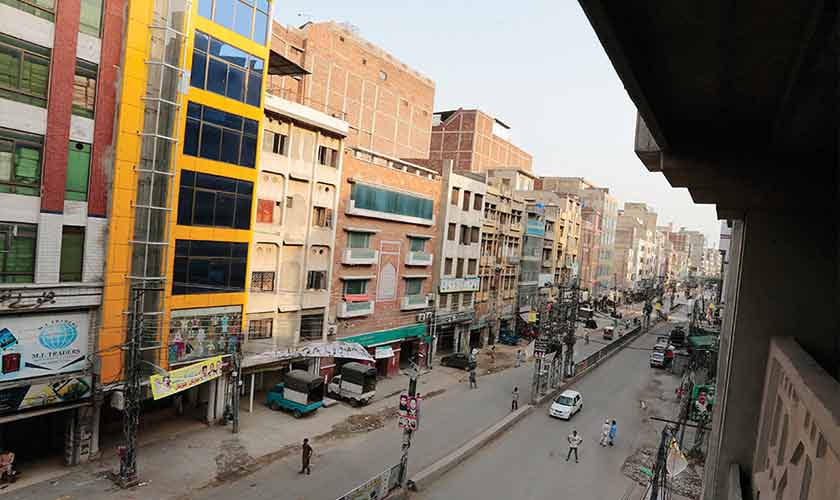
Lahore, the cultural and economic heart of the Punjab, may be on the verge of a historic administrative split. Rumours are swirling that the district could be divided into Lahore North and Lahore South, a move proponents say will help better manage the city’s explosive growth. However, critics dismiss it as a mere “redistribution of inefficiency.”
According to reports, Lahore North may be comprise Wagha, Ravi, Saddar, Shalimar, City and Cantt tehsils, whereas Lahore South could encompass Iqbal Town, Model Town, Raiwind and Nishtar tehsils.
Unnamed sources suggest that the district administration has already forwarded data to the provincial government, official channels remain tight-lipped. Tauseef Sabeeh, spokesperson for the Home Department, denies the existence of such a proposal. Chief Minister’s Public Relations Office, headed by Imran Aslam, says that no official statement on bifurcation has been issued.
Despite the denials, the debate has taken hold of the public imagination. For residents like Muhammad Abbas, a property dealer in Gulberg, the change can’t come soon enough. “If you visit the deputy commissioner’s office, you see staff buried under mountains of files,” he says. “The city keeps expanding. Even with digitisation, the workload is simply overwhelming for a single district administration.”
Not everyone is convinced that adding more offices is the right answer. Dr Farid A Malik, a management expert, warns that splitting Lahore could exacerbate the existing systemic flaws.
“Spreading inefficiency only increases inefficiency,” he argues. “If you split a bureaucracy without improving the system, you aren’t solving the problem — you’re just adding layers of red tape.”
He points to Karachi as a cautionary tale. Despite being divided into several districts, the city struggles with “jurisdictional ping-pong,” where departments and semi-autonomous agencies frequently blame one another for service failures.
| T |
he conversation shifted at a ThinkFest session in Lahore, where renowned economist Dr Ishrat Husain came up with another solution: empowerment over division.
Dr Husain argued that dividing districts often serves political control rather than public service. He noted that during the Musharraf era, public satisfaction with local government had hit a record 56 percent because of the devolution of services to the neighbourhood level.
Dr Husain spoke specifically of accountability. His argument was that local representatives understand their wards better than a district commissioner in a distant office.
He also mentioned resource allocation, saying that 60 percent of public spending should happen at the local level to ensure that basic needs — water, sanitation and roads — are met.
He cited an example from Sindh where he said a simple local path had proved more effective than approving 500 schools from a remote central office without checking local ground realities.
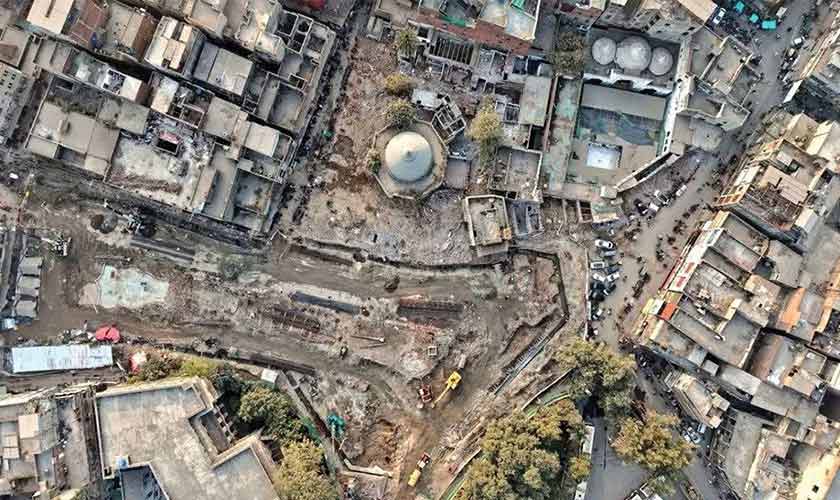
Lahore is currently divided into 10 tehsils, ranging from the historic Lahore City to the rapidly developing Raiwind. While the ghost of the 2000s-era Town Hall system lingers, the question for policymakers remains: does Lahore need two deputy commissioners, or does it need a more empowered local leadership?
As the provincial government weighs its options, the consensus among experts is clear: without systemic reform and a shift towards local empowerment, Lahore North and Lahore South may just be two names for the same old problems.
Ahsan Raza is the editor of Minute Mirror. He can be reached at [email protected]