Print Story
X




Khawaja Muhammad Zakariya’s autobiography fuses personal memory with literary and institutional history

| T |
he prominence of Professor Khawaja Zakariya as a teacher of Urdu language and literature is beyond question. His entire life appears to have been steeped in the world of literature, poetry in particular. This lifelong immersion finds eloquent expression in both his academic pursuits and creative sensibility. His deep admiration for Mir Taqi Mir and Majeed Amjad stands as a telling illustration of his literary temperament and aesthetic commitments.
Only a few months ago, his autobiography Pathar Nahin Hoon Mein, a title evocatively borrowed from Mirza Ghalib, was published. Viewed through a historical lens, the book constitutes a significant addition to the existing corpus of autobiographical and biographical writing in Urdu. More than a personal narrative, it offers a compelling meditation on memory and its role in shaping historical discourse, as well as the broader human experience as it unfolds through the turbulence and contingencies of life. The text subtly demonstrates how individual recollection intersects with collective history, lending depth and texture to our understanding of the past.
Professor Zakariya belongs to a Kashmiri family that had settled in Amritsar for three generations and was traditionally engaged in the shawl trade. His father, however, earned his livelihood by working for a prominent lawyer in the city. The autobiography offers vivid and graphic descriptions of Amritsar and the acute difficulties faced by his family on the eve of Partition. Following the upheaval, the family migrated to Lahore and later moved to Jhang, where Khawaja Zakariya received his early education.
He is remarkably candid in admitting his dislike for Jhang. The only aspect of the city he appears to appreciate is its poetic legacy, particularly the work of Majeed Amjad, Ali Sher Jafri and Jafar Tahir. Ironically, it was in Jhang that his own literary potential began to take shape and he started composing poetry. His meetings with Abdul Majeed Adam and Habib Jalib proved decisive, sharpening his taste and deepening his inclination towards Urdu poetry. After spending eleven formative years in Jhang, he moved to Lahore, completed his bachelor’s degree at Government College, Lahore, and earned his master’s degree in Urdu literature from Oriental College.
Oriental College emerges as the central site of inquiry in Professor Zakariya’s narrative. He spent almost his entire academic career there, apart from an eleven-month stint in China and a four-year period in Japan, where he taught Urdu to Japanese volunteers. He later completed his PhD on the life and literary contributions of Akbar Allahabadi, a study that remains, to date, the most authoritative work on the poet.
More than a personal narrative, it offers a compelling meditation on memory and its role in shaping historical discourse, as well as the broader human experience as it unfolds through the turbulence and contingencies of life.
Ideologically, Professor Zakariya was known to be aligned with Syed Abdullah and Waheed Qureshi, stalwarts of the so-called right-wing intellectual camp, in contrast to left-leaning figures such as Ebadat Barelvi and Waqar Azeem. However, the author adopts a balanced and critical posture in analysing this ideological grouping, skilfully exposing the contradictions between their professed beliefs and actual practices.
One of the most striking revelations of the autobiography is its portrayal of Oriental College as an environment rife with intrigue and conspiracy. It is deeply disconcerting to learn that an institution graced by some of the finest literary minds lacked a sense of collegiality and camaraderie. Khawaja Zakariya’s account thus serves as a sobering reality check. Read in this light, the book may inspire the development of reform mechanisms to help Oriental College reclaim the intellectual vitality and moral authority it once enjoyed during the days of luminaries such as Maulvi Faiz-ul-Hassan, Mahmood Sheerani and Maulvi Shafi. In terms of knowledge production, much indeed remains to be desired at the institution.
Khawaja Sahib’s contributions to Urdu will endure as lasting achievements. First, he collected, compiled and published the scattered poetry of Majeed Amjad, thereby preserving a vital literary legacy. Second, he edited a monumental six-volume compendium of Urdu literature that encompasses the entire Subcontinent. His commentary on Iqbal’s Bal-i-Jibreel may also be regarded as a significant contribution.
The autobiography also chronicles the author’s travels abroad, particularly to the United States, where his son and daughter reside. His reflections on different countries, including a deeply moving account of his journey to the Hijaz for Hajj, are rendered in lucid and graceful Urdu. The narrative is richly interspersed with verses from Urdu and Persian poetry, enhancing both its aesthetic appeal and intellectual depth. The only shortcoming of the book is a degree of repetition, which could have been avoided. His opinions on the poets and writers he interacted with at Pak Tea House and in the Halqa Arbab-i-Zauq form a particularly engaging part of the text. The role of Qayyum Nazar, his teacher at Government College and an Urdu poet, as a mentor who introduced him to the literary world, is articulated with clarity.
One hopes that Khawaja Zakariya Sahib will now turn his attention to writing on his contemporaries among Urdu’s literary greats, a project that would serve as a natural sequel to his highly significant work, Urdu kay Jadeed Shair. Such a contribution would further consolidate his legacy as both a perceptive critic and an invaluable chronicler of Urdu’s literary history.
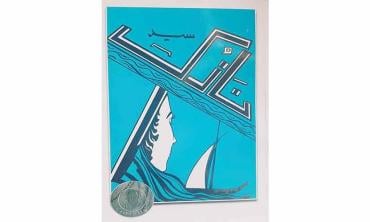
Pathar Nahin Hoon Mein
Author: Khawaja Muhammad Zakariya
Pages: 528
The reviewer is a professor in the Faculty of Liberal Arts at the Beaconhouse National University, Lahore.