Print Story
X




Without structural reforms, Pakistan will continue to oscillate between petrol price shocks and momentary relief
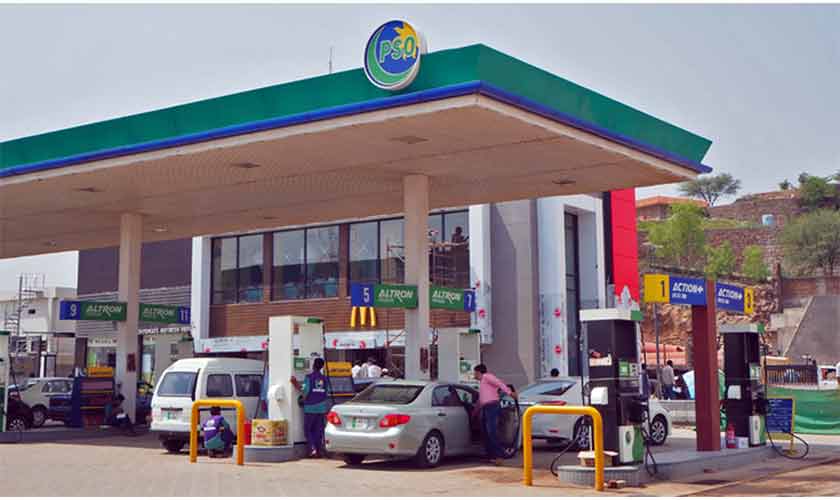
Pakistan’s daily diesel demand hovers around 16,000 metric tonnes. Local production stands at 14,000 MT, suggesting local production covers approximately 87 per cent of diesel demand at normal times… For the record, Pakistan’s ex-refinery prices are set at import parity (meaning local refineries are paid as if they had imported the fuel from the international market, regardless of their actual production cost)… During the current crisis with diesel at Rs 520 per litre ex-pump and crude at elevated but lower levels, the refinery margins have almost certainly exploded. ‘Refineries set for Rs22bn windfall’, Dr Farrukh Saleem, The News, April 7, 2026.
“Governments that cannot tax the rich eventually tax the necessities of the poor.”
This enduring observation captures the essence of government’s latest fiscal strategy vis-à-vis imposing petroleum levy of Rs 160.61 per litre on high speed diesel (HSD) when its domestic production is 87 percent. The quote above shows that it not merely a pricing adjustment but a catastrophic shift in fiscal policy—one that places the burden of fiscal mismanagement and failure of Federal Board of Revenue squarely on ordinary citizens.
On April 3, Prime Minister Shahbaz Sharif, in a televised address, reduced price of motor spirit from Rs 458 per litre to Rs 378 per litre by reducing PL by Rs 80 per litre. This brought marginal relief to a segment of consumers, though the deeper structural issues faced by energy sector persist.
Many fear that the relief announced by the prime minster may be short-lived, as the reduction in PL reflects tactical fiscal adjustment rather than structural reform. Beneath the surface lies a fragile system where petroleum pricing, electricity tariffs, circular debt, fiscal deficits and IMF conditionalities are intrinsically linked.
On April 1, petroleum prices were pushed to unprecedented levels after the petroleum levy climbed to Rs 160.61 per litre from Rs 105.37 per litre: HSD price rose from Rs 335.86 to Rs 520.35 per litre and motor spirit (MS) from Rs 321.71 to Rs 458.41 per litre.
High fuel prices raise logistics costs, shrink industrial margins and weaken export competitiveness. Manufacturers either pass on costs, fuelling inflation, or scale down operations, slowing economic activity. When fuel becomes expensive, the entire economy slows down—effectively braking the engine of growth to a stall.
Petroleum pricing in Pakistan has evolved into a fiscal management tool rather than an energy policy instrument. Temporary reductions often precede future increases, reflecting structural weaknesses in fiscal governance.
The political economy of petroleum pricing has become particularly complex, as the government made petroleum products zero-rated under the general sales tax regime. This has enabled the federal government to retain revenue through PL, without sharing 57.5 percent proceeds with provinces under the Seventh National Finance Commission Award. Petroleum levy is non-divisible, non-tax revenue, whereas GST is a tax to be shared with provinces.
This arrangement, however, is under pressure from the International Monetary Fund, which is reported to be pressing Pakistan to restore 18 percent GST on petroleum products. If GST is restored and PL stays, consumer prices will rise. Else, petroleum levy will have to be reduced, shrinking the federal fiscal space. Either option intensifies fiscal stress.
The FBR is already struggling to meet its revenue targets. The 9-month shortfall has reached Rs 610 billion. Restoration of GST may raise nominal revenue but also cause inflation, reduce consumption and slow economic activity. Simultaneously, reduction in PL will cut non-tax revenue. The government therefore faces pressure on both tax and non-tax fronts. This fiscal dilemma illustrates the central role petroleum pricing now plays in Pakistan’s economic management.
Equally troubling is the manner in which the federal government has progressively acquired unlimited authority to impose petroleum levy, raising serious constitutional concerns. Traditionally, petroleum levy was subject to statutory ceilings approved by the parliament. The Finance Act 2024 continued this practice by allowing petroleum levy up to a maximum of Rs 70 per litre.
The Finance Act 2025 omitted the Fifth Schedule to the Petroleum Products (Petroleum Levy) and Climate Support Levy Ordinance, 1961, which prescribed maximum limits. Simultaneously, it amended Section 3, granting the federal government unrestricted authority to determine petroleum levy at any rate through executive notification.
This represents unbridled delegation of legislative power over a major public revenue source. The amendment was made through a money bill, raising serious constitutional concerns. Under the constitution, money bills limit Senate oversight. Granting unlimited executive authority through a money bill for a non-tax levy undermines bicameral parliamentary scrutiny.
This development also affects fiscal federalism. PL is not part of the divisible pool under NFC Award. Increasing reliance on PL therefore reduces provincial revenue share and centralises fiscal power. This evolution of petroleum levy into an open-ended fiscal instrument represents a major shift in Pakistan’s fiscal governance that raises serious constitutional concerns.
Meanwhile, electricity generation continues to depend heavily on imported fossil fuels, including furnace oil, LNG and coal. When global oil prices rise, generation costs increase automatically. Under long-term contracts, the government must pay capacity payments to independent power producers (IPPs), many of which are indexed to the US dollar. These payments are fixed and must be made irrespective of electricity consumption.
In recent years, payments to IPPs have increased sharply. Government disclosures indicate that for major IPPS alone payments rose from about Rs 487 billion in fiscal year 2022-23 to over Rs 923 billion in 2023-24.
Overall capacity payments across the power sector are now estimated at around Rs 1.8 to Rs 2 trillion annually, making them one of the largest fiscal burdens. These payments rise further when oil prices increase because fuel cost adjustments and dollar indexation increase payable amounts.
Pakistan’s circular debt has become a chronic structural problem. Power sector circular debt, which declined to Rs 1.614 trillion by June 2025, has again risen to around Rs 1.9 trillion, reflecting persistent structural weaknesses.
Gas sector circular debt is estimated at around Rs 3.2 trillion, bringing total energy sector circular debt to over Rs 5 trillion.
The mechanism is straightforward but devastating. Pakistan State Oil supplies fuel to power plants. Power plants generate electricity and supply it to distribution companies. Due to inefficiencies, theft and delayed tariff adjustments, distribution companies fail to recover costs. Payments are delayed across the chain, creating ‘circular’ debt. When oil prices increase, value of fuel supplied rises. Capacity payments also increase. Circular debt therefore expands rapidly.
The result is a vicious chain: higher oil prices increase circular debt, which leads to higher tariffs, which reduce consumption, which further increases per-unit capacity payments.
Petroleum price hikes trigger broad-based inflation. Transport costs rise first, followed by food prices, electricity tariffs and industrial costs. Export competitiveness declines, growth slows and unemployment increases.
Inflation has historically responded strongly to fuel price increases. Temporary reductions in fuel prices rarely fully reverse inflation, as electricity tariffs and gas prices remain elevated. Thus, petroleum pricing has become one of the primary drivers of inflation in Pakistan.
Reduction in PL for motor spirit only for a limited period provides temporary relief but does not address structural weaknesses in energy sector, as Pakistan continues to oscillate between price hikes and temporary reductions. This cycle reflects structural weaknesses in energy governance, fiscal management and contractual obligations.
Rising oil prices increase capacity payments, expand circular debt and fuel inflation. At the same time, statutory amendments granting unlimited authority to impose petroleum levy have weakened parliamentary oversight and increased reliance on indirect taxation.
Energy pricing decisions influence growth, inflation, fiscal deficit and federalism simultaneously. Without structural reforms, Pakistan will continue to oscillate between petrol price shocks and momentary relief. The political economy of petroleum pricing has thus become central to Pakistan’s economic future.
The writers are lawyers, adjunct faculty at Lahore University of Management Sciences and members of the advisory board of Pakistan Institute of Development Economics