Print Story
X

The Pakistan Super League is on the brink of its most radical transformation since its inception. With the PCB confirming a shift from the traditional player draft to a full-fledged auction model for PSL 11, the league has entered uncharted territory, one that promises greater financial freedom for players, increased transparency, and global alignment, but also carries the risk of competitive imbalance if not executed with precision.
This decision, arguably the most consequential in the league’s 10-year history, will define not only how teams are built but also how the PSL positions itself among the world’s elite T20 leagues. While auctions are now the global norm, from the IPL to The Hundred and SA20, the question Pakistan must confront is whether imitation alone guarantees success, or whether the PSL’s unique ecosystem demands a more nuanced approach.
Under the newly announced framework, each franchise will be allowed to retain a maximum of four players, limited to one per category, while the remaining squad slots will be filled through auction. The PCB has also abolished the mentor, brand ambassador, and right-to-match (RTM) clauses, mechanisms that had long favored established franchises and star players. Additionally, each team will be permitted one direct signing of a foreign player who did not feature in PSL 10, a move clearly designed to inject fresh international appeal.
From a structural standpoint, these reforms signal a decisive break from the past. The player salary purse has been raised to USD 1.6 million per franchise, a welcome development that reflects the league’s commercial maturity and its intent to reward performance in a competitive marketplace. The expansion of venues, with Faisalabad returning to host PSL matches, further reinforces the PCB’s ambition to deepen the league’s national footprint.
Yet, while the auction model aligns the PSL with international best practices, it also exposes an inherent tension, one that league administrators and franchise owners must manage carefully.
From my perspective, while auctions dominate global T20 leagues, drafting remains a superior system when it comes to building balanced, competitive teams, particularly in a league like the PSL, where parity has been one of its greatest strengths. Drafts encourage strategic planning, long-term squad development, and competitive equity. Auctions, on the other hand, often reward financial aggression over cricketing coherence.
The PCB’s attempt to bridge this divide through what is being informally termed the “DrAuction” model, retaining four players while auctioning the rest, is an interesting compromise. It allows franchises to preserve their core identity while still embracing market-driven dynamics. This hybrid approach deserves a fair trial, and one hopes it produces the desired balance between innovation and stability.
However, history from other leagues offers cautionary lessons. Auction systems, if left unchecked, can quickly create power imbalances. Wealthier or more aggressive franchises can corner marquee players, leaving others scrambling to fill gaps. In leagues with deep domestic talent pools, this can still work. In Pakistan, where elite T20-ready players are fewer, imbalance is a real risk.
One of the most intriguing developments is the allowance for a direct foreign signing outside the previous season’s pool. This opens doors for new markets and fresh stars, but it also introduces potential disparity if some franchises secure global names while others are forced into reactive bidding wars.
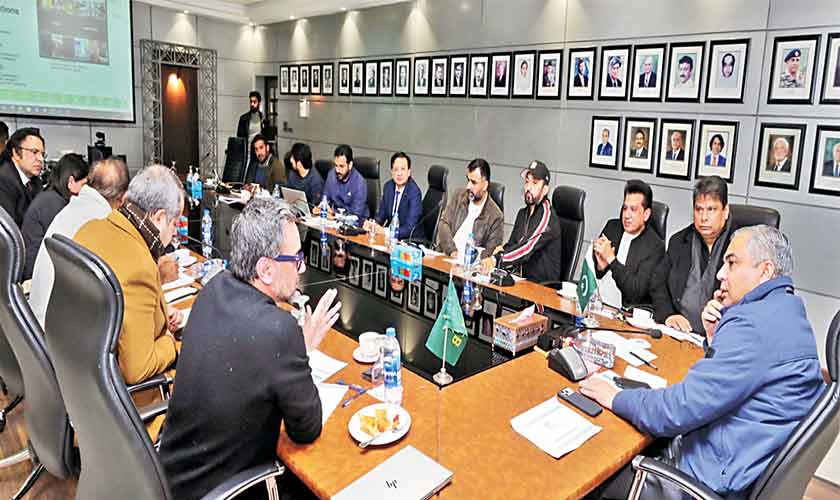
This concern was evident during recent PSL Governing Council meetings, where franchise owners expressed sharply divided views. The original five franchises pushed strongly for retaining four players, including brand ambassadors, arguing that continuity is vital for fan loyalty and commercial identity. New franchises, meanwhile, demanded zero retentions, seeking a level playing field from the outset.
PCB Chairman Mohsin Naqvi’s push for a fully open auction was driven by a player-centric philosophy, emphasizing financial empowerment and transparency. From a governance standpoint, this is commendable. Players deserve to maximize their market value, and the PSL must avoid being perceived as restrictive. Yet leagues thrive not only on player earnings, but on competitive storytelling, rivalries, continuity, and identity.
The removal of mentors and brand ambassadors is another double-edged decision. While it cleans up the rulebook and removes preferential treatment, it also strips franchises of symbolic figures who helped build the PSL’s early narrative. In its infancy, the league relied heavily on recognizable faces to establish credibility. Whether it has now outgrown that need remains to be seen.
One of the most intriguing developments is the allowance for a direct foreign signing outside the previous season’s pool. This opens doors for new markets and fresh stars, but it also introduces potential disparity if some franchises secure global names while others are forced into reactive bidding wars.

Still, credit must be given to the PCB for its willingness to evolve. The PSL cannot afford stagnation. After a decade of success, reinvention is necessary to remain commercially attractive and globally relevant. The auction system, in theory, enhances transparency, increases player bargaining power, and aligns the PSL with the modern T20 economy.
The real test, however, will lie in execution. Clear auction rules, salary caps, enforcement mechanisms, and equal access to information will be critical. Without these safeguards, the auction could dilute the league’s competitive integrity, the very quality that has made the PSL a fan favorite.
There is also the question of timing. With PSL 11 set to begin on March 26, 2026, franchises are already navigating compressed preparation windows. A workshop to brief owners on auction mechanics is planned, but education alone will not eliminate uncertainty. Auctions demand a different mindset, different analytics, and different risk tolerance than drafts.
Auctions are not inherently superior; they are simply different. Drafts, particularly in developing leagues, often produce more evenly matched teams and allow young talent to be nurtured rather than commodified too early. That said, the PCB’s hybrid “DrAuction” experiment deserves cautious optimism. If managed intelligently, it could combine the best of both worlds, core stability through retentions and competitive dynamism through auction bidding.
Ultimately, PSL 11 represents a defining crossroads. This is not merely a change in player acquisition; it is a philosophical shift in how Pakistani cricket views competition, commerce, and fairness.
Success will not be judged by headlines or first-season revenues, but by whether the league remains competitive, credible, and compelling over the long term. Innovation is necessary. Balance is essential. The PSL must now prove it can achieve both.