Print Story
X




A look at what makes interventions inclusive for children largely left on the fringes in our education system
| I |
n our day-to-day work, education often feels like a constant race against time, responding to crisis after crisis, and trying to meet the shortages of people, resources and in inclusion. From our heated rooms, behind the bright glow of laptop screens and endless notifications, it is easy to view Pakistan’s education sector only through what is missing or what is going wrong. But the story shifts when you step into the field. A school visit; a conversation with a teacher; a child proudly reading aloud, making sense of reading and math; a classroom that feels safer and more welcoming than it did a year ago—all these moments reveal the progress made and the quiet determination of teachers, parents and educators who make it possible.
Working for 25 years now, ITA’s highpoint is always interventions that make children and teachers smile in public sector schools as enablers for the most excluded children.
Exclusion of certain groups has unfortunately become part of our systems. Many children who already live on the margins, also face social, structural, gender and institutional barriers. For children with disabilities, the barriers begin with the physical environment: schools without ramps, accessible washrooms, appropriate seating, assistive devices or learning materials that can make attendance exhausting or impossible. When children enroll, many classrooms are not equipped with differentiated teaching approaches, so learners who need additional support are labelled as “weak,” are pushed aside or drop out. Families, too, may hesitate to send children with disabilities to school due to safety concerns, stigma or a realistic fear that the system will not accommodate their child with dignity.
For transgender children and gender-diverse learners, the challenge is often even more invisible and painful: the fear of harassment, bullying, humiliation and outright rejection. Many struggle with basic questions of safety: will they be allowed to use a washroom; will teachers protect them; will classmates target them; or will their identity become a reason for punishment or exclusion?
Children from religious minorities can face discrimination that ranges from subtle social isolation to harmful stereotyping, unequal treatment and pressure to stay quiet or “blend in” to avoid conflict.
Across these groups, the barriers are rarely just about access to a school building. They are about whether a child is treated as fully human within the school environment. Inclusive education, therefore, is not only a technical agenda of facilities and training; it is a deeper challenge of transforming mindsets, strengthening safeguards and building school cultures where difference is not punished, but respected.
Inclusion of marginalised children goes beyond enrollment targets and looks closely at what children actually experience once they arrive at schools: whether they can move safely through school spaces; whether they feel protected and respected; whether their learning needs are met; and whether their families trust the system enough to keep them enrolled. Inclusion, in this sense, becomes a promise that government schools are not only open, but ready.
At the national level, Pakistan’s education sector is being shaped by broad reforms and a stronger focus on results-based financing. There is growing emphasis on using data for decision-making, implementation science, improving governance and accountability, and strengthening partnerships that align government leadership with technical support from development actors. It is no longer enough for a child to be counted as enrolled. Our system is increasingly being pushed to ask harder questions like whether the child feels safe, protected and has agency. This shift matters because exclusion often happens quietly, inside the classroom, long after admission forms have been filled.
Initiatives in the mainstream, such as ILMpact Har Bacha Qabil across the Punjab and Khyber Pakhtunkhwa, demonstrate what inclusive education can look like when approached with both heart and practical design. ILMpact’s mission is simple but powerful: to create a welcoming school environment for every child, so that education feels like a place of possibility, not for exclusion. In many communities, the school building itself sends a message. When classrooms are inaccessible, washrooms are unusable, pathways are unsafe, the message is clear: this place was not built for you; this initiative is shifting that message toward dignity and belonging for 160,000 children/ adolescents.
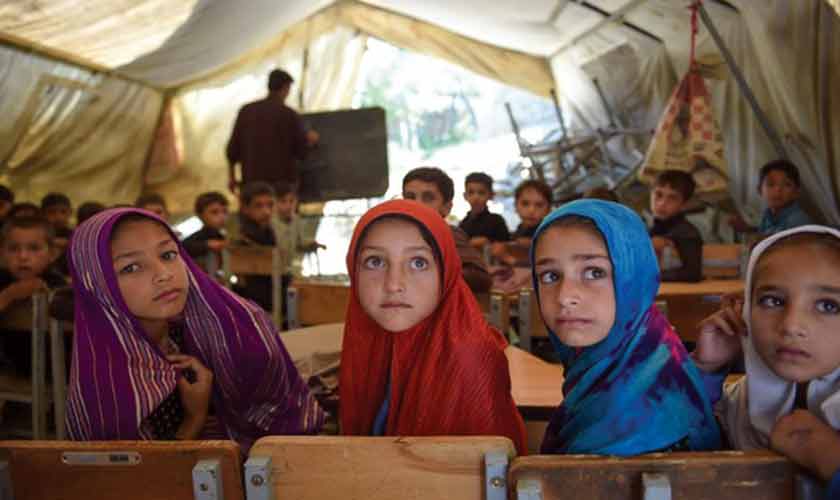
A key part of ILMpact is linking evidence to action. Through accessibility exercises conducted in each school, supported by technical guidance from Sightsavers, the programme identifies the real, on-ground barriers that prevent children from participating fully. These assessments are not symbolic; they are being used to guide targeted rehabilitation and improvements in schools so that accessibility is not an abstract goal but a visible change children and teachers can feel. When ramps, pathways and school spaces are improved based on actual needs, inclusion stops being a slogan and becomes a child’s daily lived experience.
Alongside infrastructural improvements, ILMpact is also working on a school-level safeguarding strategy to ensure that children are protected, respected and able to learn in environments free from harm, discrimination and fear. Every training has embedded inclusion delivered to teachers and school stakeholders as a dedicated component on Universal Design for Learning, and practical pedagogical techniques that help teachers respond to diverse learning needs. This combination of safer systems, more accessible spaces and more inclusive classroom practices is what makes the work meaningful: it moves beyond the idea of children merely “attending” school, ensuring schools offer learning and belonging.
The Government of Sindh is leading a foundational learning movement that places the most marginalised children at the centre, especially those in urban slums, low-income households and under-served minority-dominated rural areas where learning poverty is most visible. Karachi West/ Orangi, a high-density district shaped by migration, diversity and deep resource constraints, reflects this reality clearly. 39 percent of children are out of school; among those in (public) schools, only 41 percent can read an Urdu story, 33 percent can read English sentences and 25 percent can perform division in Grade 5.
These figures underline a critical truth: even when children are enrolled, too many are not learning foundational skills that determine their future life chances. To respond, the School Education and Literacy Department is engaged in an action research initiative with ITA and OPM-DARE-RC, Scaling TaRL through the Mainstream System, in Karachi West and Umerkot districts. By shifting instruction from age- and grade-level assumptions to children’s actual learning levels, Teaching at the Right Level is helping teachers assess, group and teach learners using activity-based “concrete to abstract” methods making foundational literacy and numeracy achievable.
The impact is already visible in classrooms: teachers like Shazia Naz are transforming mathematics through hands-on learning tools. Students like Eshal Imtiaz have progressed from quiet disengagement to reaching the highest level of comprehension. These examples demonstrate how Sindh’s FL movement is not only improving reading and numeracy, but also building confidence, participation and a stronger pathway to quality education for children who have historically been left behind.
The mainstream approach in public schools tests interventions for scaling, such as active libraries in the Punjab promoting reading and literacy under the Pakistan Literacy Project. It works on the premise that inclusive education is shaped not only by who enters a school, but also by how children experience learning once they are there. The establishment and transformation of libraries as active learning spaces where reading is routine, guided and welcoming is leading to positive results. By ensuring library periods are embedded in daily timetables and equipping teachers with age-appropriate books and facilitation practices encourage children to engage with reading as an enjoyable activity; learning comes alive rather than being a test-driven obligation.
An independent evaluation of the PLP reinforces the view that open learning libraries have been effective in strengthening children’s reading habits 30 months post intervention, demonstrating that exposure has been sustained over time through trained teachers and school routines. Students demonstrate stronger voluntary and school-facilitated reading behaviours, higher intrinsic motivation and greater confidence in engaging with challenging texts, with effects most visible in primary grades. The evaluation also highlights that enjoyment of reading at school is a key pathway through which the programme works, validating structured reading time, interactive facilitation and child-friendly materials.
The intervention recognises that inclusive literacy cannot depend on ideal conditions. Many schools operate without dedicated librarians, teachers’ turnover, active SMCs or consistent external support. Instead of waiting for perfect systems, within existing school structures, enabling teachers and school leaders organise routines, manage books and embed reading into the timetable. The whole school approach allows schools to take ownership of libraries as part of their core instructional practice, rather than as a project-led add-on. It demonstrates that inclusive education does not always require large-scale infrastructure or specialised labels. Sometimes, it begins with something quieter: a child being noticed; a book being placed in the right hands; a teacher taking the time to encourage rather than correct. By embedding reading into everyday school life, literacy initiatives can help reduce exclusion from within the classroom—one reader at a time.
ITA prioritises the participation of children and adolescents in shaping education solutions. By amplifying their voices through peer educators in largescale public sector spaces inclusion efforts lead to contextually relevant behavioural or community change. We envision a Pakistan where every child, regardless of gender, socio-economic status or social norms, can access quality education and participate fully in learning environments that respect learning with dignity and diversity.
Baela Raza Jamil is the CEO of ITA and a Pakistan Learning Festival founder. She can be reached at [email protected].
Arooj Khalid is senior programme manager at ITA. She can be reached at [email protected].
Kanza Abbasi is a special initiatives and foundational learning systems manager. She can be reached at [email protected].
Talha Iftkihar is monitoring and evaluation manager. He can be reached at [email protected].