Print Story
X




Divisions within the top Taliban leadership deepen Afghanistan’s political as well as governance problems
| F |
or nearly three years, the Afghan Taliban have projected abroad an image of cohesion, discipline and ideological unanimity. This cultivated narrative of unity, however, is collapsing under the weight of internal contradictions. What was once muted dissent within closed circles has evolved into an open struggle for power, leadership and ideological direction. The rift within the Taliban movement has matured into a full-scale contest over the future of the Afghan state, revealing that the movement’s apparent cohesion may have been less organic unity and more enforced silence.
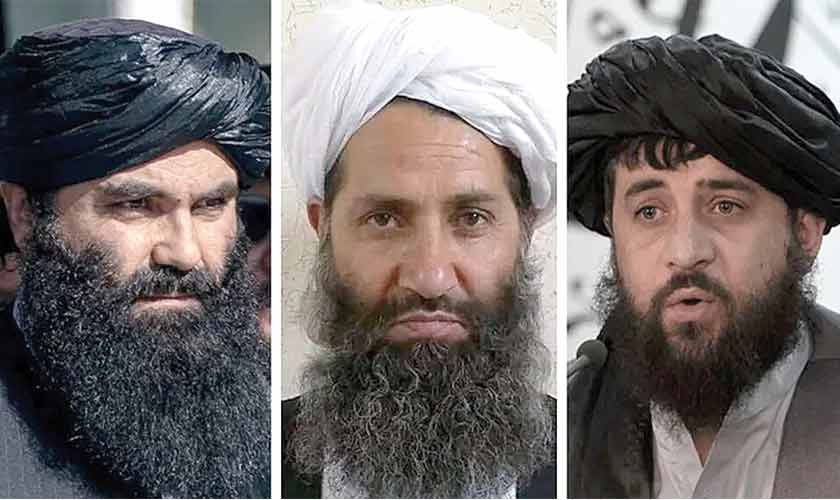
At the heart of this crisis lies growing resistance to the leadership of Supreme Leader Hibatullah Akhundzada. His authoritarian style and controversial interpretation of religious sources have alienated a part of the Afghan society and fractured the Taliban movement. He governs Afghanistan not through representative institutions, consultation or political legitimacy, but through isolation, fear and decrees informed by a narrow worldview. The fact that he has been forced to emerge from his long seclusion to publicly defend his posture is a powerful indicator that his grip on power pay may be loosening.
Hibatullah Akhundzada’s leadership is defined by isolation - both physical and intellectual. He avoids public interaction, shuns engagement with the Afghan society and confines decision-making to a limited circle of loyal Kandahari clerics. Governance under his rule is mostly through edicts rather than transparent policy frameworks, sermons rather than strategy and coercion rather than consent. “This model departs sharply from Afghanistan’s dominant religious tradition, which has historically incorporated plural jurisprudence, tribal consultation and pragmatic accommodation,” says journalist Mubasher Bukhari.
In the name of enforcing sharia, Hibatullah has imposed sweeping bans on girls’ education, suppressed social and cultural life, criminalised dissent and dismantled institutional governance. These measures are not the product of any scholarly consensus but rather the manifestation of an inward-looking clerical mindset that equates absolute obedience with faith and disagreement with apostasy. “This perverted interpretation of religious authority has transformed the Emirate into a system centred on submission rather than legitimacy,” Bukhari says.
The approach could not have failed to trigger backlash. The Taliban are now increasingly divided between a Kandahar-based hard-line clerical faction loyal to Hibatullah and a more pragmatic bloc led by Interior Minister Sirajuddin Haqqani. The Haqqani Network, historically one of the most powerful pillars of the Taliban insurgency, has openly questioned Hibatullah’s lack of engagement with the political reality and the strategic harm caused by his extreme positions.
To many, Sirajuddin Haqqani’s public address in Khost, in which he condemned governance based on fear, intimidation and exclusion, represented a direct challenge to Hibatullah’s authority. It was also seen as an implicit rejection of the supreme leader’s religious narrative. For the first time since the Taliban’s return to power in Kabul, a senior leader of the movement has openly accused the regime of betraying the movement’s original commitment to justice, consultation and Islamic moderation. This moment marked a turning point: dissent has graduated from hushed whispers into public discourse.
At the heart of this crisis lies growing resistance to the leadership of Hibatullah Akhundzada. His authoritarian style and controversial interpretation of religious sources have alienated a significant part of Afghan society and fractured the Taliban movement.
Hibatullah’s response further exposed the depth of insecurity within the regime. His loyalists, including people such as Mullah Nida Muhammad Nadeem, rushed to issue statements emphasising “one emir, one system and absolute obedience.” Such declarations do not emerge from strength; they surface when authority is contested and legitimacy questioned. Hibatullah’s own rare public appearance in Kandahar—accompanied by veiled threats and warnings about “knowing one’s limits”—only reinforced perceptions that authority is slipping from his grasp.
The crisis has been aggravated by systematic exclusion, nepotism and ethnic imbalance. Under Hibatullah’s rule, state power has been monopolised by Kandahari clerics at the expense of battlefield commanders, technocrats and non-Pashtun figures including Haqqani’s supporters, as well as some Tajik and Uzbek commanders, who had important roles in the Taliban’s military victory. Many of them have been sidelined, humiliated, arrested or stripped of authority.
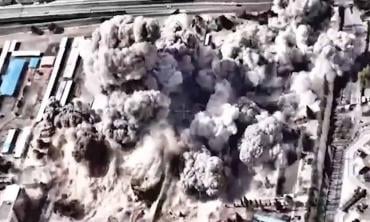
The demolition of the historic Jalaluddin Haqqani Madrassa in Khost in 2024 became a powerful symbol of this campaign of erasure. The madrassa was not merely a building but a cornerstone of Taliban’s jihadist history and identity. Its destruction without credible justification was widely interpreted as a calculated insult to the Haqqani legacy and a deliberate assertion of Kandahari dominance.
Siraj Haqqani’s subsequent silence should not be misread as submission. In 2024 and 2025, he moved decisively to consolidate opposition to Kandahar’s monopoly on power. He began lobbying within the Taliban shura, forging alliances with marginalised Pashtun, Tajik and Uzbek commanders across northern and western Afghanistan. People who had been instrumental in the fall of Kabul but were later disgraced for resisting Kandahari supremacy have increasingly aligned with him. This indicates that the conflict is no longer merely factional; it is structural and systemic.
Governance failures under the Hibatullah regime have further accelerated fragmentation. The regime neither seeks popular legitimacy nor shows respect for public accountability. Key decisions are sometimes arbitrary, poorly communicated and ideologically driven. The sudden nationwide internet shutdown in October 2025—imposed without explanation and partially reversed under pressure—exposed both an authoritarian impulse and the internal disarray. Education policy, now directly controlled by Hibatullah, has been transformed into an instrument of indoctrination. Entire academic disciplines have been banned or rewritten and girls’ education remains prohibited despite overwhelming religious, economic and social arguments against such restrictions.
While security has marginally improved in some urban centers, the regime’s stability remains brittle. ISIL-K continues to operate; security forces suffer from corruption and ethnic rifts; and ideological incoherence weakens command structures. Mass unemployment and dependence on humanitarian aid have intensified the competition for power and resources within the Taliban.
The Taliban Emirate is no longer struggling primarily against external pressure or international isolation. Its most serious threat now comes from within. The myth of unity has fractured. The movement is at a crossroads between clerical authoritarianism and pragmatic political survival. Whether this power struggle leads to reform, fragmentation or violent confrontation will shape not only the Taliban’s future but also the fate of Afghanistan.
The author works for The News. He can be contacted at [email protected].