Print Story
X

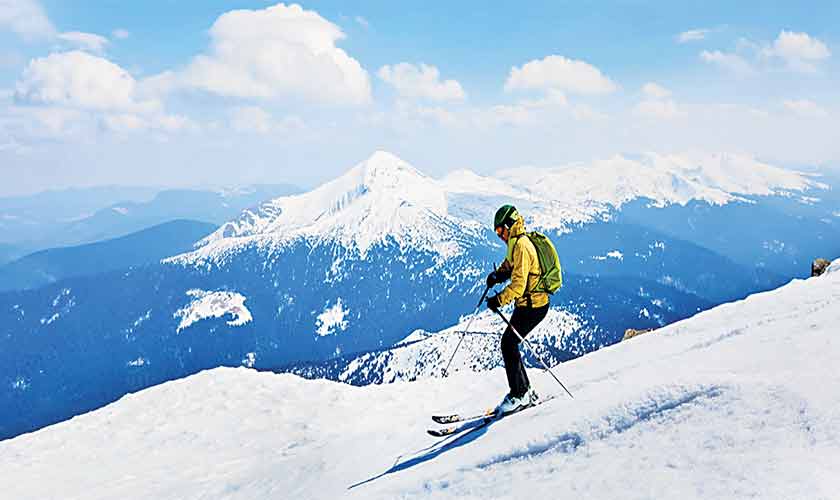
When we talk about the Olympics, our minds switch to the sports in which we historically excelled-namely field hockey-or to the global popularity of squash and cricket, and more recently, to track and field.
Olympic Games are a definitive measure of a country’s international sporting standing. However, the shocking reality is that from 1996 to 2020, Pakistan went without a single medal in any event. Furthermore, the nation had never won a Gold medal in an individual event until Arshad Nadeem, the javelin thrower, came to the rescue by winning Gold at the 2024 Paris Olympics.
It is time for Pakistan to diversify its athletic horizons and bolster its presence in international competitions, with the Olympics serving as the premier platform for this transformation. The Milan-Cortina 2026 Winter Olympics are just around the corner (scheduled for February 6-22), and they present a pivotal moment for Pakistan’s sporting narrative. While the Olympics brings to mind summer sports such as field hockey, boxing, wrestling and now athletics, our presence on the world’s most elite snow and ice stages remains largely elusive.
This national mindset is ironic, considering Pakistan is host to some of the most exquisite natural mountainous terrains in the world. Tucked away in our northern areas lies a high-altitude wilderness-a ‘Switzerland of the East’-which remains an untapped natural resource, a hidden treasure, waiting to be developed into world-class training grounds. The development of these mountainous terrains into international skiing resorts could transform our international image from a ‘tropical’ one to a mountainous splendor, boasting five of the world’s fourteen 8000 meter peaks.
Participation in the Winter Olympics:
Participation is the strategic key to success and a pre-requisite for developing the talent to compete at an international level. Pakistan has a dismal record when it comes to participation in the Winter Olympics. Compared to the Summer Olympics, where we have triumphed in hockey and athletics, it’s a much bleaker story in the Winter Games. Despite being gifted with the world’s highest peaks, it took them 63 years after independence to qualify for its first-ever Winter Olympic Games in 2010.
Pakistan individual record in the Winter Olympics:
Though exposure is limited, Pakistan has its own legends:
2010 Olympics (Vancouver, Canada): Mohammad Abbas became the first Pakistani to qualify, competing in the Alpine Skiing event known as Giant Slalom (GS). Though he finished 79th in the overall standing, his qualification was a historic honour for the country.
2014 Olympics Sochi, Russia: Muhammad Karim, again the only athlete representing his country, finished 71st in the Giant Slalom Alpine Skiing, the highest rank a Pakistani has ever achieved in the Winter Olympic Games.
2018 Olympics (Pyeongchang, South Korea): Two athletes competed: Muhammad Karim qualified for three out of the four Winter Olympics in which Pakistan has participated (2014, 2018, and 2022), along with Syed Human, who qualified to compete in cross-country skiing.
2022 (Beijing, China): Muhammad Karim solidified his legend status qualifying for his third Winter Olympics, representing the nation as a lone but resilient athlete.
Reasons for low
participation:
Lack of funding: Traditionally, funds are allocated to cricket, hockey and squash. There is an urgent need for dedicated infrastructure and training funds.
Development of Infrastructure: We need professional-grade skiing facilities. Skiing slopes at the Naltar or Malam Jabba are barely 1 km long which are far from adequate for Olympic level training.
Qualification Hurdles: Athletes must earn points in international FIS (International Ski Federation) races. Most athletes from developing nations cannot bear the exorbitant travel and equipment costs without corporate sponsorships.
Coaching needs: We must invest in top coaches from alpine powerhouses like Austria, Switzerland, or Japan to introduce modern training techniques.
The perception of northern Pakistan as the “Switzerland of the East” is well-founded, yet the region remains neglected. We are home to a natural arena for winter sports that remains unutilized. Upgrading resorts at Malam Jabba, Naltar, and Skardu would not only develop talent but also boost the tourism industry manifold. The onus is on the state to realize this potential. Once the development process begins, sponsorships and investments will naturally follow, attracted by the exquisite beauty of our high, snow-clad peaks.