Print Story
X




Twenty countries have agreed to join US-led Board of Peace for Gaza
| T |
he second phase of the US-brokered plan for Gaza has been announced. The situation on the ground is still informed by the fundamental issues that plagued the first phase: a devastating humanitarian crisis; a stark absence of Palestinian representation; and Israel’s continued military operations that have fragmented the Strip into several occupied zones. The first phase was marred by continuing casualties, broken promises on border opening and a failure to recover remains of all hostages and prisoners. No wonder the stated goals of Phase II —disarmament of Hamas and reconstruction appear ambitious.
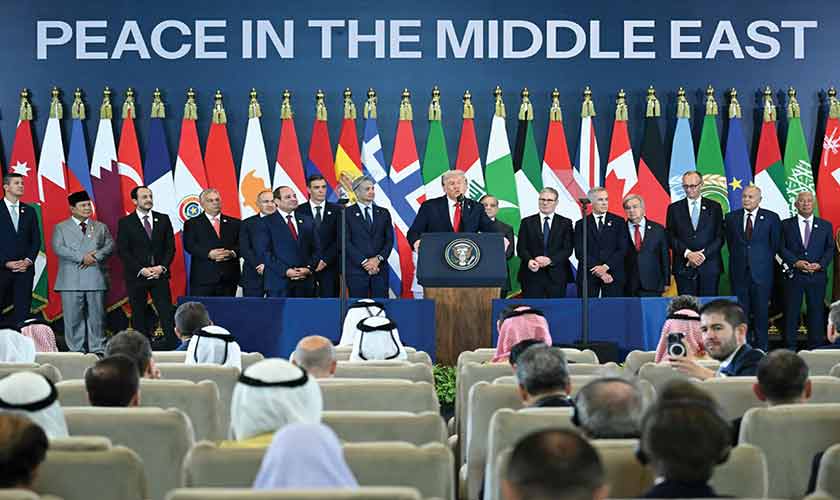
Eight Muslim majority countries, including Pakistan, Saudi Arabia and Turkey, have announced their decision to join the US President Donald Trump’s Board of Peace.
Since the October 10 ceasefire, Israeli forces have killed over 400 people. Hamas accuses Israel of creating excuses to break the ceasefire. US officials say the truce is still holding. They have urged both sides to treat the violence as isolated incidents rather than a return to war. This raises the question of whether a deal that allows one side to keep killing people can truly be called a ceasefire regime.
The plan for Phase II is focused on disarmament of Hamas. However, the movement refuses to agree to it amid continued Israeli presence and in the absence of ironclad, irreversible commitments toward Palestinian statehood. Israel on the other hand, has conditioned any withdrawal from Gaza on the disarmament. The US has been in talks with Egypt, Qatar and Turkey, which have assured Washington that Hamas will give up its heavy weapons. This development might be accompanied by potential amnesty by Israel for the complying members of Hamas.
Pakistan’s former ambassador to Egypt and Tunis, Mushtaq Shah, says the Hamas disarmament is an unpractical idea without peace guarantees and self-rule pledges. Israel’s Gaza withdrawal plans are murky. A significant number of troops are likely to stay. “Netanyahu’s stance on Phase II – no talks until captive Ran Gvili’s body is returned – has added to the impasse,” Shah notes.
Amid the political deadlock, the situation on the ground continues to deteriorate. Israel currently occupies over 50 percent of Gaza. The Rafah Crossing remains a critical flash point. The crossing’s reopening has been postponed and Israel has refused to withdraw from the Yellow Line, further complicating the situation. The Israeli army has expanded its buffer zone in eastern Gaza, taking more territory despite the ceasefire plan. IDF officials want to maintain control over this area, currently serving as a temporary redeployment boundary. This persistent military presence is in stark contrast to the proposed international solutions that have failed to materialise.
Initially, the ISF was supposed to provide temporary security, oversee demilitarisation, protect civilians and facilitate the return of the Palestinian Authority in Gaza. Egypt, Turkey, the UAE, and Qatar were expected to join, but none have made formal commitments due to vague specifics. This hesitation appears to stem from uncertainties and a lack of clarity surrounding the operational specifics and strategic framework of the proposed plan.
Former ambassador Asif Durrani says: “Any international force sent to Gaza will fail if its primary mandate is confrontational disarmament. The proposed ISF members are hesitant because they understand that their mission’s success depends on local consent and a political solution, not military force alone. Without that political foundation, the force will become a target, destabilise the region further and face untenable costs both in Gaza and in the domestic politics of its contributing nations.” In line with the serious concerns of the Muslim nations, discussions are taking place to restrict ISF’s mandate to secure Gaza’s borders and manage humanitarian aid, while a Palestinian police force handles internal security.
Amid these political developments, the situation on the ground continues to deteriorate. Israel currently occupies more than 50 per cent of Gaza. The Rafah Crossing remains a critical flash point.
The governance discussions are happening against the backdrop of a Gaza that is already being physically carved up. The IDF’s deployment has fragmented Gaza into three colour-coded zones, with the Green Zone allowing rebuilding of homes and infrastructure. There is another Red Zone, covering about half of Gaza, where reconstruction will remain blocked until security conditions are met. Then there is a Yellow Line, which is a security boundary between zones, already shifted by Israel to expand control. This plan is part of Israel’s strategy to maintain control over Gaza, with some arguing it’s a step towards permanent occupation. Under the Oslo Accords’ interim arrangements for Areas A, B and C in the West Bank have become a permanent fixture.
The UN has, however, warned that the Board of Peace plan can increase risks in Gaza, citing concerns over the potential undermining of UN efforts and the lack of Palestinian representation. The structure of this board is multi-layered. At the top will be the Board of Peace, chaired by Donald Trump setting the strategic vision and controlling funding. The Gaza Executive Board, the middle layer, will manage regional coordination and support day-to-day governance. At the bottom, the National Committee for the Administration of Gaza, led by Ali Shaath, a former deputy minister in the West Bank’s Palestinian Authority, will handle day-to-day administration. It will be tasked with running daily affairs in the Gaza Strip in place of Hamas and providing public services in Gaza.
The Board of Peace plan has sparked concerns among Palestinians. The White House has named US Secretary of State Marco Rubio, Trump’s special envoy Steve Witkoff, former British prime minister Tony Blair and Trump’s son-in-law, Jared Kushner as members of the initiative’s founding Executive Board. Member states will be limited to three-year terms unless they pay $1 billion each to fund the board’s activities and earn permanent membership, the charter says. The Board of Peace has received support from more than 20 countries. However, some countries have reacted cautiously to the initiative. The success of the reconstruction efforts depends on addressing the underlying political issues and ensuring Palestinian agency and self-determination.
The Board’s structure, with international leaders controlling funding and strategic vision, echoes colonial-era mandates. Ambassador Shah emphasises that “many Palestinians view this as a deliberate effort to undermine their self-determination and perpetuate foreign control. When outside entities dictate how funds are allocated or what vision is pursued, it can be interpreted as a subtle or overt domination. For Palestinians, who have long struggled for political autonomy and the right to self-determination, such arrangements may feel like a continuation of foreign interference.”
This risks perpetuating a power imbalance where local voices are marginalised and priorities are set according to external interests rather than the needs and aspirations of the Palestinian people. “In this context, even well-intentioned international involvement might be seen as undermining efforts to achieve true independence, reinforcing a sense of dependency and control that echoes colonial histories. This highlights the importance of ensuring that aid and governance structures are designed in ways that empower, rather than overshadow, local leadership and agency,” Shah says.
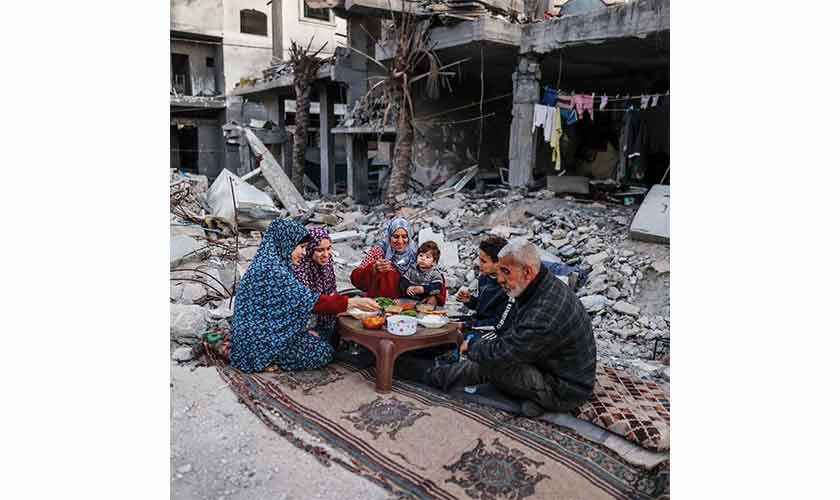
This sentiment is compounded by the heart-wrenching humanitarian conditions in Gaza, where ongoing hardships further underscore the urgent need for a just and sustainable resolution. “Hundreds of thousands remain homeless, huddled in makeshift tents that offer little protection from the elements. Winter storms and flooding are taking a toll, and aid groups warn that famine could return if the situation doesn’t improve. Children have begun to die. The world needs to act now to prevent a catastrophe,” says Durrani.
Lack of adequate shelter has emerged as a major crisis. Aid organisations are pleading for Israel to allow metal poles to stabilise tents against the harsh winter winds. Israel’s concern apparently is that these materials could be used by Hamas for weapons. The consequence is devastating for civilians. Children are paying a terrible price. Many having gone without formal education for two years. The ban on essential items like school pencils and paper is crippling their future. While Israel has eased some restrictions on aid, it’s not enough. The severe shortage of aid in Gaza is heartbreaking. Only 100 out of 600 aid trucks are allowed through daily, leaving millions struggling to survive.
Addressing this dire immediate need is a prerequisite for any discussion of the territory’s long-term future. The estimated cost of reconstruction is over $50 billion, funded through a World Bank trust backed by Arab and international donors, says Shah. The plan involves using debris from destroyed buildings for marine land reclamation or recycling it into materials for road construction. Temporary shelters for displaced Palestinians are expected to be established in the first six months. Top priorities include repairing desalination plants to restore access to potable water and rehabilitating schools.
The staggering human cost in Gaza demands more than a ceasefire that permits ongoing violence and division. It demands a radical rethinking. The fragmentation of the territory under the IDF’s colour-coded system is a warning sign that cannot be ignored. For any plan to have legitimacy and a chance of success, it must begin by centring Palestinian agency, ending the occupation and prioritising the immediate, unfettered flow of aid to stop a famine. The alternative—managing a crisis rather than solving it—ensures that the next phase will be just as fraught, and just as bloody, as the last.
The writer is a senior The News staffer in Karachi.