Print Story
X




As Basant draws near and Lahore gears up for the festivities, kite traders, commuters and local officials are scrambling to make it fun and safe
| W |
hile Lahore is excited about the return of Basant after over two decades, the announcement has taken a toll on various stakeholders who are left trying to maintain the fine balance between making the festival’s comeback fun and memorable while also ensuring public safety.
For many, Basant is not only a festival; it is also a part of Lahore’s historic culture. While the news that Basant will be celebrated this year has brought some excitement, on ground, the situation looks more complicated. Traders, police and officials are all scrambling to prepare for the festival amid confusion, shortages and apprehensions.
In the run up to the festival, The News on Sunday spoke to various stakeholders, including kite traders, commuters and the local traffic police, to get an understanding of their apprehensions and challenges.
Where are the kites?
Kite traders say the festival is being launched without adequate groundwork needed for a festival of the desired scale. This, they say, has left manufacturers facing losses amid fears of legal troubles.
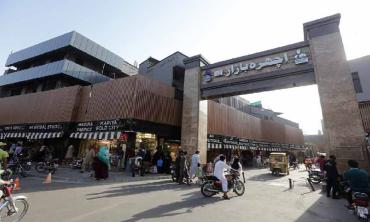
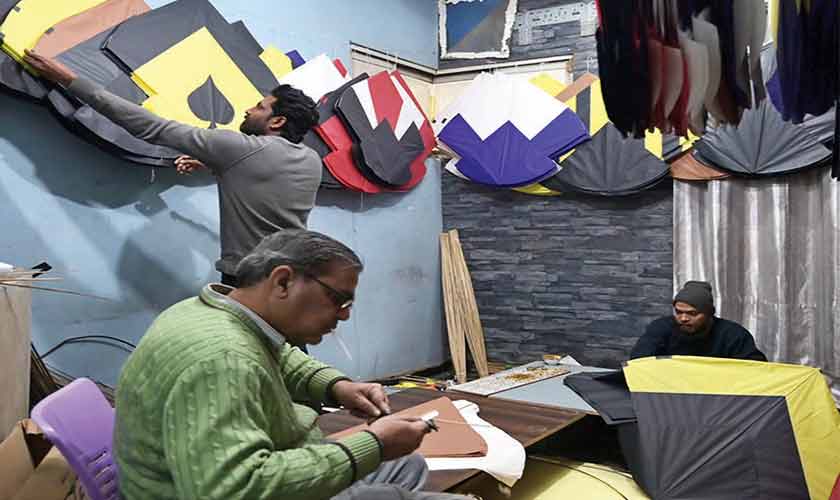
At Data Darbar, one of Lahore’s oldest kite-making areas, small rooms and rooftops where kites were once made in thousands look relatively quiet. Bamboo sticks, coloured paper and glue are not visible abundance. Some of the workers who once depended on Basant for their yearly income, remain idle.
Asif Hussain, a kite trader and manufacturer based in the Data Darbar area, says the government announced the Basant permission without providing kite-makers the raw material required to produce enough kites for the festival.
“We have not been able to buy bamboo. We have not received paper,” he says. “Even if we prepare 1,500 or 2,000 kites a day, we are not going to get even close to catering to Lahore’s demand, which is far beyond what most people imagine.”
He says if the government wanted Basant in its full glory, it should have first ensured the supply of raw materials such as bamboo and paper, and given traders at least six months to prepare.
“It used to take an entire year to make kites for Basant. When the wind picked up, shops would run out of kites. Now, Basant will be celebrated for only three days. Yet, the material is not sufficient.”
Hussain says the traders feel trapped. They have paid licence fees, registered online and recruited workers, but they cannot produce kites.
He says that kites made in Lahore are in high demand across the world. “I have 20 orders right now. Fifteen of those are from abroad… Canada, the US and the UK.”
Yet, the bamboo used in kites, called Montreal bamboo, is missing.
“Montreal bamboo is not available anywhere. Not in Lahore, Karachi, Peshawar, not even in Haripur.”
This bamboo is imported. It is used because it is strong and light. High quality kites cannot be made without it, he says.
Hussain says that around 2,000 traders have registered on the government portal to sell kites during Basant. Only around 300, he says, are actually able to work.
“The other 1,300 have idle capacity. They have no bamboo or paper.”
The prices
The shortages are likely to raise the prices.
“One month ago I started booking orders at Rs 250 per kite. Now customers are offering Rs 400 per kite as long as we can assure them that they will deliver.”
Who’s to blame?
Many traders fear what will happen after the Basant. Under the new rules, every kite must have a barcode that links it to the seller. The idea is to track responsibility if a kite causes injury.
But traders say this system threatens to pin the entire blame on them.
“If I sell a kite and someone else flies it somewhere and causes an accident, the barcode will bring the police to my door. But I only sold it. Why should I be responsible for what happens afterwards?”
Hussain also says barcodes can be copied.
“Someone can take a photo of my barcode, print it and stick it on hundreds of kites. If an accident happens, I will be blamed.”
“We have already put our money in this. But we are scared of being framed.”
Hussain says most kite flying injuries happen when the activity is banned. “When kite flying is banned, many people fly kites at night. That makes accidents more likely. During Basant, most people fly kites in daylight.”
He says the government should target illegal kite flyers.
Safety first
Traffic police also see a race against time.
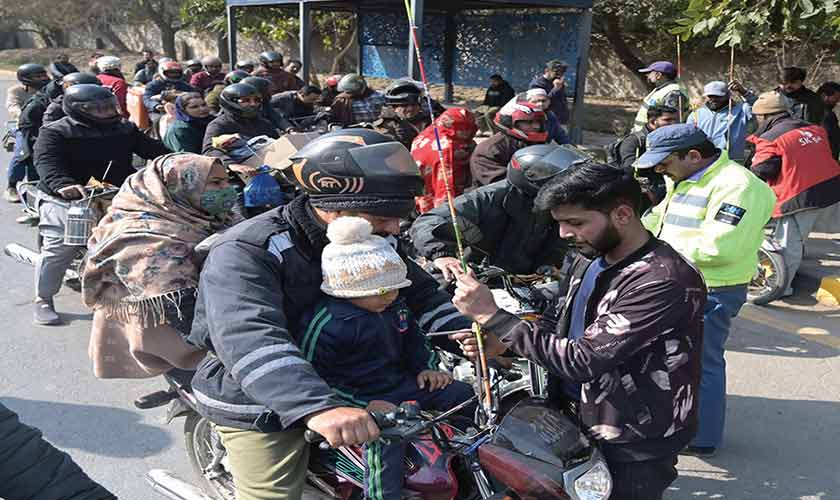
At Charring Cross, traffic police teams are fitting safety rods on motorcycles. These metal rods stop sharp (illegal) kite strings from reaching the riders’ necks.
Chief Traffic Officer Athar Waheed says camps have been set up at more than 100 locations. “These camps are working in two shifts, from morning till evening. The safety rods are being fitted for free.”
He says all government bikes are also being fitted with the safety rods. “Police, the PERA and the EPIC motorcycles are being equipped with these as well.”
Waheed says free fitting will continue till February 1. “Any bike without a safety rod will not be allowed on public roads during Basant.”
A traffic police officer installing rods says fitting one million bikes in a week is nearly impossible.
Many riders say they support safety but worry about the delays.
Mudassar, a young motorcycle rider, standing in a long queue awaiting the installation of the safety rods, said, “I have been waiting for 20 minutes. I have to wait for as long as it takes, because I know I will face problems later if this is not done now.”
Registrations and preparations
Amir Rafique, a Kite Flying Association spokesperson, says that preparations are under way as per government SOPs. He says that an online system called E-Basant is being used for registration. “Dealers, manufacturers and sellers are registering there.”
According to him, about 2,100 traders have registered so far.
Official Basant events are scheduled to be held at places like the Lahore Fort and some public parks.
Special camps run by the Lahore Commissioner’s Office have been set up, including one near Minar-i-Pakistan. Commissioner Maryam Khan’s office has become the headquarters for a ‘safe’ Basant.
The commissioner says that Basant kite-flying will be allowed from February 6 to February 8. Kites and strings may be sold from February 1 to February 8. Only registered traders will be able to sell kites. All kite businesses must stay in Lahore.
She says that kite flying before February 6 is banned and warns that action will be taken against offenders. So far, 204 cases have been registered.
The writer is the editor of Minute Mirror. He may be reached at [email protected]