Print Story
X




Labelling Punjab’s school reform as “privatisation” oversimplifies the policy debate
| I |
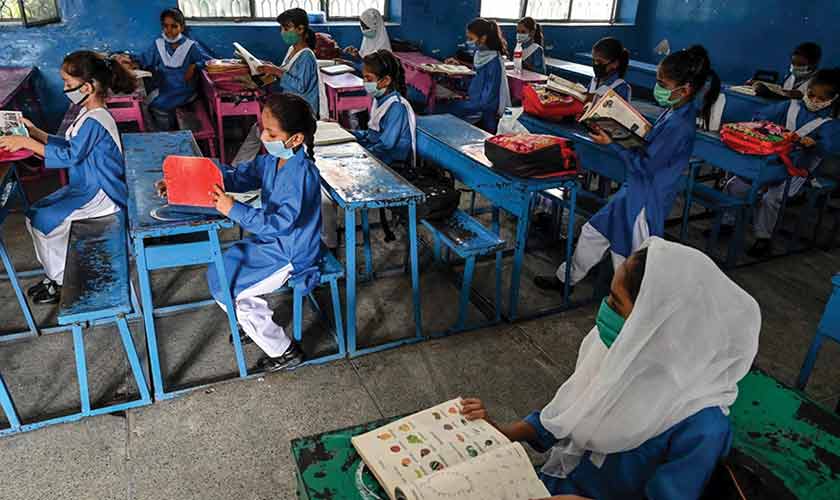
t has been nearly two years since the Punjab government announced a scheme to hand over low-performing primary schools to private parties for management. The Punjab Educational Initiatives Management Authority was tasked with overseeing the project. It is now time to refocus on this initiative. Headlines describing the move as “privatisation of schools” alarmed parents, teachers and educationists alike. Yet, a closer look at the policy framework, financial arrangements and governance mechanisms suggests that what unfolded in the Punjab was not privatisation in the usual sense, but a large-scale experiment in public-private partnership in school education, seemingly with the primary purpose of easing the fiscal burden on the state rather than improving educational standards. Countries like Finland and Singapore, it bears recalling, did not dilute state responsibility in education; their systems excel precisely because the state remained fully committed.
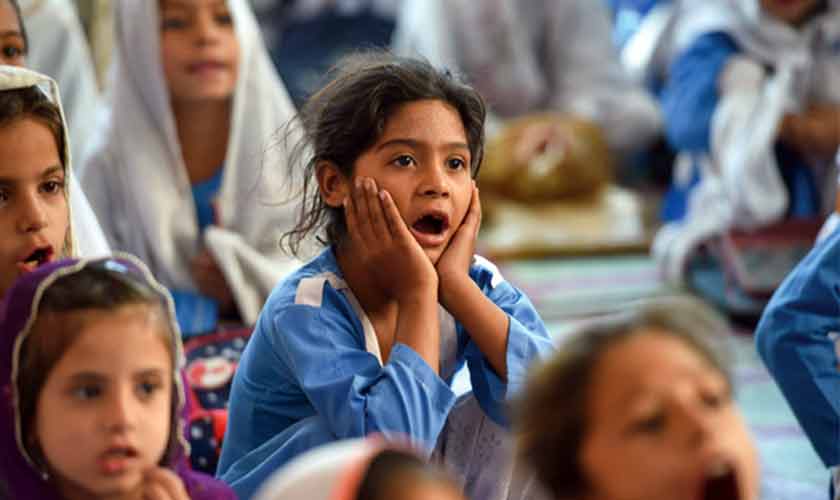
Understanding this distinction is critical, because privatisation and PPPs differ fundamentally in ownership, control, funding and purpose—differences that have far-reaching implications for access, equity and quality.
Privatisation implies a complete transfer of ownership and control from the state to a private entity. A privatised school becomes fully independent: it sets its own policies, charges tuition, determines admissions and employs teachers on its own terms. Public funding ceases, government oversight becomes minimal and access is often restricted to those who can afford to pay. In short, a public asset is sold or permanently transferred and education becomes a private service.
A true public-private partnership, by contrast, is a governance arrangement rather than a sale. Ownership of school buildings and assets remains with the government. The state continues to finance education, while private partners are contracted—on a not-for-profit basis—to manage schools under clearly defined rules, performance benchmarks and regulatory oversight. The stated purpose is improved efficiency, innovation and learning outcomes within a publicly funded and accountable system.
According to information shared by PEIMA and the Punjab Education Foundation, the reform targets low-performing public schools only. These schools are handed over to selected partners through an open and competitive process. School buildings remain public property, students are not charged any fee and the government supplies textbooks while enforcing the public curriculum and examination system.
Under this model, partner organisations receive a per-student subsidy—reported at Rs 650 to Rs 750 per month—paid by the PEF. In return, partners must hire teachers, pay salaries, cover utility bills and finance any additional infrastructure or innovation. The subsidy is insufficient even to cover basic salary costs. A primary school with 150 students across five classes would require at least five teachers. Even at the minimum salary of Rs 40,000 per month, the grant would cover barely half the wage bill.
Quality assurance and monitoring remain the responsibility of the PEF. The schools can be taken back if performance reports are adverse. Although the handover period is open-ended, it is conditional rather than permanent. This arrangement is neither denationalisation nor simple outsourcing. It is, in effect, the state passing part of the burden onto the philanthropic private sector: the state partly pays, regulates, owns and evaluates; the private sector partly pays, manages and innovates.
Globally, PPPs in education have been adopted to address chronic weaknesses in public schooling: poor learning outcomes, weak management, teacher absenteeism and fiscal constraints. When designed well, they can expand access, improve quality and offer better value for public money. Private partners often introduce modern teaching methods, stronger management practices and faster adoption of technology. In several districts, PEF-managed schools have shown improvements in enrollment, attendance, and learning outcomes.
International experience offers mixed lessons. Technology-enabled classrooms in India improved student engagement; teacher-training innovations in Uganda enhanced classroom effectiveness but reduced teacher autonomy; charter schools in the United States expanded options in underserved areas; and vocational PPPs in Southeast Asia linked education more closely with employable skills.
Despite their promise, PPPs carry serious risks. Inadequate subsidies or weak monitoring can encourage cost-cutting at the expense of quality or indirect exclusion of the poorest students. Faith-based or mission-driven organisations may retain denominational practices that conflict with constitutional guarantees of inclusivity. Weak oversight can lead to financial mismanagement and poor academic outcomes. Finally, standardised solutions—such as scripted lessons or AI-based tools—may undermine teacher professionalism and local relevance, especially in rural contexts.
If the PPP initiative is to succeed in the Punjab, balance is essential. Roles and responsibilities must be clearly defined in enforceable agreements. Equity must be non-negotiable, with zero fees and explicit safeguards for disadvantaged students. Oversight bodies must have both authority and capacity to terminate failing contracts. Innovation should be encouraged, but not at the cost of critical thinking, cultural relevance or teacher autonomy.
Labelling Punjab’s school reform as “privatisation” oversimplifies the policy debate. What is under way is a controversial PPP experiment aimed at passing on part of the burden of failing public schools, not selling them off. Whether it becomes a model for renewal or a cautionary tale will depend less on ideology and more on design, regulation and political will. Education is too important to be left to slogans; the real test is whether the state remains firmly responsible for guaranteeing every child a high-quality, inclusive education.
The writer taught physics at the Quaid-i-Azam University.