Print Story
X




Motor-biking is reshaping how Pakistanis, and foreign riders, experience the country
| “I |
n a car you’re always in a compartment, and because you’re used to it you don’t realise that through that car window everything you see is just more TV. You’re a passive observer and it is all moving by you boringly in a frame. On a motorcycle the frame is gone. You’re completely in contact with it all. You’re in the scene, not just watching it anymore, and the sense of presence is overwhelming.”
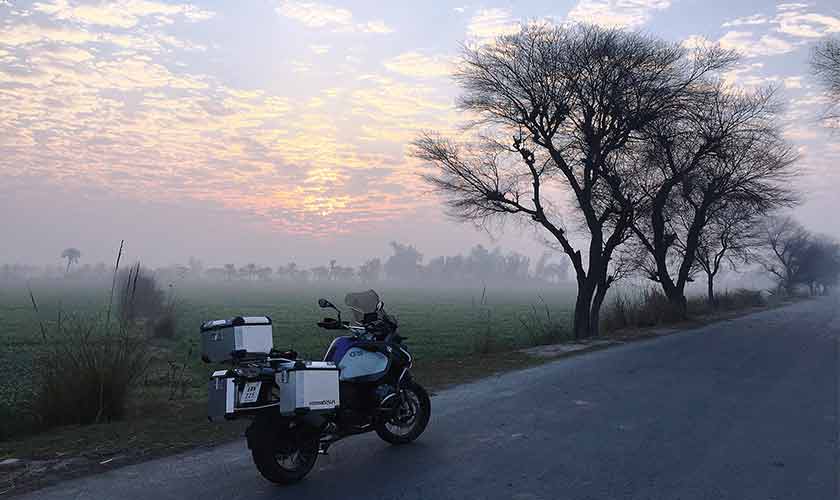
These words from Robert M Pirsig, in his famous fictionalised autobiography Zen and the Art of Motorcycle Maintenance, published in 1974, capture the true spirit of motor-biking.
It is often said that the shortest distance between two points is not always a straight line, especially when you are travelling by road on a two-wheeled, engine-powered machine. A motorbike, or motorcycle, can take you from one place to another over both short and long distances. While the pros and cons of different modes of transport, whether car, boat, train or plane, can be debated, the fact remains that travel is as much about experience as it is about distance.

Motorbikes are widely used around the world for a range of purposes, from commuting to work and intercity travel to satisfying a sense of wanderlust. In Pakistan, the motorbike can be described as the national mode of transport. Estimates suggest that there are more than 25 million registered motorbikes, making Pakistan one of the world’s largest motorbike markets, with over 50 percent of households owning one.
Lately in Pakistan, the trend of exploring far-flung regions on motorbikes has gained momentum, with a growing number of people using their two-wheelers to travel across the country. While no credible statistics are available on how many people use motorbikes specifically for tourism, the figure likely runs into hundreds of thousands. It is now a common sight to see individuals and families of all ages, across much of the country, travelling on motorbikes to explore new places. This phenomenon is not limited to any gender: both men and women are equally drawn to motor-biking as a form of travel and adventure.
A motorbike is not only an inexpensive mode of transport but also offers quick mobility and produces less pollution than many alternatives. However, long-distance motor-biking requires stamina, skill and careful planning. My own experience of touring within and outside the country over many years suggests that every journey adds to a rider’s reservoir of knowledge and capability. Every motor-biker has stories and lessons to share that can be valuable to others.
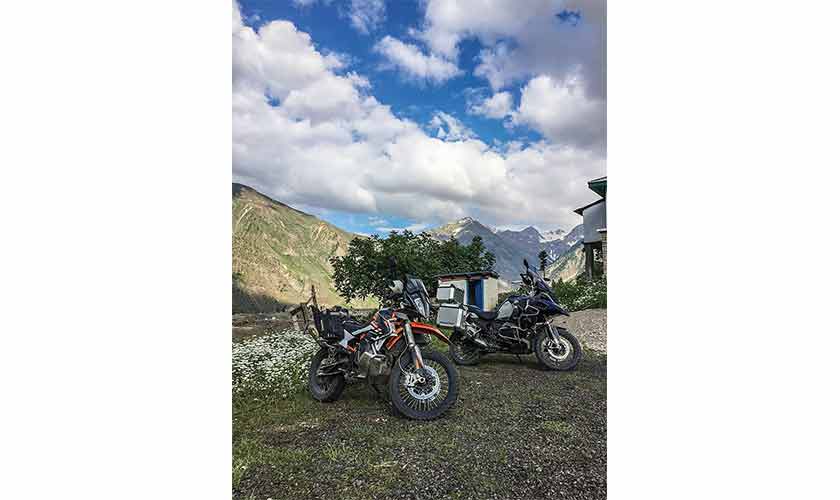
The history of adventure biking in Pakistan can be traced back to the early 1980s, when enthusiasts such as the late Masood Ahmed, along with a small group from Lahore, travelled across the country from north to south on rudimentary motorbikes. Conditions at the time were challenging: roads were poor, breakdowns were frequent and facilities were limited. Yet their determination to pursue adventure remained undeterred. In subsequent years, the late Burhan Khan and his son became the first Pakistanis to complete a round-the-world motorbike journey. The example set by these pioneers continues. Several Pakistani motor-bikers have now travelled across the globe.
Travelling by motorbike is, by its nature, an adventure, and no adventure can be fully enjoyed without adequate preparation. Choosing the right bike is one of the most important aspects of motorbike travel. The first step is selecting a machine that matches the demands of the journey. Key considerations include engine size, fuel efficiency, ease of maintenance, luggage-carrying capacity and, most importantly, a comfortable seating position to avoid strain on the neck and back during long rides.
The size and type of motorbike used for long-distance travel must meet certain specifications to ensure both comfort and control across varied terrain. Today, a wide range of motorbikes is available, from street bikes to touring and adventure models. For solo travel, a bike with an engine capacity of 150cc to 250cc is generally sufficient. However, if travelling with a pillion rider and additional luggage, a larger engine is a better option. Currently, motorbikes ranging from 70cc to 1200cc are available in the market, offered by both local and international manufacturers.
Once you have secured a motorbike, a thorough technical inspection is the next essential step before embarking on a trip. This is crucial for both safety and reliability. A simple and widely accepted method is to use the T-CLOCS checklist, developed internationally for pre-ride inspections.
T for Tyres and wheels: Check tyre tread depth, overall wear, cracks, bulges or embedded objects. Inspect wheels and spokes for looseness or damage and examine rims for dents or cracks.

Every journey adds to a rider’s reservoir of knowledge and capability.
C for Controls: Ensure hand levers and foot pedals (brake and gear shift) are not bent or broken and operate smoothly. Check control cables and brake hoses for cuts, kinks, chafing or leaks.
L for Lights and electrics: Turn on the ignition and check that the headlight (high and low beam), tail light, brake lights (front and rear activation) and indicators are functioning properly. Inspect battery terminals for corrosion and ensure the battery is securely mounted.
O for Oil and other fluids: Check engine oil using the dipstick or sight glass, with the engine warm and the bike upright or on its centre stand. Inspect brake fluid, coolant and transmission fluid levels. Look for signs of leaks around gaskets, seals, hoses and lines.
C for Chassis: Inspect the frame for cracks or damage. Check front forks and rear shocks for smooth travel and any oil seepage around seals. Examine chain or belt tension and overall condition. Lubricate the chain if it appears dry and inspect sprocket teeth for excessive wear.
S for Stands: Ensure the side stand and centre stand (if fitted) operate smoothly and that their springs hold them firmly in place.
Safety is a primary concern for any motor-biker. No trip should be undertaken without the essentials, including full protective gear. Helmet: A full-face helmet for maximum protection. Jacket and trousers: An abrasion-resistant riding jacket with armour, along with trousers fitted with knee protection. Gloves: Full-fingered, protective riding gloves. Boots: Sturdy, waterproof motorcycle boots. Rain gear: A waterproof jacket and trousers, or a full rain suit. Layers: Thermal or moisture-wicking base layers for temperature control.
In addition to technical checks, riders should ensure they are carrying all required documentation, including vehicle registration, a valid driving licence and an identity card.
A basic toolkit is essential and should include a puncture repair kit, tyre levers, an air pump or compressor, Allen keys, screwdrivers, zip ties and duct tape. Riders should also carry spare parts specific to their motorbike, such as control cables, levers, a spark plug, fuses, chain lubricant and engine oil.
Luggage options may include a tank bag, saddlebags or a waterproof tail bag. A compact first-aid kit with basic medicines and supplies is strongly recommended, along with adequate hydration in the form of water bottles or a hydration pack.
Planning the route in advance can save both time and fuel. A range of navigation tools and applications is available online and can be used via a GPS device or smartphone to plan and follow the journey.
Preparing for a journey is an important consideration. Once you release the clutch, however, a motor-biker’s natural instinct takes over, whether you are riding a standard commuter bike or a heavier machine.
Pakistan is a compelling tourist destination, made all the more appealing by the fact that Pakistanis are enthusiastic travellers. The country offers remarkable geographical diversity, from the white-sand beaches and sculpted hills of Gwadar to the riverine plains of the Punjab, the rolling sand dunes of Cholistan, the thick pine forests of Naran and the mighty mountain ranges of the north.
Motorbike holidays across Pakistan can be deeply rewarding. Many riders relish the thrill of travelling through dramatic landscapes marked by sweeping panoramas, quiet roads and welcoming local communities. Motorbikes are widely admired across the country and riders are often met with curiosity, hospitality and goodwill along the way.
Navigating a motorbike through challenging terrain, whether across plains or in mountainous regions, builds a distinctive form of confidence. It is a confidence rooted in self-reliance, technical skill and the ability to confront fear. With time and on-road experience, that fear gradually diminishes.
Pakistan has a diverse road network, ranging from provincial roads to national highways and motorways. Each demands a different set of riding skills, shaped by surface conditions, weather, terrain, traffic density and road regulations. Unlike many other countries, however, motorways in Pakistan remain off-limits to heavy motorbikes. This restriction has dampened the growth and potential of motorbike tourism in the country.
For foreign motor-bikers, Pakistan remains a favoured destination, attracting riders from across the world each year. Video blogs produced by some of these travellers have not only helped project a welcome image of the country but have also encouraged and inspired others to explore its less-known regions.
Pakistan holds immense tourism potential for both local and international motor-bikers. With supportive policies, sensible regulations and institutional encouragement, motorbike tourism could add significant value to the wider tourism industry. As the saying goes, two wheels offer endless possibilities.
Ride safe.
The writer is an architect based in Lahore/ Islamabad and an outdoors enthusiast who enjoys camping, hiking, off-roading and motor-biking. He can be reached at [email protected]