Print Story
X




A composer’s travels tell a bigger story about culture and what is being lost
| A |
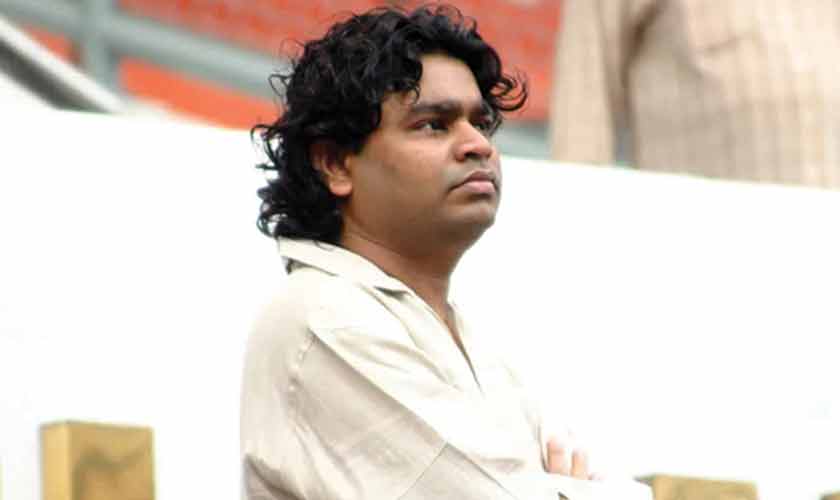
R Rahman has been in the news lately, and, surprisingly, not for reasons that might be described as celebratory. One of the most popular and successful film composers in the world, with a fan base running into millions, has found himself framed in a negative light. The discomfort this generates says less about the man than it does about the atmosphere that increasingly shapes public discourse in India today.
The response to Rahman’s recent remarks about the declining quality of music production has been telling. What might once have been read as a professional critique is now filtered through a harsher lens. His comments are assumed, by some, to be motivated not by artistic concern but by religious identity, as if faith alone were enough to disqualify expertise. This reflex reveals how deeply communal prejudice has embedded itself in everyday judgment, becoming the dominant marker by which individuals, institutions and ideas are assessed.
India, constitutionally defined as a secular republic, once held up equality as both principle and promise. In a society as vast and diverse as its population, this commitment was understood as the only workable route towards freedom and tolerance. The degeneration of the environment has loosened those wheels. What should have been a steady journey now lurches forward, painfully, towards a destination that appears to be losing both clarity and purpose.
For those who travel across the subcontinent, between cities, cultures and histories, these shifts are not abstract. They are visible in conversations overheard on trains, in the tone of televised debates, in the suspicion that greets difference. Cultural spaces that once thrived on plurality now feel constrained by a narrowing sense of belonging.
It is worth remembering the moment when AR Rahman first transformed the soundscape of Indian cinema. Rising to prominence in the 1990s, his compositions did more than signal a change in musical style. They announced a new sensibility, shaped by emerging technologies, global influences and an openness to experimentation. He was embraced as a composer looking forward and attentive to innovation while grounded in tradition.
That grounding has often expressed itself through travel and pilgrimage. Rahman’s journeys have not been limited to studios or stages. On one visit to Pakistan, he travelled to Lahore to seek blessings at the shrine of Data Ganj Bakhsh. He told those present that it was his mother’s fervent wish that he offer respect and gratitude at the resting place of the Sufi adept. The act was quiet, unpublicised and deeply personal.
Music, an art form associated with transcendence and connection, is now dragged into arenas of hostility.
For anyone familiar with the shared cultural geography of South Asia, such a journey makes sense. Shrines like Data Ganj Bakhsh’s have long been sites of movement and meeting, places where travellers arrive not as representatives of nations or creeds, but as seekers. Musicians, poets and artists have historically drawn strength from these spaces, shaped by a tradition that values humility before the unknown and acknowledges the anxiety inherent in the creative act.
This is a culture in which reverence does not diminish artistry but nourishes it. Across the region, musicians of all backgrounds have sought blessings before embarking on new work, recognising that creativity is as much surrender as control. In this sense, Rahman’s pilgrimage marked him not as an outsider but as a son of the soil, participating in a shared inheritance that predates modern borders.
Yet today, even the most widely admired icons find their beliefs placed under interrogation. What should be private becomes suspect; what should be plural is forced into rigid categories. The result is a reversal of the long journey towards a more open social order, a retreat into suspicion that impoverishes public life.
Travel, whether physical or cultural, has always offered a corrective to such narrowing. Moving through different landscapes and listening to unfamiliar rhythms allows for perspective. It reminds us that identities are layered and histories intertwined; that creativity flourishes at crossroads rather than checkpoints.
The irony is difficult to ignore. Music, an art form associated with transcendence and connection, is now dragged into the same arenas of hostility that have scarred sport and public debate. Recent controversies in cricket, marked by the erosion of sportsmanship and grace, underscore how far this corrosion has spread. When even spaces dedicated to excellence and fair play are overwhelmed by prejudice, the damage is profound.
To travel across South Asia today, whether between Lahore and Delhi, or through the sonic worlds Rahman has helped create, is to sense both loss and possibility. The loss lies in the shrinking space for difference; the possibility in the memories of what culture once enabled. Rahman’s journeys, his music and his silences all gesture towards an older idea of belonging: one that allows faith without fear, critique without condemnation and creativity without suspicion.
That idea may be under strain, but it has not vanished. Like a melody carried across borders, it persists, waiting to be heard again.
The writer is a culture critic based in Lahore.