Print Story
X




As the curtain falls on 2025, Pakistan’s cultural industries are signalling a shift not just in ambition, but in self-awareness. Film, fashion, music and television appear less driven by algorithms or audience appeasement and more focused on reassessing scale, authorship and relevance.
| T |
his is not merely a year-end inventory. From masked stars and action-forward teasers to a fashion week built around instant retail and tech, cultural industries are moving with intent. What emerges is a sector in recali-bration, negotiating spectacle and sustainability, nostalgia and reinvention, volume and value.
The return of the
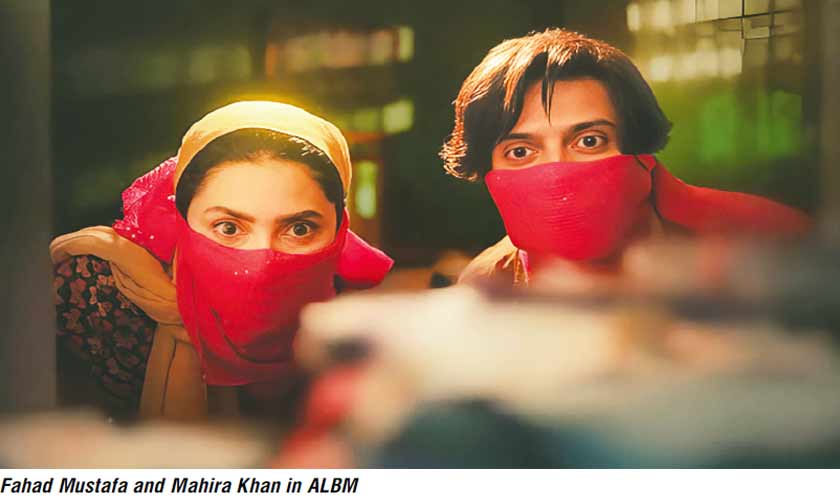
superstars: Fahad Mustafa and Mahira Khan in ALBM
Few announcements have closed out 2025 with as much calculated momentum as ALBM, widely believed to stand for Aag Lage Basti Mein. The project marks Fahad Mustafa’s return to cinema after a prolonged and highly successful television phase, most notably with Kabhi Main Kabhi Tum, which re-affirmed his position as one of country’s few genuinely bankable stars.
The film’s 10-second first look, released on December 29 in 2025 was strategically opaque. Fahad Mustafa and Mahira Khan appear masked, invoking outlaw imagery that prioritises attitude over exposition.
In Pakistan’s contemporary film culture, where symbolism often arrives before story, the move proved effective. The response was immediate and intense, underscoring how star power continues to function as both currency and crutch.
Directed by Bilal Altaf Khan, ALBM is being positioned as a high-energy comedy, a genre long associated with Mustafa but one that has struggled to evolve beyond broad strokes. Mahira Khan’s presence, along with Tabish Hashmi, suggests an attempt to update that formula. Whether the film challenges comedic conventions or simply refreshes them remains to be seen. The pairing was last seen on the big screen in Quaid E Azam Zindabad. As a tentative Eid-ul-Azha ‘26 release, ALBM carries the weight of scale, comparison and commercial pressure, testing whether television’s dominance can translate into cinematic longevity.
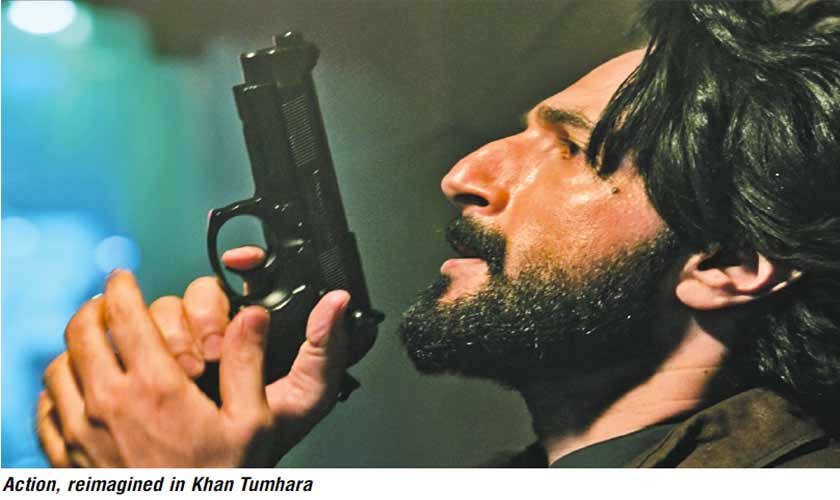
Action, reimagined in Khan Tumhara
If ALBM leans on familiarity, Khan Tumhara signals a different kind of ambition centred on technical credibility. Its teaser, released in November of last year, deliberately sidestepped romance and gloss in favour of brutality, terrain and endurance.
Bilal Ashraf’s Yusuf Khan is framed less as a conventional hero and more as a survivor, while Maya Ali’s armed presence disrupts the industry’s habitual sidelining of women in action narratives. The involvement of international action specialists Nick Khan and Hussain Abdullah points to a growing recognition that spectacle alone cannot substitute for craft. Ashraf’s insistence on performing his own stunts, reportedly at significant physical cost, feeds into a narrative of authenticity that Pakistani action cinema has historically struggled to sustain.
Directed by Mohammad Ehteshamuddin and written by Mustafa Afridi, Khan Tumhara carries creative weight alongside its physical ambition. Its Eid-ul-Azha clash with ALBM raises a larger question: is the industry finally confident enough to sustain competition or still testing the limits of audience appetite? Time will tell.
Fashion’s retail reset: LAAM
Fashion Week ‘26
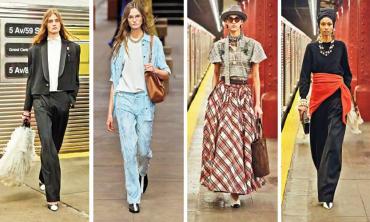
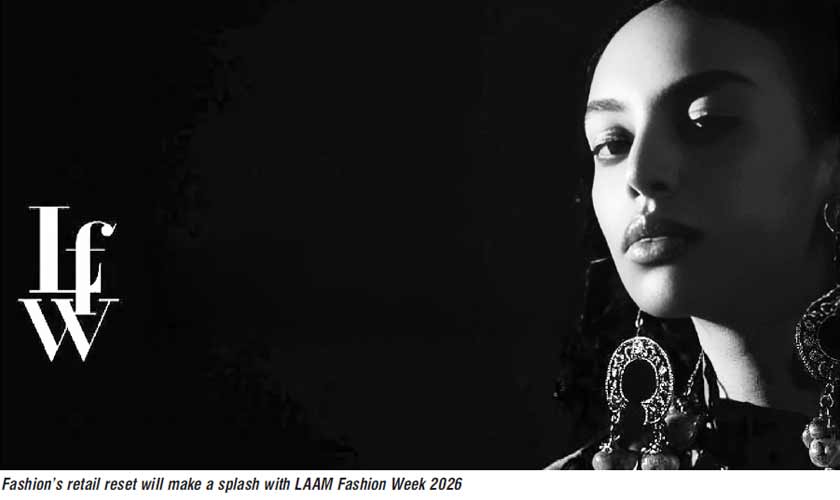
While cinema leans into spectacle and substance, fashion is attempting something more structural and potentially more precarious. LAAM Fashion Week, launching in January ‘26, is less interested in tradition for its own sake. It is the rethinking of how fashion is consumed, sold and scaled.
At its core is a fully integrated runway-to-e-tail model. Every look shown will be available for immediate purchase via LAAM’s digital platform, collapsing the traditional lag between presen-tation and retail. In an industry shaped by algorithmic attention and compressed consumer patience, the model reflects a pragmatic reading of contemp-orary behaviour. Aspiration now unfolds in real time, driven by screens rather than seasonal editorial cycles.
Yet this compression carries risk. By eliminating the distance that once allowed collections to be contextualised and critiqued, LFW also shortens fashion’s discursive lifespan. The danger is not commerce itself, but the possibility that design becomes content optimised for conversion rather than experimentation. When every look must sell instantly, the runway risks becoming a catalogue rather than a site of creative provocation.
The collaboration between LAAM and Design651, with HSY as Event Director and Nabila as Style Partner, lends institutional weight and professional disci-pline. Their involvement suggests an awareness that scale without structure quickly slips into spectacle. Scheduled as a bi-annual event in Lahore, LFW will cater to LAAM’s reported 3.5 million monthly active users worldwide, a figure that under-scores reach while heigh-tening curatorial responsibility.
If executed right, LFW could reposition Pakistan not only as a fashion producer, but as a retail-led fashion economy with global ambition. The question is whether velocity can coexist with vision.
Music: Albums, reinvention and the return of the long form
Perhaps the most quietly consequential shift of 2025 has been music’s renewed engage-ment with the album. In an industry long shaped by singles, soundtracks and algorithm-fri-endly releases, extended projects are once again being approached as deliberate artistic statements.
Asim Azhar’s transition into Asim Ali exemplified this recali-bration. His debut album priori-tised cohesion and emotional continuity over obvious hit-making, signalling a desire for longevity rather than virality. It was a calculated risk in a market built on immediacy.
Late-year album releases from Ali Zafar and Farhan Saeed added further weight to this shift. Both artists, long associated with singles, film music and acting careers, closed out 2025 with full-length projects, signalling a renewed willingness among established names to engage with albums as complete statements rather than legacy gestures. In the case of Ali Zafar, he released his first album in 15 years and that is a clear example of how artists, past and present, are once again embracing the full-length album structure over singles.
In hip-hop, album-led thinking has remained dominant. Talha Anjum and the wider Young Stunners ecosystem continued to prioritise narrative continuity through sequenced releases and collaborative tapes, reinforcing rap’s affinity for long-form story-telling.
This sensibility is increasingly filtering down to younger artists, who are positioning EPs and albums as primary creative units rather than stepping stones. The growing preference for the term “project” over “single” reflects a deeper shift in priorities, framing music as world-building rather than disposable content.

Television’s mantra: Strategy, scale and selective silence
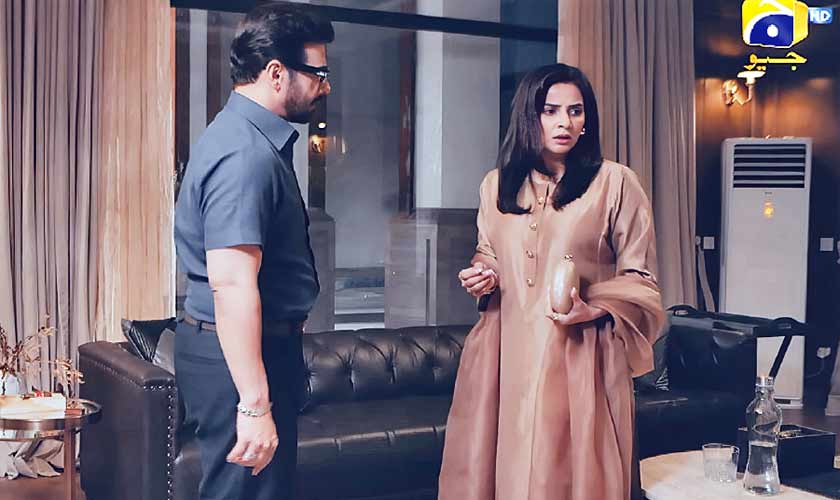
Television, the most prolific and commercially dependable arm of Pakistan’s entertainment industry, is entering 2026 with an unusual combination of visibility and restraint.
Announcements are fewer, rollouts more staggered and projects increasingly framed as events rather than routine programming.
Star power remains central, but its deployment has shifted. Familiar names are being concentrated into fewer, stra-tegically positioned projects.
Among them is Zanjeerein, which reunites Farhat Ishtiaq and Shahzad Kashmiri and features a cast that includes Sajal Aly, Ahsan Khan, Yumna Zaidi, Ameer Gilani and Danyal Zafar. Its focus on love, restraint and social pressure positions emotional credibility as its primary currency.
Elsewhere, Rahguzar, Aik Mohabbat Aur, Dar-e-Nijaat and Tu Jo Mila collectively signal a return to writer-led storytelling, moral inquiry and emotional interiority. Notably, Tu Jo Mila carries added resonance as the final script by the late Saira Raza.
What unites these projects is intent. Fewer episodes, deliberate casting and the foregrounding of writers and directors suggest an industry aware that scale alone no longer guarantees impact. Television’s selective silence appears less like hesitation and more like recalibration.
A year poised on
the edge
Taken together, these shifts suggest point to an industry no longer content with inertia. Cinema is testing its capacity for competition, fashion is conf-ronting its commercial realities, music is reclaiming the long form and television is learning to pause.
If 2025 was about consoli-dation, 2026 looks set to test resolve. The question is no longer whether Pakistan’s entertainment industry can generate noise, but whether it can sustain meaning once the noise fades.