Print Story
X




2026 can be the year in which Ukraine and Sudan conflicts end
| 2 |
026 is likely to be a year of major global realignment. Diplomacy has already turned into coercion. Back-room deals and pressure tactics have turned peace into a commodity. Nations and private players broker reconstruction contracts for selfish gain. Drone strikes, rising defence spending and waning accountability have become the norm. China is expanding its sway a Trump-led US pushes transactional politics. The Global South is pressing for a bigger share of the pie.
Liberal norms coexist today with hard bargaining among great powers; regional exceptionalism is adding further complexity to geopolitics. National security-driven trade and technology policies being pursued by the United States and the ongoing conflicts in Ukraine, the Middle East and the Indo Pacific are turning uncertainty into a norm. This is making rule-breaking and bloc politics more likely. At the same time, the heavy handed use of tariffs, sanctions and export controls is cementing a geo-economic split into the global order. US-China-Russia relations are leading to the creation and growth of new parallel institutions. Can there be a stable order while unprincipled competition and coercion undermine the rules-based system?
Talking to The News on Sunday, Ambassador Naghmana Hashmi (retired) says the world is entering a managed fragmentation where the order bends, regionalises and becomes more overtly power-centred but does not snap. “The established order is likely to muddle through 2026 in a more fragmented, plural and transactional form rather than either holding firm or collapsing dramatically. As the Western alliances are being reinforced on one side, China and Russia, too, are building new groupings. All these are operating alongside the traditional UN framework. This patchwork is reshaping international relations more than tearing the system apart. Groups such as BRICS+ and South-South legal initiatives are pushing back against Western dominance, calling for reforms in trade, climate and global governance.

“Beyond the shifting dynamics in the Global South, a pattern of limited enforcement and great-power leverage is playing out in the Western hemisphere. While the Southern coalitions can raise diplomatic heat, the US military buildup near Venezuela shows how major powers still dictate the hard edge of international action.”
Hashmi says the growing US military presence around Venezuela carries real risks of escalation, regional instability and norm erosion but offers only modest coercive leverage, signaling benefits and intra-alliance credibility. “A full-scale US attack would likely deepen insecurity across Latin America, polarise the hemisphere and draw in great-power rivalry rather than achieve a quick, clean regime change. Besides any blockade or escalation will threaten global economic shocks by disrupting Venezuelan oil, regional energy infrastructure and inviting spillover attacks that could backfire heavily on the United States. The current deployments are consistent with coercive signaling and limited strikes, rather than the logistics footprint required for a large-scale occupation.”
The assessment that economic pressure and a blockade, while it can weaken Maduro’s grip, cannot topple the regime, underscores the limits of coercive tools in Latin America.
The war will likely come to an end sometime next year. Putin knows, Trump is desperate and how to play the game. Also, there are cracks within Europe.
Meanwhile, Trump’s April 2026 trip to Beijing and a reciprocal Xi visit to the United States later in the year provide a contrasting picture of how major powers are trying to manage rivalry while alo milking it for benefits. “The visit will give Beijing leverage to press for tariff rollbacks or looser technology curbs, without abandoning its long-term competitive push. In return, Washington hopes to secure Chinese pledges on fentanyl, market access and Indo-Pacific restraint while keeping its geo-economic and technology containment tools intact.” The likely outcome is a win -win for both including modest “managed protectionism”—partial tariff suspensions tied to sectoral deals—and technical tweaks to semiconductor and AI export controls, while China continues its drive for domestic substitution.
“They are expected to bring a short-term tactical stabilisation to the US-China rivalry rather than a reset, locking in a more predictable leader-level dialogue while the underlying clash over technology, Taiwan and regional influence remains unchanged.” The upcoming US-China summits may give Indo-Pacific and Global-South countries a short-term lull in tensions. Yet, they also signal that the long-run great-power rivalry is becoming a permanent feature rather than a problem to be solved. At the same time, Washington is moving ahead with a $10-11 billion arms package—HIMARS, howitzers, Javelin anti-tank missiles, loitering munitions and NASAMS air-defence—intended to boost Taiwan’s ability to fend off a Chinese amphibious attack.”
Explaining their utility, she says the aid will raise the cost of any attack. However, it will also sharpen Beijing’s threat perception, prompting show-of-force drills, missile tests and blockade rehearsals that push the region into a higher-risk routine. “They raise the odds of accidental air or sea collisions and could pull US allies like Japan into the escalation, even though no side wants a full-scale war.”
This summit also has the potential for a temporary easing of tensions in the Indo-Pacific and Global South. For Pakistan, a warming of ties between Washington and Beijing could be a positive development, says Ambassador Abdul Basit. “A reduction in US-China tensions could create a more stable regional environment. More directly, if the US and China find common ground, it might lessen the likelihood of the US applying pressure on Pakistan on issues where their interests diverge, as China, a staunch ally of Pakistan, could advocate on its behalf. This could allow Pakistan more diplomatic and strategic breathing room. Conversely, this development could be a source of strategic anxiety for India. India has carefully cultivated a strong strategic partnership with the United States as a counterbalance to China’s growing influence in the region. The cornerstone of India’s concern will be the fear that a US-China rapprochement might come at the expense of US support for India,” he says.
In 2026, as the US marks its 250th anniversary, President Donald Trump faces major tests of delivering on his promises. Key challenges include maintaining fragile ceasefires, managing strained relations with Beijing and steering a volatile global economy. The year features significant milestones, his January inauguration anniversary; the July renegotiation of the United States-Mexico-Canada Agreement trade deal; and November mid-term elections that could shift congressional control to the Democrats, potentially constraining his executive power. Regarding the mid-term polls, he says, “Trump as not too much bothered about mid-term elections. He appears confident that by then he would have done something better with the economy, especially on the jobs and inflation fronts.”
Basit says the core of Donald Trump’s political strategy and self-presentation, is built on a foundation of supreme confidence and a claim of singular, transformative achievement. Rather than worrying about the typical political headwinds an incumbent party faces, he is projecting an image of a leader focused solely on his grand agenda.
The challenges in Taiwan and Ukraine remind us that in today’ interconnected world, the actions of major powers reverberate globally, making dialogue and collaboration more critical than ever. Ukraine must re-tool its economy, boost domestic arms production and win the drone-intercept and deep-strike technology race with European help. Russian missiles are slipping past Patriot systems, underscoring the need for stronger support. To keep fighting in 2026, Ukraine needs about $100 billion in aid and top-tier weapons as well as tighter sanctions. The EU agreed to a €90 billion loan after a failed €140 billion reparation plan. NATO’s PURL initiative has raised only $2 billion. At the July NATO summit in Ankara, key discussions are expected to focus on Ukraine’s security framework and future commitments.
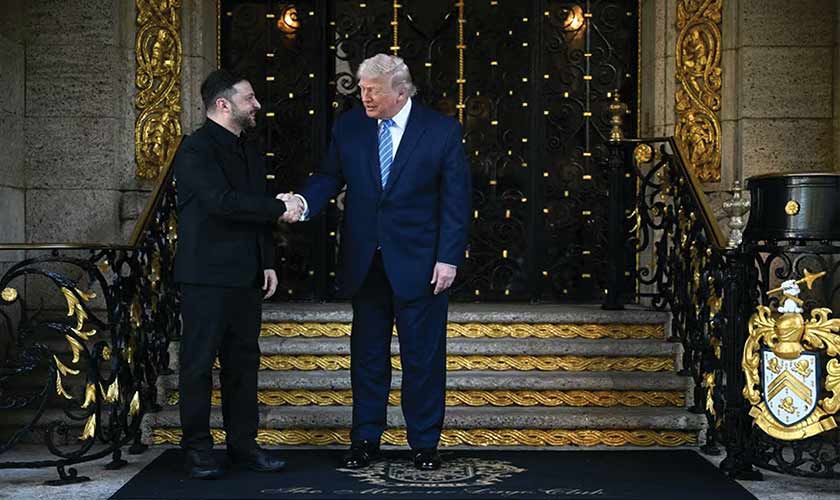
Basit notes that President Trump is reportedly frustrated with President Zelensky and his European allies, recognising their reliance on active US support to sustain efforts. “The war will likely come to an end sometime next year. Putin knows that Trump is desperate and how to play the game. Also, there are cracks within Europe. Zelensky is increasingly isolated. They are inching towards a modus vivendi. Trump’s diplomacy is working. A referendum suits Moscow. It could help make territorial changes legitimate and permanent,” Basit adds. Putin may, at the end, show some flexibility on the Zapporizhzhia nuclear plant.
This year will also test whether the Gaza ceasefire can transition into lasting peace. The US-brokered has resulted in some temporary relief but the progress remains fragile. Israel has killed 414 Palestinians in Gaza since the October ceasefire and continues to block international aid—including tents and other temporary shelter—even as people endure deadly weather.
Ambassador Javed Hafiz (retired) is sceptical about the prospects for lasting peace in the Middle East, citing deep divisions within the Arab world and repeated violations of the Gaza ceasefire by Israel. He says the Trump peace plan faces significant challenges. Recent diplomatic moves have opened talks, but the effort still lacks a concrete framework, timetable or binding commitments. Continued international involvement—particularly from regional powers—is vital to turn this lull into real political progress and reconstruction.
He says, “Israel has clearly chosen a policy of deterrence over diplomacy. This has brought it some tactical gains. The proposal sidelines regional influence, treating Israel mainly as a hegemon and risking its long-term isolation. Hafiz says Saudi Arabia will join the expanded Abraham Accords only if it sees concrete progress toward Palestinian rights, including self-determination. Without this, Saudi participation remains unlikely.
Meanwhile, Israel and its US allies have redirected attention toward Iran’s missile development, contending that it should be addressed proactively to prevent it from becoming a threat to Israel. President Trump has indicated that the United States will consider additional military measures against Iran if the country resumes or expands its nuclear activities or enhances its missile capabilities. Iran’s determination to possess advanced strategic capabilities and Israel’s refusal to allow that make a renewed and potentially larger confrontation highly probable. The current calm is likely not a path to peace, but a preparation for the next phase of conflict.“
Lebanon and Syria are still ticking time-bombs.
Barcelona Centre for International Affairs, in its yearbook for 2026, has highlighted how traditional multilateral diplomacy is being replaced by a “crony diplomacy,” where powerful individuals and countries prioritise lucrative business contracts and strategic investments for mediating countries and their connected private interests over the needs of the warring populations. The Trump-mediated Ukraine-Russia talks are being packaged into a $185 billion profit package for Tesla, Amazon and TSMC (with a Gaza-linked component), alongside 99-year US rail leases across Armenia and Azerbaijan and mineral-rights concessions in the DRC and Rwanda for ExxonMobil and KoBold Metals. Qatar and the United Arab Emirates have stepped in as mediators in Sudan and the Democratic Republic of Congo, securing $21 billion in investment rights—Qatar gaining mining stakes in the DRC and the UAE locking in control of Sudanese gold mines.
The writer is a senior The News staffer in Karachi.