Print Story
X




Pakistan’s population question is about a mismatch between population growth and economic growth
| P |
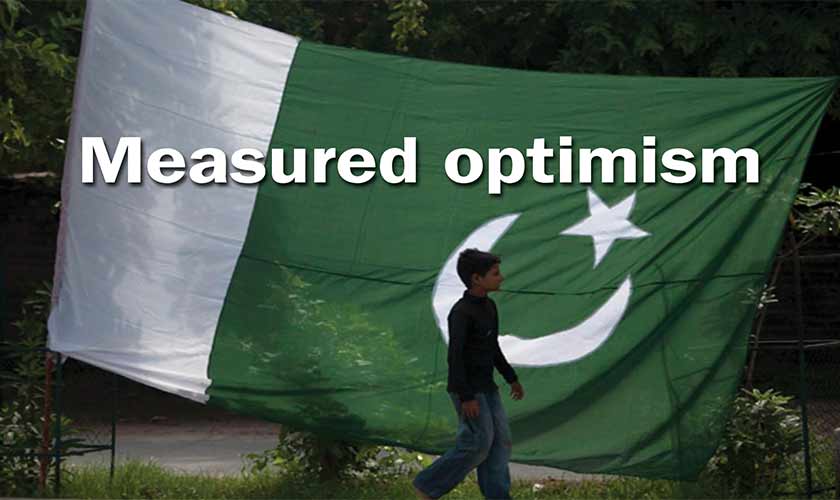
akistan adds more than five million people to its population every year. Most of them are young. This simple fact sits at the centre of the country’s population debate, which is often framed as a binary choice. Either a celebration of a youth bulge or the root cause of every ill. Both framings capture part of the truth, but neither addresses the core issue. With more than 240 million people and a median age of just over 22, Pakistan is one of the youngest large countries in the world. Only a handful of African economies combine a comparable population size with a similar age structure. Most of Asia does not. China, Thailand, Vietnam and India are ageing at speed. Europe and East Asia are already shrinking.
This contrast matters.
Pakistan’s population challenge is not that it is large but that it is growing rapidly at a time when the economy is struggling to create productive jobs, raise human capital and absorb young entrants into the labour market. Fertility remains above three births per woman, well above the replacement rate and higher than most regional peers. Population growth of around 2 percent a year places sustained pressure on an economy growing at three percent or less.
Seen this way, Pakistan’s population question is about a mismatch. The country is adding people faster than it is adding skills, firms, exports, cities that work and other social sector services. This mismatch shows up across social and economic indicators.
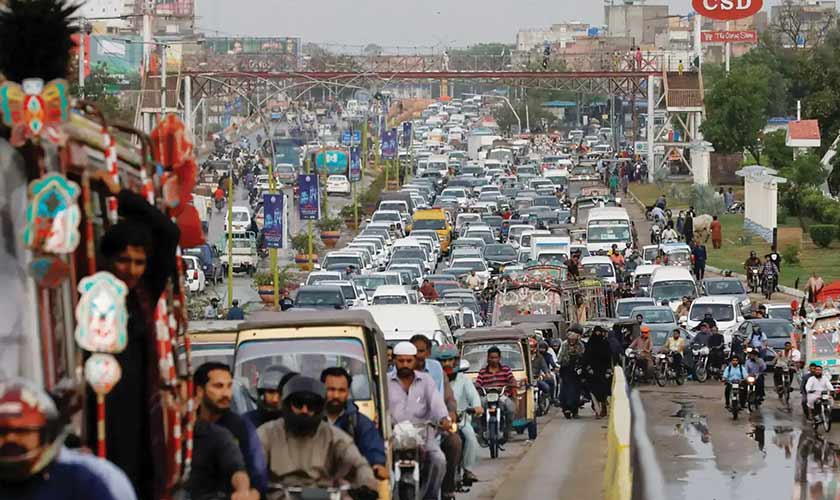
Education systems are stretched thin. Learning outcomes remain weak despite higher enrolment (in selected districts), especially in public schools. Health systems struggle with maternal and childcare, nutrition and basic preventive services. Labour markets absorb young people into informal, low-productivity work rather than into firms that invest, export and scale. Urban infrastructure falls behind population growth, producing congestion, pollution, water stress and housing shortages rather than dense, productive cities.
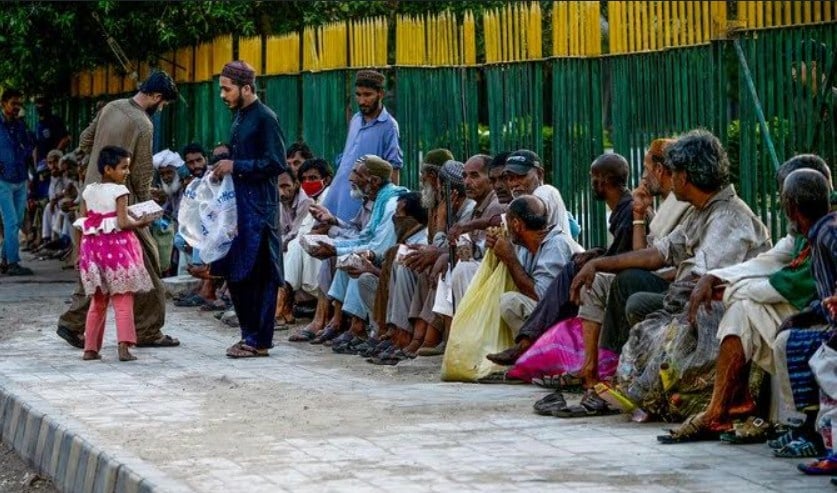
There is also a harder economic logic at work in poorer and marginalised households. For families facing insecure incomes, weak social protection and little assurance of support in old age, children are a form of insurance. A larger family promises more hands to work, supplement household income and provide care later in life. Male children, in particular, are viewed as future earners in contexts where labour markets, inheritance rules and social norms continue to favour men. From this perspective, high fertility is not irrational. It is a coping strategy in an economy where the state offers limited protection against illness, unemployment or ageing.
This logic weakens only when households believe that fewer children can be better educated, healthier and more likely to secure stable work. Where schools fail, jobs remain informal and pensions barely exist, incentives to limit family size stay weak. Awareness campaigns alone cannot overcome economic insecurity.
History offers a more grounded lesson.
Population growth has not been destiny elsewhere. East Asian economies once faced similar pressures. In the 1960s and 1970s, South Korea and Taiwan combined high fertility with scarce resources and young populations. Their turning point was not demographic alone. It came from coordinated investments in education, family planning, export-oriented industrialisation and urban employment. As productivity rose, fertility fell. The demographic profile improved because the economy changed, not the other way around.
More recent examples are mixed but instructive. Vietnam converted a young workforce into manufacturing and export growth by pairing basic education with integration into global value chains. Bangladesh reduced fertility sharply through community-based health services and female education, while expanding garments exports that absorbed women into paid work. Ethiopia invested heavily in primary healthcare before fertility began to decline. Countries that delayed such investments saw youth bulges translate into unemployment, migration pressure and social strain.
These experiences point to a clear lesson: population supports growth only when institutions move first. Demography does not substitute policy.
For Pakistan, this leaves a narrow but real policy space. Human capital must come first. Not simply more years of schooling, but better learning outcomes. Early childhood nutrition, maternal health and primary education deliver the highest returns in a fast-growing population. Without them, later interventions become expensive and less effective. Female education remains especially powerful, raising productivity, delaying marriage, reducing fertility and improving child outcomes at the same time.
Through our work at the Sustainable Development Policy Institute with the United Nations Population Fund, we produced data-driven evidence showing that reproductive health and family planning function as economic infrastructure rather than as social add-ons. Where access is reliable, services are affordable and delivery is continuous, fertility rates fall. Countries that reduced fertility did so by building this infrastructure steadily. This shift does not require coercion. It requires trust in service provision and confidence that fewer children can survive, learn and secure stable incomes through job opportunities.
In our case, the job opportunities created through production-led growth, not consumption-led growth, can absorb our increasing human resources. A young population becomes productive only when firms can hire, train and retain workers at scale. That requires export competitiveness, reliable energy, predictable regulation and access to finance for small and medium firms. It also requires cities that function. Pakistan’s urbanisation has been rapid but poorly governed. Fiscal devolution stopped at the provincial capitals, leaving cities without authority or resources. Urban growth has therefore produced sprawl rather than productivity.
Labour force participation must rise, especially for women. Pakistan’s female participation rate remains among the lowest in the region. This reflects not only social norms, but also the absence of safe transport, childcare, flexible work and suitable jobs. Countries that converted demographic pressure into growth did so by bringing women into paid employment. The gains came through higher household incomes, lower fertility and stronger tax bases.
Population policy must also be explicit about limits. A young population offers possibilities, not guarantees. Rapid population growth strains water, land, climate resilience and public finances. Pakistan is already among the most climate-vulnerable countries in the world. Larger populations increase exposure to floods, heat stress and food insecurity unless economic productivity rises faster than the population.
As I said in the opening, Pakistan’s debate on population often swings between alarmism and denial. Both miss the point. A large population magnifies policy choices. It rewards competence and punishes delay.
The UN’s national human development report reminds us, on an almost annual basis, that we lack the conditions that enable people to become economically productive, climate resilient, healthy and secure. Until those conditions change, population growth will continue to appear as pressure rather than promise. When they do, demographic behaviour will adjust, as it has elsewhere.
The writer heads the Sustainable Development Policy Institute and chairs the National Disaster Risk Management Fund. The opinion expressed here is personal. LinkedIn: Abid Suleri.