Print Story
X




Across two wedding-themed episodes, celebration became a lens through which artistic instinct, restraint and emerging star power were quietly but unmistakably revealed.
| A |
cross Episodes 25 and 26, Pakistan Idol’s wedding special unfolded as something far more revealing than festive programming. Draped in the rituals of mayun and mehndi, the Gala round embraced colour, nostalgia and communal joy with open arms. Yet, beneath the marigolds and dhol beats lay a quieter, sharper narrative. This was not simply a celebration of weddings but a moment where voices were tested, instincts exposed and artistic identities subtly but decisively sorted as the competition edged closer to its endgame.
Episode 25 opened with an ambitious group medley featuring all male and female contestants, pulling from Amir Khusrau-inspired compo-sitions, Punjabi folklore and cont-emporary musical textures. It was less a performance designed for polish and more an act of immersion, inviting viewers into a shared cultural memory rather than dazzling them with per-fection.
The transitions occasionally wavered, and cohesion was not always seamless, but sincerity carried the performances. In its collective energy, the medley set an emotional tone that prioritised feeling over finesse, a fitting entry point into a week shaped by tradition and celebration.
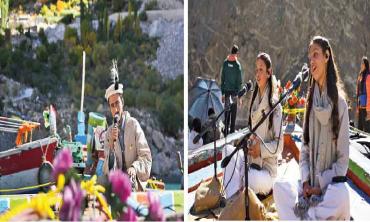
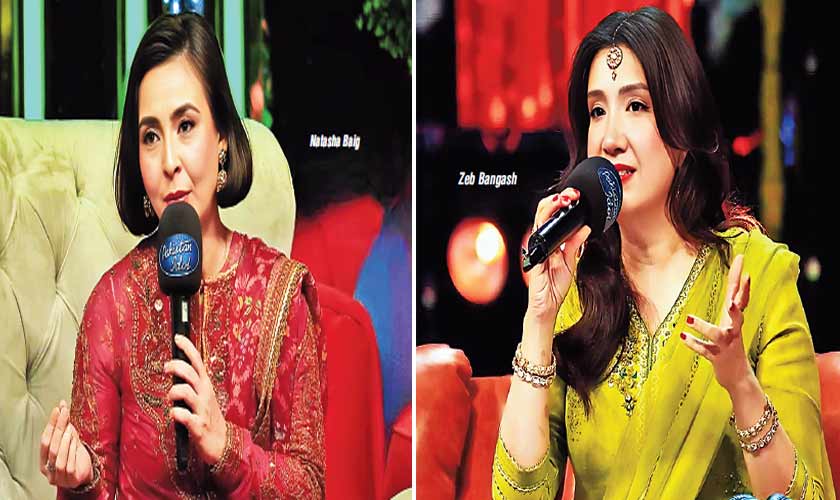
That atmosphere was sharpened by the arrival of guest musician Natasha Baig, whose performance of ‘Yaar Daadhi’ functioned as both interlude and intervention. With measured restraint and precise control over dynamics, she demonstrated how folk-rooted music can remain contem-porary without sacrificing its soul. Her presence recalibrated the room, reminding contestants and viewers alike that power often lies not in excess but in intention.
Among the competitive perfor-mances, Muhammad Minaam emerged as a moment of stillness amid move-ment with ‘Ambwa Talay Dola’ by Bilqees Khanum. The song, steeped in classical lineage, demands emotional maturity as much as technical discipline. Minaam resisted the urge to over-sing, choosing vulnerability over volume. His restraint allowed the composition’s emotional architecture to breathe and the judges responded with consensus, praising the honesty and depth of the rendition.
Faryal Amber followed with ‘Balle Balle’ by Shazia Manzoor, shifting the energy while preserving its emotional weight. At just 15, Faryal continues to occupy an unusual space between youthful ease and vocal maturity. Her performance was expressive rather than aggressive, rooted in rhythm and clarity. When emotion overtook her on stage due to concern for her grandfather’s health, her voice remained steady, never collapsing under the moment. It was a reminder that vulnerability, when supported by technique, can elevate a performance rather than derail it.
Episode 25 concluded with Waqar Hussain’s spirited take on ‘Duniya Te Pyar Mile (Luddi Hai Jamalo)’ by Madam Noor Jehan. Where others turned inward, Waqar expanded outward, transforming the stage into a communal dance floor. The perfor-mance leaned unapologetically into spectacle and while certain moments could have benefitted from tighter vocal control, his rhythmic confidence and willingness to take risks signalled genuine artistic growth. Judges res-ponded not just to what he delivered but to what he is becoming, a performer increasingly comfortable balancing experimentation with intent.
If Episode 25 traced a dialogue between generations and genres, Episode 26 sharpened the competitive lens. The mehndi night was brighter, louder and more assured in its celebration, but its subtext was unmistakable. This was about who could translate festivity into artistry without surrendering vocal authority or musical intelligence.
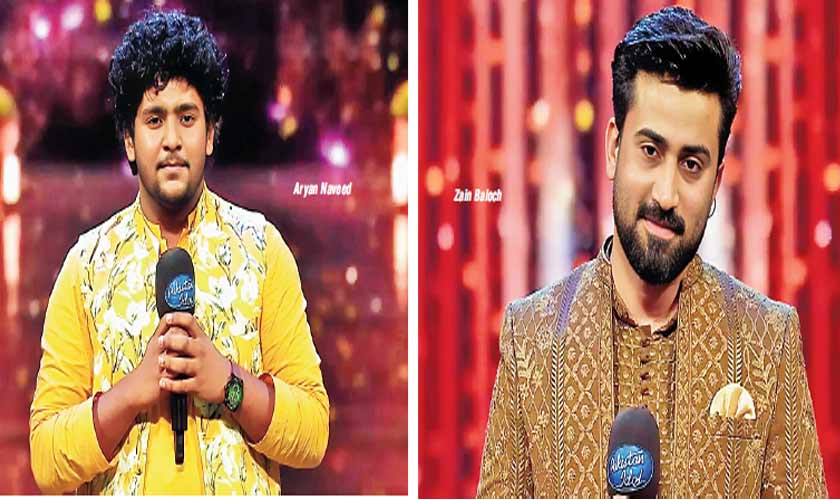
Zain Baloch opened the night with Jawad Ahmed’s ‘Mehndi Ki Yeh Raat’ and immediately asserted command. His performance balanced vocal power with ease, rhythm and effortless audience engagement, carrying the confidence of a seasoned live performer rather than a contestant chasing approval. The judges’ praise felt grounded and precise, culminating in an emotional telephone call from Jawad Ahmed himself, who acknow-ledged the song’s legacy and offered his blessings. The moment felt organic and earned and underscored Zain’s growing authority as both singer and storyteller.
Samia Gohar followed with ‘Ik Pal’ by Hadiqa Kiani, a choice that exposed the unforgiving nature of this stage. While her performance aligned visually and emotionally with the mehndi setting, her voice was clearly not at its strongest. The judges navigated their critique carefully, focusing on song selection rather than intent, repeatedly urging viewers to consider her broader journey. Samia’s own candid admission of struggle added emotional texture to the moment, but the performance served as a reminder that at this stage of the competition, even sincerity must be matched by precision.
Aryaan Naveed delivered one of Episode 26’s most compelling per-formances with ‘Haye Dil Bechara’ by Jimmy Khan. Emerging from bottom-three pressure, he approached the song with confidence, musical inte-lligence and visible joy. Judges framed him as a complete musician rather than a vocalist alone, praising his adaptability and command over complexity. A brief lyrical slip passed without consequence, eclipsed by strong breath control, fluid movement and an infectious sense of ease that continues to define his appeal.
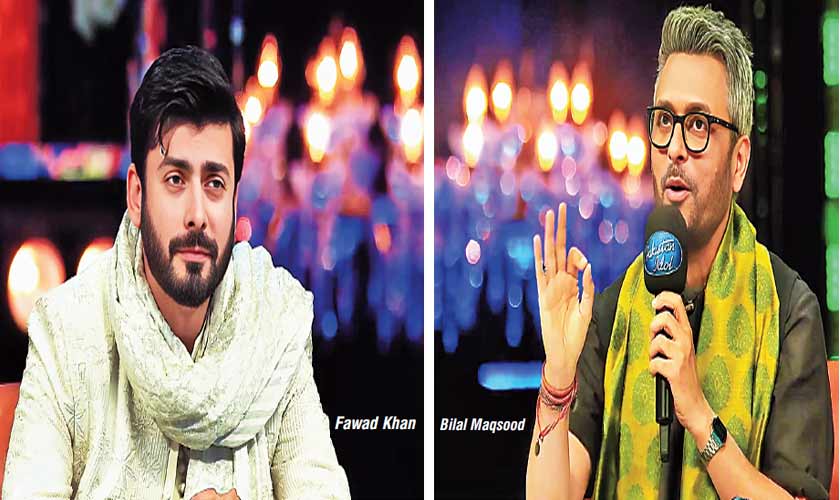
Mehtab Ali closed the competitive segment with ‘Shakar Wanda Re’ by Asrar Shah, delivering a performance rooted in folk exuberance and theatrical abandon. Fawad embraced the performance wholeheartedly, rising for a standing ovation, a sentiment echoed by Asim Raza who also applauded Mehtab’s stage presence. Zeb praised the expressive quality of his movement, his sense of perspective and his sheer confidence, going so far as to call him a rock star. Bilal Maqsood, however, was more measured in his response, suggesting the performance leaned closer to a variety show, acknowledging the strength of the dance while ques-tioning the consistency of the singing. Fawad returned to the larger point, reiterating how effectively he engaged the audience and that it worked as a great moment for him. Natasha Baig, meanwhile, declared Mehtab a showstopper for the night. What remained indisputable was the energy Mehtab generated and the camaraderie it sparked, as fellow contestants joined in and transformed the performance into a shared celebration rather than a solitary showcase.
Both episodes were strengthened by a thoughtfully assembled guest panel. Rahat Fateh Ali Khan was absent due to his daughter’s wedding, with filmmaker Asim Raza stepping in as guest judge across both nights. His insights brought a narrative sensibility to the judging, viewing performances as arcs rather than isolated moments. Natasha Baig’s continued presence added warmth and musical grounding, shifting the tone away from rivalry and toward shared artistry. Episode 26 closed with her performance of ‘Barkha’, leaving the audience suspended in something gentler than judgment.
By the end of the wedding-themed stretch, the Rising Star award was fittingly awarded to Zain Baloch, whose consistency, growth and stage authority now place him firmly at the forefront. Taken together, Episodes 25 and 26 did more than honour wedding traditions.
They clarified trajectories. As Pakistan Idol moves toward its impending eliminations, the cele-bration remains vibrant, but the hierarchy is no longer subtle. The joy is still abundant, yet the stakes have never felt more exacting.