Print Story
X

HOPES and FEARS
Punjab’s Information Minister Azma Bukhari recently dubbed Lahore “Pakistan’s Europe.”The scalar fallacy (the odd city-to-continent comparison!) aside, it’s a fantastical claim. While Lahore definitely boasts the historical charm of cities like Rome and Paris, it lacks the infrastructure and development to match — to say the least.Hollow rhetoric defined the year gone by as rulers consistently launched public initiatives that fell short of their grand promises. As Lahore rings in 2026, it does so with occasional fireworks and all-nighters, but chiefly with a massive carryover of unresolved issues, empty pledges and tall claims.
Can ‘26 break this cycle? Eminent Lahoris —leaders whose insights guide the city — share their thoughts
Compiled by Ahsan Raza
Hope: “Lahore’s historical capacity for renewal”
Fear: “The pressures are unmistakable”
— Raza Rumi
Writer & journalist
| L |
ahore has always lived in many tenses at the same time — it’s a city anchored in memory, animated by culture and restless about its future. As we approach 2026, I see Lahore at a crossroads, shaped by contradictions: extraordinary resilience alongside deep structural stress.
On the one hand, Lahore remains Pakistan’s most vibrant intellectual and cultural capital. Its universities, publishing spaces, theatres, heritage circles and digital platforms continue to generate debate, creativity and dissent. A younger generation of Lahoris — writers, artists, entrepreneurs, historians and technologists — is reclaiming the city in new ways, often outside formal institutions. This civic energy that is Lahore’s greatest asset will only grow in 2026.
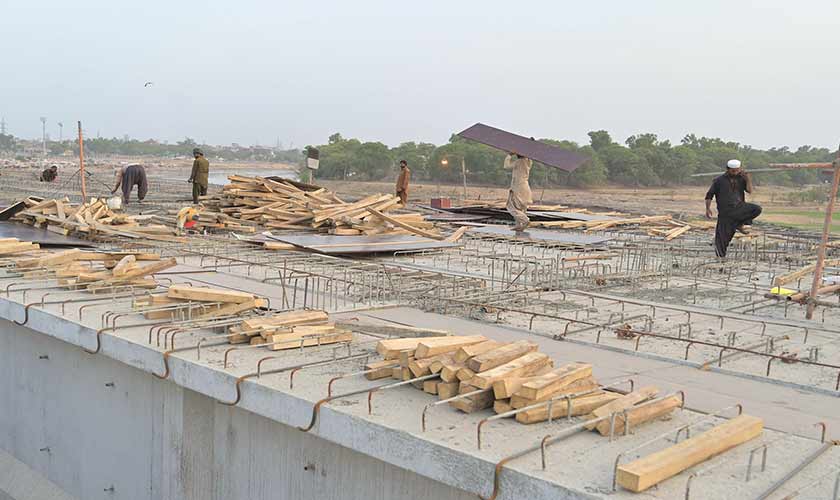
Yet, the pressures are unmistakable. Rapid, poorly regulated urban expansion has strained Lahore’s infrastructure, environment and public services. Air pollution, water scarcity, loss of green spaces and traffic congestion are no longer abstract policy concerns; they shape everyday life and health. Without serious investment in sustainable urban planning, public transport and environmental governance, the city risks becoming less livable for its most vulnerable residents.
Politically and socially, Lahore in 2026 will continue to reflect Pakistan’s larger tensions. It will remain a site of contestation — between centralisation and local autonomy, between securitisation and civic freedoms, between spectacle-driven development and inclusive growth. The city’s future will depend on whether governance moves closer to citizens, empowering local communities, municipal institutions and cultural custodians rather than sidelining them.
What gives me hope is Lahore’s historical capacity for renewal. This is a city that has absorbed conquest, colonialism, migration and upheaval — yet repeatedly reinvented itself through ideas, art and public debate. If Lahore in 2026 chooses to invest in its people, protect its heritage and plan responsibly for climate and urban challenges, it can still model a humane, plural and intellectually alive metropolis.
Lahore’s direction is not predetermined. It will be shaped by the choices we make now — about inclusion, sustainability and the kind of city we want future Lahoris to inherit.
Hope: “This hesitant, half-permitted Basant only Lahore could do with”
Fear: “Actual life keeps shrinking”
— Dure Akram
Journalist who loves everything about Lahore
| A |
sk any Lahori what kept the city alive last year and they won’t be able to name a project or a policy; but they’ll tell you about Christmas lights, at places where silence once felt heavy; they’ll tell you about seeing women out and about, unafraid to belong; they’ll tell you about the vibrant Jashn-i-Bahaaran; and a first-of-its-kind project to clean up roads and streets.
To a common Lahori, these matter more than the leaders’ speeches ever will.
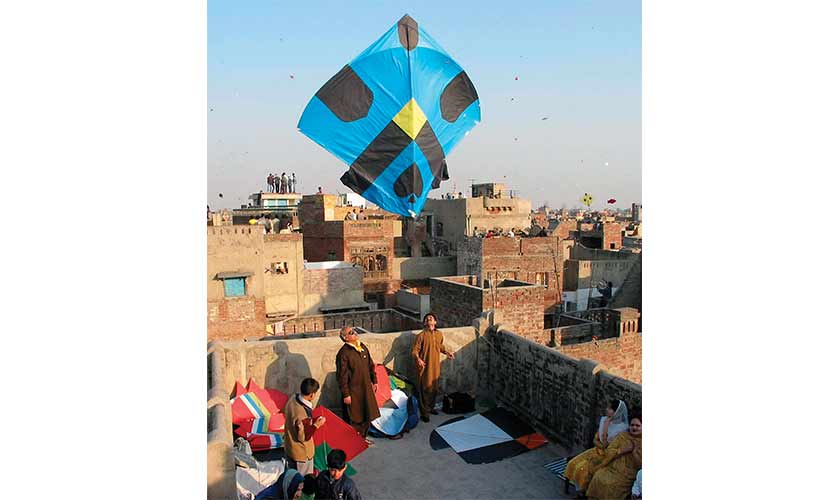
And, what to talk of Basant — this hesitant, half-permitted Basant is something only Lahore could do with. It reminds us that our city resists erasure. You can regulate it, restrict it, return it to its shell, but you can’t suppress Lahore’s craving for colour.
That said, let’s not fool ourselves. Lahore is tired. We inhale smog like it’s a seasonal fruit; we sit in traffic like it is our destiny; and we follow political drama like it’s family gossip.
The Ravi, once the city’s spine, now watches on from a polite distance, almost embarrassed. We keep building higher and wider, while actual life keeps shrinking.
Lahore in 2026 doesn’t need grand visions or imported slogans. It needs basics done well: clean air, walkable streets, parks that belong to the public, not marquees; culture that doesn’t need barricades; and a city where everyone can come and say their piece. Whether you agree with them or not, give them the space to claim their own. As Fakhr Abbas said,
Yeh jo Lahore say mohabbat hai,
Yeh kisi aur say mohabbat hai.
Us ki har tarz mujh ko bhaati hai,
Us kay har taur say mohabbat hai.
Hope: “The city is going to be cleaner”
Fear: “All measures to make Lahore more livable will be restricted to posh areas”
— Dr Qais Aslam
Former professor of economics, GCU
| I |
n 2026, in Gulberg and other posh areas of Lahore, electric and fibre optic cables are expected to be laid underground. I think the city is going to be cleaner.
I also see healthcare becoming more accessible to the public, but medicines prices might go up.
Schools are going to be privatised and cultural events like Basant and Christmas shall become public, but rural-urban migration will lead to an increase in the population of the city. The Ravi shall remain polluted.
The affluent will continue to enjoy life at the expense of the poor and the working class. All measures to make Lahore more livable will be restricted to posh areas, at the cost of the Old City.
***
Hope: “The city finds an owner”
Fear: “There’s no real governance”
— Dr Farid A Malik
Public figure, political activist and ex-chairman of Pakistan Science Foundation
| I |
was born in this city. Back then, Lahore had a Town Hall which was the centre of the city. Lahore had an elected mayor who was responsible for everything. The city was very active and alive. It had a great bus service called the Omni Bus. It was also known as LWS. Its depot was near Mozang Chungi.
Double-decker buses were a symbol of the city. They plied across Lahore.
My school was on The Mall, my college was also on The Mall and Punjab University Old Campus was there, too. In the morning, I’d walk to school. The roads would be all clean and free of rubbish. We’d go to school on our own and come back on our own.
Elected mayors ran the city. If they did not work, people would not re-elect them. Later, Lahore came under the Cantonment Board. Instead of elected people, appointed officials started running the city.
Slowly, the city began to decline.
Lahore has become a helpless city, a city without an owner. It is only a show piece for the Punjab. Everything done here is for the sake of display. The Safe City Project is a big show. When you see its control room, it looks like a space control centre — there are cameras watching you from all corners, and yet the crime rate wouldn’t drop. The main purpose of these cameras seems to be to serve tickets to traffic violators.
The cameras do not see garbage trucks blocking roads during school hours. They do not see tanks watering plants on greenbelts during office hours, causing traffic jams. They don’t catch policemen violating traffic lights every day — their vehicles are often without number plates — but they are not fined.
There’s a host of government departments, such as the Waste Management Company and Pakistan Horticulture Authority; but there is no real governance.
My wish for Lahore in 2026 is to get back the city in which I was born and where I went to school. I hope the city finds an owner. The chief minister’s job is to run the province, not a city; that’s the job of the mayor.
Hope: “Lahore should return to its democratic ethos”
Fear: “Next to no political activities”
— Ammar Ali Jan
Academic, author and founder of Haqooq-i-Khalq Awami Party
| W |
e would like to see Lahore become a place that is clean and safe and open to political participation.
Lahore has always been the centre of political activity in the subcontinent and in Pakistan. Right now, next to no political activities are allowed in the city, particularly those by opposition leaders.
We would like Lahore to return to its democratic ethos and become a hub for critical thinking, intellectual activity — dissent or positional activity.
That’s what we are hoping for.
Hopes: “More activity in real estate, and a surge in coffee culture”
Fear: “Lahore’s population is going to increase exponentially”
— Ali Aftab Saeed
Musician, journalist and satirist
| I |
think more and more wealthy people from all over Pakistan would like to send their children to Lahore, because of its improved law and order, road infrastructure and affordable housing.
Thanks to all this, we may get to see more activity in real estate, more brand outlets and a surge in coffee culture — in the new year, that is. Basically, there will be more demand for everything, which will attract people from lower-income groups in search of jobs to Lahore.
That is not to say that Lahore’s population is going to increase exponentially over the next few years.
Hope: Trees around the canal shouldn’t be cut to make space for the Yellow Line
Fear: Expansion of city by trespassing agriculture land
— Falahat Imran
President, Women’s Chamber of Commerce and Industry, Lahore Division
| I |
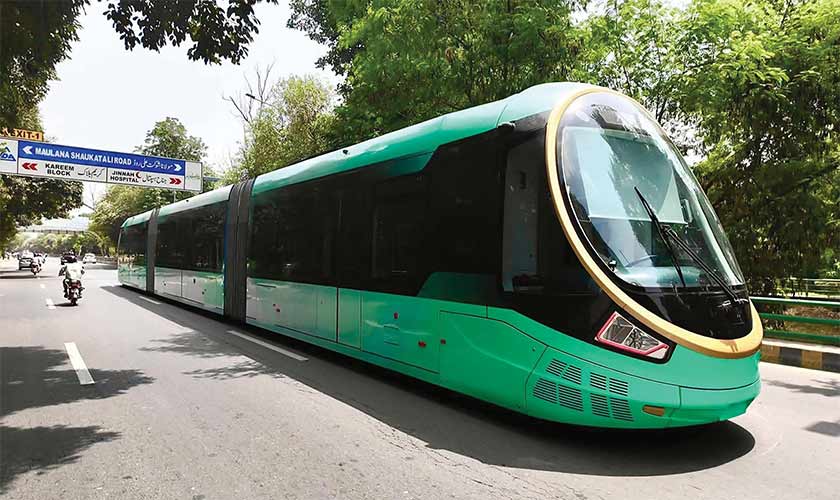
see a lot of developmental projects for Lahore under way. I strongly believe these projects need careful monitoring. Under no circumstances should the trees around the canal be cut to make space for the Yellow Line; or the historic Nasser Bagh be converted into a parking ground.
Our heritage spaces are the footprints of our roots. Just like London and Paris. There’s no harm in expanding the city, but it should not be done by trespassing our agricultural land.
These are the foremost issues that the government should be looking at.
Besides, I feel there’s a need for creating safe outdoor sports areas for women. These could be parks and play arenas.
Hope: “The city becomes breathable again”
Fear: Institutions are being mismanaged
— Hamza Ghaznvi
Entrepreneur; founder of Propergaanda
| L |
ahore’s most urgent challenge remains existential: the city needs to become breathable again. Smog is no longer just an environmental issue; it’s a public health emergency. Load shedding, too, continues to undermine daily life and productivity. It has become this unshakable curse attached to Lahore.
If Lahore is to truly thrive, it must invest in its cultural backbone. Theatre, film and the arts cannot survive on individual passion alone. These need institutional support and funding. Institutions
like the Alhamra Arts Council need a major revamp
in terms of its infrastructure and how it’s
managed.
A city is not defined only by its roads and towers, but by the air its people breathe and the culture they create. That’s the Lahore worth building.
Ahsan Raza is the editor of Minute Mirror. He can be reached at [email protected]