Print Story
X

| F |
reedom — that luminous word around which modern civilisation revolves — has become, in our age, a beautifully crafted illusion. We repeat it as a sacred mantra, equating it with choice, ownership and self-expression. We believe that we are free because we can choose between endless variations of the same thing, because we can display our individuality through the brands we wear or the devices we hold. Yet this supposed freedom conceals a quiet captivity.
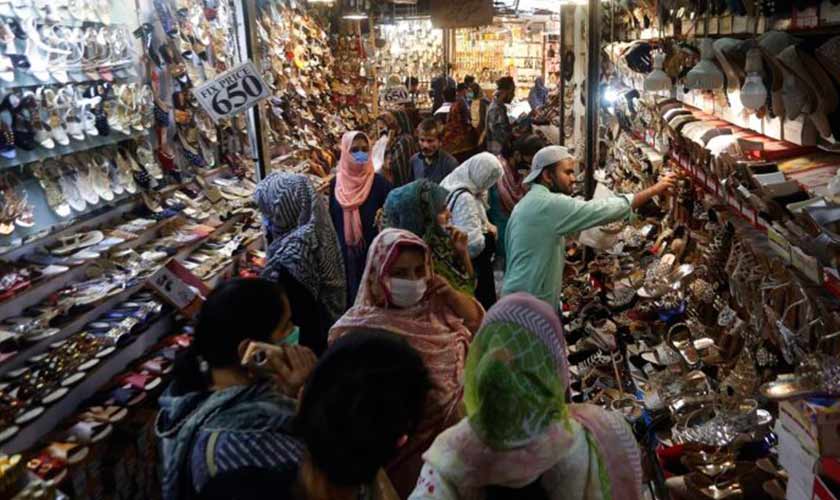
Beneath the glittering surface of consumer society lies a subtle tyranny: not the tyranny of kings or conquerors, but of things. The modern individual, in chasing comfort, convenience and recognition, has become the servant of his own desires — desires not born from within, but carefully engineered from without. We mistake our compulsions for choices; our cravings for freedom; and our possessions for identity. It is this tragic reversal, this spiritual inversion of liberty, that Erich Fromm devoted his life to unveil. Fromm saw that the modern world, in proclaiming liberation, had merely replaced the old chains of authority with new chains of consumption.
The modern man works not to live, but to buy; not to create, but to display; not to be, but to have. He runs endlessly on the wheel of production and consumption, believing movement to be progress. What once enslaved the body has now conquered the mind. The marketplace has become the new temple and advertising the new scripture. Fromm described this condition as a kind of modern slavery — a system that binds not through oppression, but through seduction. In this system, happiness is always deferred, sold to us in glossy images and fleeting pleasures. The more we consume, the more our emptiness expands, for the satisfaction of the false need never touches the hunger of the soul.
At the heart of Fromm’s philosophy lies the distinction between two fundamental modes of existence: having and being. The world of having is the world we inhabit today — a world obsessed with possession, where worth is measured by accumulation. To have is to cling, to define oneself through ownership: I have wealth, I have power, I have love, I have knowledge. Yet in the very act of having, one loses the essence of living. Love becomes a property; knowledge a collection; the self a trophy case of things acquired. The having mode thrives on fear — fear of loss, fear of insignificance, fear of being nothing without the security of possessions. So the modern individual clings ever tighter, mistaking the prison of ownership for a fortress of freedom.
The being mode, by contrast, is an entirely different way of existing. To be is to live in active relationship with the world rather than to dominate it. It is to love without possession, to think without control and to create without calculation. Being is spontaneous, alive, unguarded — it cannot be stored, measured or bought. In the being mode, the self is not a container of experiences but an unfolding process of growth. The poet who writes, the craftsman who shapes and the lover who gives live in the being mode. They participate in life rather than consume it. Fromm believed that only through rediscovering this mode could humanity escape the spiritual poverty of modern times. But the difficulty lies in the structure of modern society, which rewards having and punishes being.
True freedom begins when we stop mistaking choice for liberty, consumption for fulfillment and possession for life. It begins when we no longer ask what we can buy, but who we can become.
The machinery of mass production depends on endless consumption. Such consumption depends on creating discontent. Thus are born what Fromm called false needs — desires that masquerade as necessities, designed not to fulfill but to perpetuate dependence. We are told that we need more comfort, more speed, more novelty, more validation. Yet, each satisfaction is hollow, each pleasure fleeting. We are left restless and anxious, caught in a cycle of craving that no object can end. In this way, the modern economy does not serve human needs — it manufactures them, turning the human being into both product and consumer, into the very instrument of his own enslavement. Fromm, however, was not merely a critic; he was a humanist, and therefore a believer in the possibility of renewal. He envisioned a different kind of freedom — one grounded not in having more, but in being more. To achieve this, he proposed a transformation of life’s very orientation, guided by four essential capacities: craft, love, reason and joy.
Craft, for Fromm, is the art of creation — the rediscovery of the human as maker rather than buyer. In creating, one participates in the world instead of consuming it; one becomes active rather than passive. Love is the deepest act of being — not a possession or an exchange, but a practice of care, responsibility and respect. It is through love that the walls of isolation crumble and the individual rediscovers his connection to life. Reason, as Fromm conceived it, is the courage to awaken — to see reality as it is, unclouded by ideology or illusion. It is the faculty that allows us to pierce the fog of consumer propaganda and recognise the truth of our condition.
Joy — the rarest of all in modern life — is the quiet radiance of being alive, the contentment that flows not from having, but from being fully present in one’s existence. In these four paths, Fromm saw a map back to authenticity. They are not rules, but attitudes; not moral commands, but ways of being human again. Through them, we rediscover that life’s meaning cannot be bought or owned; only lived.
A poet might say that the having mode is winter — static, frozen, hoarding what little warmth it can — while the being mode is spring, overflowing, generous, alive. To live in the being mode is to open the hand that clutches and let the world flow through one’s fingers, knowing that what is truly ours can never be lost. Today, Fromm’s words echo with prophetic force. In an era where even attention has become a commodity and our inner lives are mined for data, the illusion of freedom grows ever more convincing — and ever more hollow. We live in a society that mistakes noise for vitality and distraction for joy. We scroll, we purchase, we display — and call it living.
Yet beneath this feverish motion lies an aching stillness, a silence that asks: what have we become? Fromm’s answer is both sobering and liberating: we have forgotten how to be. But we can remember. The path to freedom, he tells us, begins not with rebellion against society, but with the awakening of the self — the reclamation of our capacity to love, to create, to think, to rejoice without ownership.
True freedom begins when we stop mistaking choice for liberty, consumption for fulfillment and possession for life. It begins when we no longer ask what we can buy, but who we can become. In the end, Fromm’s philosophy is not a rejection of the world, but a call to re-enter it more deeply — to live not as owners of life, but as its participants. When we cease to consume existence and begin to experience it, the chains of modern slavery fall away. For only in the courage to be — not to have — does the human spirit find its home again.
The writer is a professor in the Faculty of Liberal Arts at the Beaconhouse National University, Lahore.