Print Story
X




From the centrality of capital for Pakistan’s elite class to the travels in Samarkand during the Soviet era, the books offer diverse and intresting reading
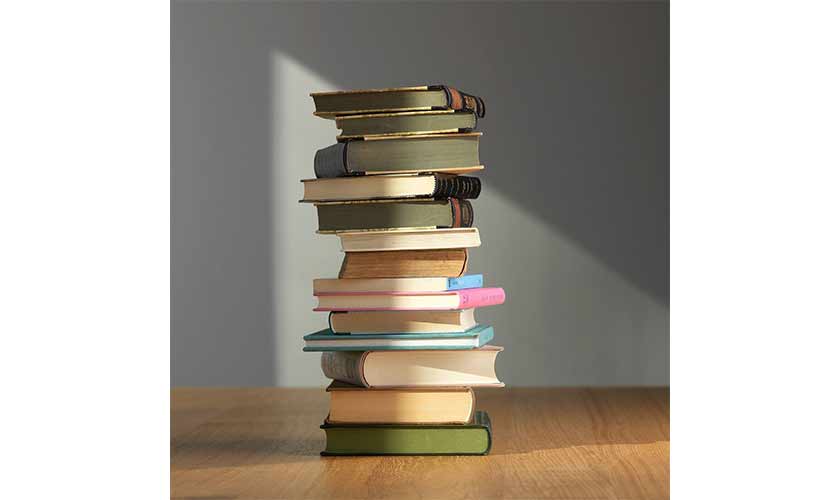
I read 12 wonderful books in 2025. Here is a brief account.
| I |
began the year with Big Capital in an Unequal World - The Micropolitics of Wealth in Pakistan by Rosita Armytage. This is a research on the Pakistani elite class, its origins from the British times (families from that era are referred to as established elite in the book) to the recent emergence of wealthy families, referred mostly as navay rajjay. It is an informative account of how through exclusive clubs and schools (Aitchison College is mentioned), legislation, marriages and bribery the elite class perpetuates itself, protecting and expanding its wealth and power and makes one realise the insignificance and lack of opportunities for the middle and lower classes.
In We Need to Talk about Inflation - 14 Urgent Lessons from the Last 2,000 Years Stephen D King points out that the 2021 global inflation came as a surprise for central bankers and policy makers who had started considering inflation something of a historic relic. Tracing the history of inflation since the Roman Empire, the book delves into diverse aspects like the inflationary role of governments, techniques for forecasting inflation and groupthink in the monetary policy committees of the central banks. However, I found the book lacking in academic rigour.
The Last Man in Russia - The Struggle to Save a Dying Nation by journalist Oliver Bullogh traces the history of the Soviet Union, especially during the times of Stalin and Khurshchev, by following the life of a dissident priest Father Dmitry Dudko (1922-2004). The author travels all over Russia from the birthplace of Father Dmitry, close to Ukraine in the east, to the gulag near the Arctic where he was imprisoned for a decade, meeting with and interviewing people who had interacted with Father Dmitry as he campaigned against Soviet repressive policies and spoke widely against alcoholism and other vices. The book chronicles the dissident movements and KGB tactics that ultimately led to Father Dmitry himself recanting in early 1980s. Thereafter, he led a largely lonely life. Grim reading at times, the book affords some insight into the Soviet-era conditions from a largely Western perspective.
I had been planning to read Bertrand Russell for quite some time. This year, I finally read The Conquest of Happniess and was impressed with his clarity of thought and simplicity of writing. In his peculiar writing style, making use of examples from everyday life, Russell elaborates the reasons for both unhappiness and happiness and leaves one thinking about one’s own life and habits. He summarises the happy man in the closing chapter and concludes that certain simple things, including food and shelter, health, love, successful work and possibly parenthood, are indispensable for happiness.
I received Seat 1C - A Survivor’s Tale of Hope, Resilience and Renewal from my friend and colleague Zafar Masud and found it an engrossing account of the crash of PIA’s Flight 8303 (from Lahore to Karachi on May 22, 2020) and the lessons learnt by him during and after the crash. Zafar Masud was one of the only two survivors of the plane crash that took 98 precious lives, including that of my friend and colleague Khalid Sherdil who was possibly seated next to him. The book blames the crash mostly on the arrogance and lack of professionalism and accountability that had become hallmark of the airline over the years. Calling his survival a miracle, the author credits only his parent’s prayers for it. The book concludes by encouraging the readers to lead their lives with more empathy and to offer support to the community wherever possible.
Sophy Roberts, a British writer whose work focuses on remote travel, traversed the length and breadth of the vast Siberian landmass for two years in search of pianos, their owners and their stories and chronicled her quests in The Lost Pianos of Siberia. She went to Irkutsk, the Paris of Siberia, and to Harbin, the Moscow of the East; from the Yamal peninsula in the Arctic circle to the Kuril islands out in the Pacific in search of interesting leads and conversations. She also covers the Russian and Soviet history of the past two hundred years. The grisly execution of Tsar Nicolas II, his wife Alexandra and their five children by the Bolsheviks in Ekaterinburg, and the subsequent search for their remains, is described in some detail and forms a grim part of this historical travelogue. A good read, the book would be appreciated more by music enthusiasts than those more into travel books.
As a high school student, I once wrote an article about our solar system for a newspaper. Four decade later, I have read the fascinating and insightful The Future of Geography - How Power and Politics in Space will Change our World by Tim Marshall about space and all there is about it. The book encapsulates the essential knowledge in the field starting from the Big Bang 13.7 billion years ago to the formation of our sun a mere 4.6 billion years ago and the first proof, from around 30,000 years ago, of humans’ first chronicled interest in space to the landing on the moon. The book is a must read to understand the space activities of the big three (USA, China, Russia), the future plans, challenges and dreams as well as the present and future of politics and technology.
Jamil Ahmad’s debut novel The Wandering Falcon is a highly readable piece of fiction covering the spectrum of Frontier Crimes Regulations enforcement, honour killings, role of elders and mullahs in tribal societies, spying for foreign powers, annual migrations between highlands and plains and the increasingly disruptive role of formal governments and modern lifestyle.
Lost Islamic History - Reclaiming Muslim Civilisation from the Past by Firas Alkhateeb is a compact account of the tumultuous history of Islam since the times of pre-Islamic Arabia to the rise of nation-states in the 20th Century. The book highlights the cyclical nature of Islamic history, ranging from the expansion during the Umayyad era, the Salahuddin Ayubi conquests, the Ottoman rise and the Mughal consolidation to the Mongol destruction of Baghdad, the crusades and the general stagnation from the 1600s onwards. I found the account of loss of al-Andalus in the 15th Century a particularly sad part. Modern Muslim countries remain unsure between choosing Islamic political order and modern nationalism and secularism and striking a balance between the two. That balance will largely determine the role of Islam in the coming decades and centuries.
Adam Smith’s Think Again - The Power of Knowing What You Don’t Know is one of the most thought-provoking books I have read and joins the list of my favorite books. An excellent case for regular re-thinking in our lives and careers, it makes a forceful and logical argument for making one aware of the limits of one’s understanding, thinking like a scientist and resisting the temptation to preach, prosecute or politick when starting to form an opinion. Readers are advised not to confuse confidence with competence, to realise that everyone knows more than them about something, to practice the art of persuasive listening and to consider that there are often more than two sides to every story. The one suggestion that I found particularly interesting was to abandon best practices (which suggests that the ideal routines are already in place) and instead to adopt process accountability and to strive for better practices.
In Economics in America - An Immigrant Economist Explores the Land of Inequality Noble Prize-winning economist Angus Deaton explores major economic issues like minimum wages, healthcare, inflation and pensions that concern the American public. Highlighting the types of inequalities that exist in American economy and society, he divides the mainstream economists into two broad groups - “conservative economists” and “progressive economists.” Both groups, he argues, believe in the power of markets while also caring about poverty. But, according to him, progressives worry about inequality as well and are willing to use redistribution even at the cost of some efficiency to correct failures of the market. According to him all mainstream economists think of human welfare in terms of money. He advises abandoning such a fixation and to instead think like sociologists and philosophers in search of solutions.
Geoffrey Moorhouse’s Apples in the Snow - A Journey to Samarkand is an interesting book about his travels in Central Asia in early 1989 when Mikhail Gorbachev’s glasnost was opening up the USSR. Commencing his journey in Almaty, the author travels to Merv, Tashkent, Bukhara and finally Samarkand, experiencing life in these cities under Soviet occupation and marvelling at the unique architecture scattered in the region. He delves into the historical as well as contemporary events of the region, from the conquests of Genghiz Khan and his successors in the 13th Century, including the complete destruction of Merv, then the second largest city after Baghdad, which resulted in a death toll of up to a million people at the hands of Genghiz Khan’s son Tolui, to the Soviet withdrawal from Afghanistan.
The writer specialises in finance, development and public policy. He can be reached at [email protected]