Print Story
X




In 2025, the United Nations and world powers failed to contain conflicts in Gaza, Sudan, Syria and Ukraine

| T |
he global security landscape in 2025 witnessed a dangerous transformation. Rising power rivalries, unchecked military aggression and dwindling respect for humanitarian law are converging, fragmenting the international system into a New World Disorder that makes instability chronic and erodes civilian protection. At the same time, international cooperation is fraying: sharp cuts in aid and frequent UN Security Council vetoes have paralysed effective responses to mass atrocities in Sudan, Syria and the occupied Palestinian territory.
For decades, the post-1945 international order operated through dense multilateral institutions like the United Nations and the World Trade Orgaisation. Major powers, despite their differences, worked within shared legal and normative frameworks. That era is fading. Core humanitarian principles are eroding because of compromised civilian protection, obstructed aid, collective punishment and weakened war-crimes accountability. The fraying of international rules isn’t just a symptom of global rivalry—it is actively accelerating it. As multilateral systems weaken, regional powers are creating competing blocs and new arenas for confrontation.
Explaining the fracture, former ambassador Naghmana Hashmi says, “Global governance is splintering into overlapping, rival regimes. This is evident in trade (from WTO to minilateral deals), security (from UNSC to ad hoc coalitions) and development finance (from Bretton Woods to new banks and initiatives). The major powers increasingly treat institutional fragmentation as a tool of statecraft. They create exclusive clubs (BRICS+, technology coalitions) that embed their own rules and exclude competitors, thereby transforming rule-making itself into a core arena of rivalry.”
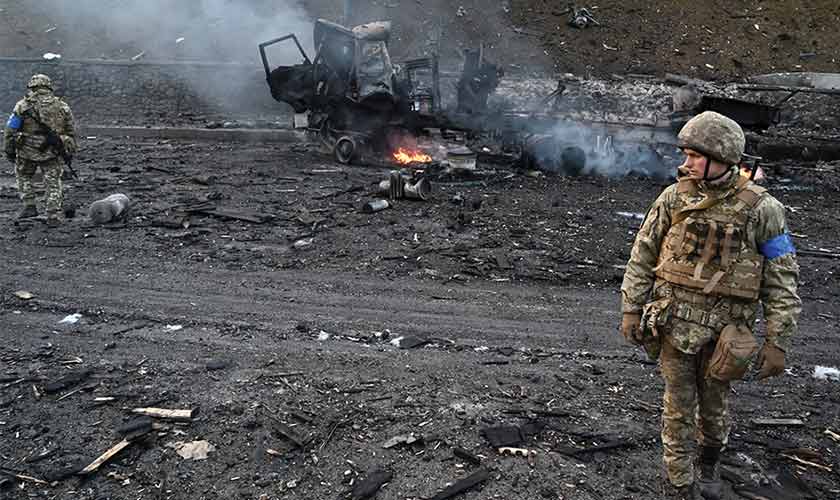
This breakdown of rules enables powerful states to prioritise their interests over collective norms, making relationships more situational and self-serving. The Russian challenge to principles of territorial integrity in the continuing offensive against Ukraine and China’s push for alternative institutions and standards show how some norms are openly rejected.
Another trend that defined geopolitical competition this year, was the great-power brinkmanship driven by raw coercive posturing rather than by diplomacy.
Tragically, this also replaced diplomacy with coercion. Negotiations within universal institutions are viewed as slow, unpredictable and framed as weakness. Powerful leaders are inclined towards more unilateral, visible instruments, said Ambassador Hashmi.
Competition is spreading into trade, finance, cyber norms and regional security architectures where rival powers try to secure advantage by locking each other out of key systems and rule-making.
Reviewing US-China trade competition, former diplomat Abdul Basit says: “US President Donald Trump’s efforts to bring manufacturing back to the US and reduce China’s control over critical minerals are his main instrument of statecraft. The aim is to make America and its partners less dependent on rivals rather than confronting them directly in their regional spheres of influence. In short, if he looks humming and hawing it is not without a purpose.
“This also explains why tough trade rhetoric sits alongside reluctance to military escalation in places like the Taiwan Strait or Eastern Europe. The focus of the US president is on economic primacy, not ideological or military dominance.”
A trend that defined geopolitics this year, was the great-power brinkmanship driven by raw coercive posturing rather than diplomacy. Tragically, this radical global change also replaced diplomacy with coercion.
Donald Trump’s push for a new global order is not about withdrawing from the world but about radically renegotiating America’s role – using US power as a transactional tool rather than as a provider of global public goods. “By using US power unilaterally where possible or plurilaterally where ineluctable, Trump is trying to create a new world order,” says Basit. Elaborating the critical features of Trump’s foreign policy, he describes it as built on a zero-sum view of national interests. “In Gaza and Ukraine, the US did not defend a rules-based international order, but punished adversaries (Iran-backed groups and Russia) while pressing allies for concessions on burden-sharing and diplomatic alignment. In Venezuela, maximum-pressure sanctions aimed at regime change, reviving a more assertive Monroe Doctrine in Latin America.”
Despite his endless claims of peacemaking and stopping wars, Trump’s policies are unlikely to bring lasting peace and resolution to several conflicts around the world. In the case of Palestine, Ambassador Basit says the Trump administration’s Peace to Prosperity plan and the Abraham Accords deliberately sidestepped core final-status issues – Palestinian statehood, Jerusalem and refugees.
By recognising Israeli sovereignty over settlements and relocating the US embassy to Jerusalem, Washington unilaterally shifted the parameters of the conflict in Israel’s favour. “This was not balanced diplomacy seeking a negotiated two-state solution but an imposed framework designed to force Palestinian concessions through pressure and Arab-Israeli normalisation. It framed the dispute as a bilateral deal, not a justice-driven multilateral issue, yielding entrenched occupation and a sharp decline in US credibility as an honest broker.”
Trump’s offer of mediation between India and Pakistan – quickly withdrawn – exposed a view of the dispute as a solvable transactional issue. More significantly, the US administration’s muted response to India’s 2019 revocation of Article 370 signalled that strategic and economic partnership with New Delhi took precedence over consistent advocacy for human rights and bilateral dialogue, argues Ambassador Basit. “The conflict was effectively relegated to a bilateral matter, with Washington unwilling to exert leverage on a key partner.”
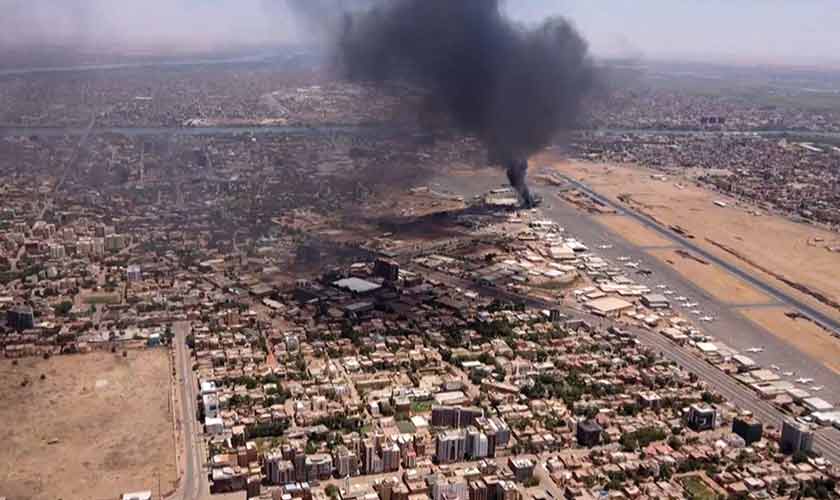
In 2025, hard power increasingly dominated international relations. Military or economic coercion, rather than dialogue, became the go-to tool for major and regional powers seeking to impose their will. As a result, threats and outright use of force flouting international law became more common in this conflict era, said Ambassador Hashmi.
Gaza/ West Bank have reported more than 60,000 deaths since 2023, with intermittent ceasefires and accusations of war crimes and genocide by Israeli forces. Israel also struck Iran, Syria, Lebanon, Yemen and Qatar. Several vetoes by the US scuttled ceasefires intended to stop the horrific Palestinian massacre and massive destruction of Gaza. They were seen more as unquestioning support for Israel than a commitment to justice and fair play. Sudan’s human catastrophe has left more than 61,000 dead and 11-12 million displaced. The RSF is accused of ethnic killings and possible genocide amid blocked aid, effectively unhindered. Myanmar’s high-intensity conflict has killed over 13,700, marked by junta airstrikes and ongoing Rohingya atrocities. US strikes on Iran and India’s military action against Pakistan further illustrate the surge in the use of hard power.
In a fractured international system, the UN Security Council is often paralysed, weakening the enforcement of laws and norms and making coercion even more attractive. Fragmentation thus actively rewards unilateral, bloc-based behaviour over institutional compromise.
This strategic shift from multilateral norms to unilateral pressure also extends into economic domain. As Ambassador Hashmi notes, 2025 also witnessed targeted sanctions to investment screening—becoming central to great-power strategy.
“Major powers are turning to targeted economic tools—like the West’s sanctions on Russia, chip controls on China and Beijing’s retaliatory trade measures. They impose heavy costs on rivals without triggering a full-blown war.”
The fragmentation of the rules-based order is not merely a backdrop to great-power rivalry; it actively reorganises the strategic environment. It creates conditions that systematically reward coercive, unilateral, and bloc-based behaviour, while de-incentivising investment in universal institution-building and diplomatic compromise. This results in a structural shift in the very grammar of statecraft.
The writer is a senior The News staffer in Karachi.