Print Story
X




Nano-bio-pesticides offer significant benefits over conventional pesticides, making them a promising tool for sustainable agriculture
| P |
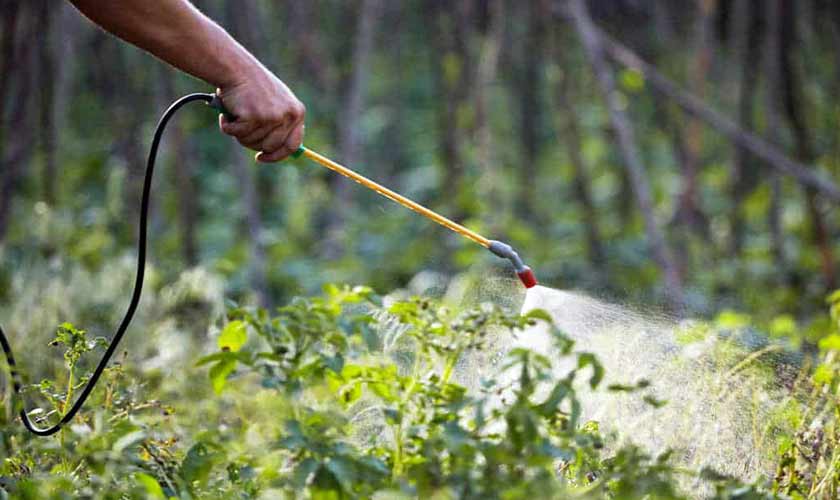
esticides are chemical agents widely used in modern agriculture to control insects, weeds, plant diseases and organisms that threaten crop production and food supplies. Despite their importance in enhancing agricultural productivity and supporting food security, excessive dependence on pesticides presents significant ecological and environmental concerns. Key issues in this regard include the persistence and bio-accumulation of pesticide residues in the food chain and the increasing development of resistance among pest populations. Moreover, extensive use of pesticides poses serious risks to non-target organisms, ecosystems and human health. Following application, pesticide residues and their degradation products may remain in the air, soil and water for extended periods, contributing to long-term environmental contamination. The World Health Organisation has identified pesticides as a major cause of fatal self-poisoning, particularly in low- and middle-income countries. Soil ecosystems are especially susceptible, as pesticides can disrupt beneficial organisms responsible for nutrient cycling, soil structure maintenance and natural pest regulation. Additional concerns include contamination of water resources, residues in food and adverse effects on wildlife and human populations.
Recent research indicates that pesticide exposure results in both direct and indirect losses of bio-diversity, contributing to population declines in insects, birds, bats, fish, amphibians and other organisms. These impacts are associated not only with banned pesticides, such as neo-nicotinoids and chlorpyrifos, but also with commonly used compounds, including cypermethrin and glyphosate. Studies show that exposure to mixtures of pesticides can lead to synergistic effects, intensifying their harmful impacts. Pesticide use is also estimated to contribute to approximately 37,000 cancer cases annually in developing countries. Globally, around three million cases of pesticide poisoning are reported each year, resulting in nearly 200,000 deaths, with the majority occurring in developing nations. The ongoing crisis is largely attributed to the continued use in developing countries of highly toxic pesticides that have been banned in many developed regions due to their severe health and environmental consequences.
These challenges have driven scientists to explore alternative pest control strategies. Bio-pesticides are green pesticides that serve as a link between green technology and sustainable agriculture, which is defined as large-scale farming that minimises environmental harm while remaining socially and economically viable. Bio-pesticides are increasingly recognised as the future of agriculture due to their numerous advantages over synthetic pesticides, including enhanced crop productivity, health benefits and reduced environmental impact. These benefits have driven significant research and development in the field, resulting in a growing variety of bio-pesticides.
Currently, approximately 1,400 bio-pesticides are commercially available worldwide, demonstrating efficacy comparable to synthetic pesticides, particularly in controlling insect pests. The bio-pesticides include plant crude extracts and essential oils. Crude extracts from plants such as solanum melongena, muntingia calabura, moringa oleifera, artemisia scoparia, santhoxylum heitzii and eucalyptus globulus have been reported as effective pest control agents. Likewise, essential oils derived from plants including azadirachta Indica, spathodea campanulata, mentha piperita, origanum vulgare and acorus calamus have demonstrated pesticidal potential.
The future prospects of nano-bio-pesticides are highly promising, driven by the growing need for sustainable and eco-friendly pest management solutions. Advances in nano-technology are expected to enhance the precision, efficiency and safety of these formulations, allowing for highly targeted delivery of bio-active compounds while minimising environmental impact.
Another area of interest in bio-pesticide research is the integration of nano-technology, which imparts new properties to existing materials. Nano-materials have become increasingly important in fields such as pharmacology and biology due to their unique physical and chemical characteristics compared to bulk materials. These materials are defined by their small size, distinctive surface properties and quantum effects. Recent years have seen substantial growth in the application of nano-materials and advancements in pesticide formulations. In particular, nano-carriers help protect active ingredients from degradation and enable controlled release, enhancing the effectiveness of bio-pesticides. Engineered nano-particles are increasingly being explored as innovative carriers for pesticide delivery. Various formulation types have been proposed, including nano-emulsions, nano-encapsulations, nano-vesicles, nano-gels and nano-fibers. These nanotechnology-based systems can enhance the effectiveness of existing pesticide active ingredients while also improving their environmental safety.
Bio-pesticides possess several advantageous characteristics, including host specificity, minimal toxic residues, absence of phytotoxicity and safety for humans, making them ideal for environmentally sustainable agriculture. Despite these benefits, they often struggle to compete with synthetic pesticides in the market due to issues such as limited solubility, susceptibility to photolysis, relative instability and higher cost. To match the efficacy of synthetic pesticides, advanced bio-pesticide formulations are essential. The development of novel nano-materials has opened new avenues for creating innovative bio-pesticide formulations and enhancing their effectiveness in laboratory and semi-field conditions. Most nano-composites designed for nano-bio-pesticides aim to improve formulation properties such as permeability, controlled release, thermal and photo-stability and crystallinity. Nano-bio-pesticides are produced by incorporating active ingredients into nano-carriers via encapsulation, adsorption, attachment or entrapment. Various nano-carriers—including metals, metal oxides, non-metal oxides, polymers, carbon-based materials, and lipids—are employed in these formulations.
Among the different classes of pesticides, fungicides represent a major category, targeting destructive plant diseases of fungal origin either by inhibiting fungal growth or through complete biocidal action. The importance of fungicides is underscored by the fact that fungal diseases are the leading cause of crop losses worldwide. In addition to conventional synthetic fungicides available on the market, bio-fungicides have gained a distinctive role in managing fungal diseases effectively. A recent advancement in bio-pesticide technology is the use of engineered nano-materials, offering enhanced efficiency and targeted action against pathogens. A cutting-edge advancement in bio-pesticide technology is the use of nano-bio-fungicides. Their unique properties are leveraged to efficiently target and control the plant-pest system, offering a promising eco-friendly approach for sustainable pest management.
Nano-bio-pesticides offer several significant benefits over conventional pesticides, making them a promising tool for sustainable agriculture. Their size and unique properties enhance bio-availability and solubility, allowing for improved penetration into pests and pathogens and higher efficacy at lower doses. They enable targeted action, reducing harm to non-target organisms and beneficial species. Additionally, nano-bio-pesticides often feature controlled and sustained release mechanisms, prolonging their activity and reducing the frequency of application. This targeted and efficient delivery helps in managing pest resistance and lowers human, animal and environmental toxicity. Encapsulation within nano-carriers also improves the stability and shelf life of active ingredients, protecting them from degradation by light, heat or enzymatic activity. Furthermore, some nano-bio-pesticides can integrate multiple functions, such as delivering nutrients or promoting plant growth alongside pest control. These advantages make nano-bio-pesticides an eco-friendly, efficient and versatile alternative for modern pest management
The future prospects of nano-bio-pesticides are highly promising, driven by the growing need for sustainable and eco-friendly pest management solutions. Advances in nano-technology are expected to enhance the precision, efficiency and safety of these formulations, allowing for highly targeted delivery of bio-active compounds while minimising environmental impact. Research is likely to focus on developing multifunctional nano-bio-pesticides that can simultaneously control pests, deliver nutrients and promote plant growth. Integration with smart agriculture technologies, such as sensors and precision farming tools, may further optimise their application and effectiveness. Additionally, regulatory frameworks and public awareness are anticipated to support wider adoption, particularly in developing countries where pesticide-related health and environmental risks are high. With continued innovation, nano-bio-pesticides have the potential to revolutionise pest management over the coming decade, offering a sustainable alternative that balances agricultural productivity with ecological safety.
Prof Dr Nazish Jahan is associated with the Department of Chemistry, University of Agriculture, Faisalabad.
Dr Usman Khalil is associated with the Department of Environmental Sciences, RIPHAH International, Faisalabad.