Print Story
X




As 2025 draws to a close, leading urban planners, environmentalists, academics and artists weigh in on the impact of major public-sector projects that had the promise to redefine Lahore’s landscape over the past year
Compiled by Ahsan Raza & Usman Ghafoor
Hit: Mandatory green certificate for vehicles
Miss: Anti-smog guns
Smog returned as Lahore’s most crippling public issue in 2025, with air quality once again plummeting to hazardous levels as winter approached. The recurring crisis underscores a significant failure, despite the launch of several anti-smog projects.
Ahead of the traditional smog season (late September to early December), the government focused its efforts on two main areas: a) A major drive was launched, making a green certificate mandatory for motor vehicles after they pass an emissions test, in an attempt to curb pollution; and b) The government deployed what was touted as Pakistan’s first-ever fleet of anti-smog guns — machines that use an ultra-fine mist spray technology to settle pollutants.
The second initiative was met with immediate backlash. Environmental activist Ahmad Rafay Alam sharply criticised their procurement as “wasteful and harmful,” demanding an independent inquiry by the National Accountability Bureau. The government defended the move, calling it as a key component of a broad, technology-driven master-plan to combat smog.
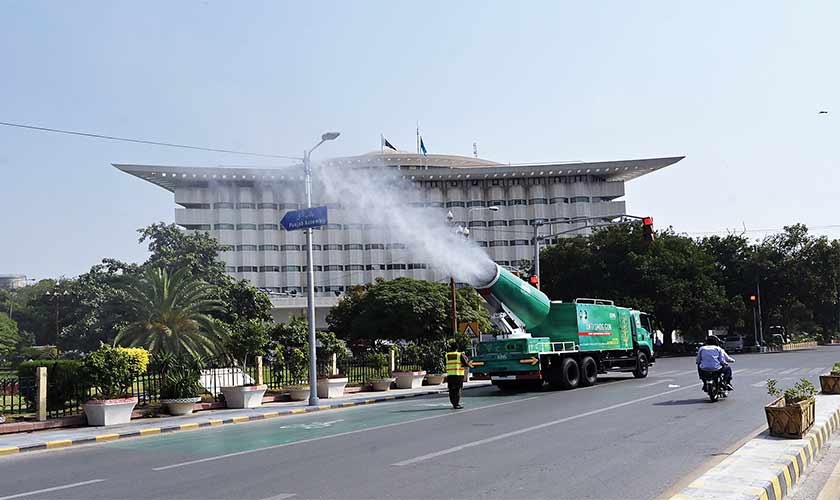
The government’s claims were undermined by conflicting actions across the city. While officials championed the new clean-air technology, scores of trees were cut at various locations in the city — some to clear space for various construction projects.
The environmental debate exposed a growing divide based on wealth and privilege. Air purifiers became a common fixture in Lahore’s affluent neighbourhoods, a trend environmental activist Altamush Saeed says is a symptom of a deeper crisis.
According to Saeed, this trend reflects a failure of governance and a systemic lack of seriousness about environmental damage. He points at the existing legislation, including the Punjab Environmental Protection Act, which mandates heavy fines, factory closures and jail sentences for polluters. He also highlights the presence of environmental tribunals and laws designed to protect natural environments.
“Enforcement is weak,” says Saeed. “The polluting industries manage to avoid serious punishment and settle with small fines or warnings.”
The disconnect between stringent laws and weak enforcement remains the core challenge as the city faces another winter under a toxic cloud.
*****
Hit: Coffee house on police station premises
Miss: Encounter deaths
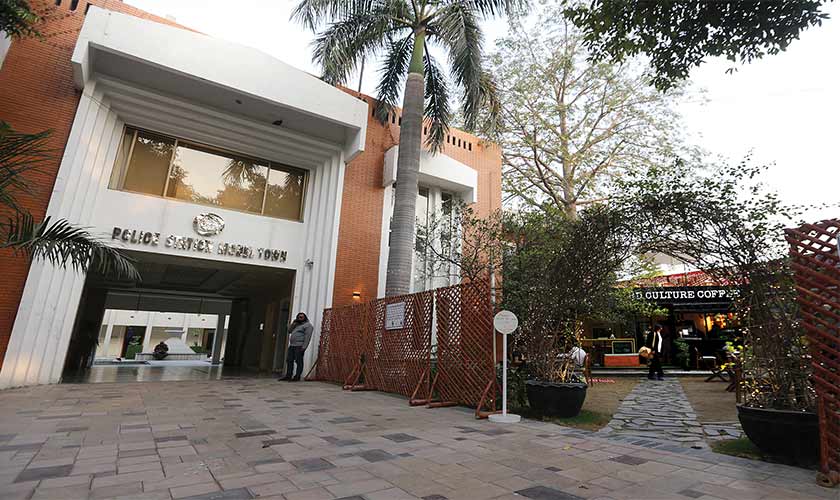
The year 2025 was literally a mixed bag for the police. The department pursued a ‘soft image’ — consider the opening of Lahore’s first café in a police station (at Model Town), and the expansion of Model Thanas and Khidmat Markaz complexes — this campaign was challenged by incidents such as the fatal ‘encounter’ involving Teefi Butt.
Barrister Haaris Ramazan, president of CrossEdge Pakistan, an expert in human rights and international law, says that the role and conduct of the police remains the single biggest issue for the common citizen.
He notes that the police serve citizens in two primary ways: controlling crime and maintaining public order (including traffic management). While he hails the efforts made by the department to reduce crime, he calls recent actions by the Crime Control Department “quite alarming.”
He calls for accountability within the department, without which the ordinary citizens will continue to feel vulnerable in dealing with the cops.
The barrister stresses that the constitutional rights of citizens must be protected: “The common man has fundamental rights; the law enforcement agencies, especially the police, must respect and safeguard those.”
He says that interactions between police and citizens often lack basic interpersonal skills. Add to this the fact that the process of registering complaints is extremely difficult: “If you ask the public, 99 percent would express dissatisfaction with the police service.”
Even the 15 Helpline, he says, suffers from an inefficient complaint system.
He also criticises the traffic police for aggressively issuing fines (e-challans) “often with little regard for fairness.” This system tends to confuse uneducated drivers and professionals alike, leading to dozens of incorrect fines, he adds.
Ramazan advocates for an education-first approach to traffic laws: “It is unfair to punish [people] without ensuring they understand the law.”
He says the police have been “creating policies in isolation, ignoring citizen feedback and socio-cultural realities.” He says a top-down approach to governance produces policies that are ineffective; sometimes even harmful.
******
Hit: The
Christmas tree at Liberty Roundabout
Miss: “Equality, safety and
justice for all”
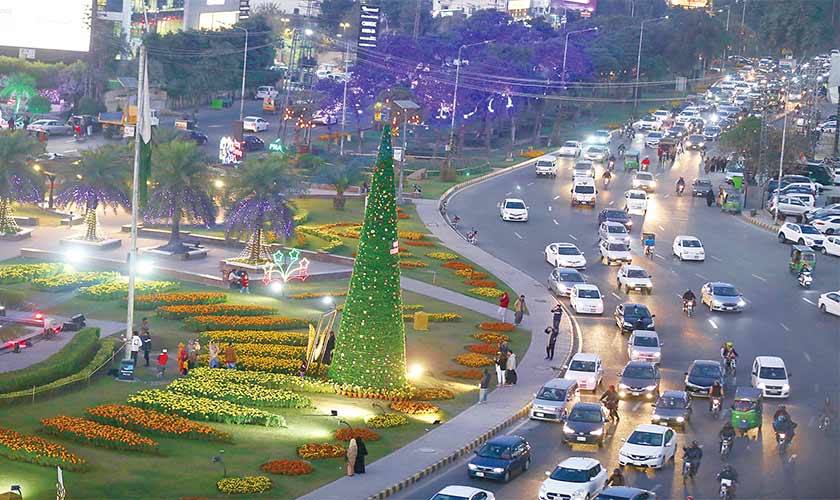
Early this month, the Punjab government famously installed a 42-foot tall Christmas tree at the Liberty Roundabout. It became the centre of attention for obvious reasons, chiefly a display of inclusivity.
Peter Jacob, human rights activist and advocate of religious minorities, says such initiatives play an important role in building the confidence of people of minority faiths in state institutions. Also, public recognition of religious festivals sends a positive message to the society at large: “When Christmas is celebrated openly and respectfully, it creates a feeling of inclusion,” he says. “This is especially important for people who live on the margins of society. It tells them that they are seen, respected and valued.”
Jacob recalls the times when religion-based arguments were used to stop the religious minorities from celebrating. “There were requests not to display Christmas symbols or greet people on Christmas. In that context, such an initiative means a lot.”
He is quick to add that inclusivity should not be limited to symbolic gestures alone. “We still have a long way to go in addressing issues related to equality, safety and justice,” he declares. “Inclusivity should be part of our everyday life; not just on special occasions.”
Ahsan Raza is the editor of Minute Mirror. He can be reached at [email protected]
Hit: Fort Road Food Street renovation
Miss: Mochi Gate Bagh and Nasser Bagh parking plazas
| D |
r Ajaz Anwar, veteran artist and a founding member of the Lahore Conservation Society, says 2025 brought “no good at all.”
He expresses serious concern over several government projects that he says are putting Lahore’s invaluable past at risk. The plans to construct parking plazas at the historic Mochi Gate Bagh and Nasser Bagh, he says, are a major threat.
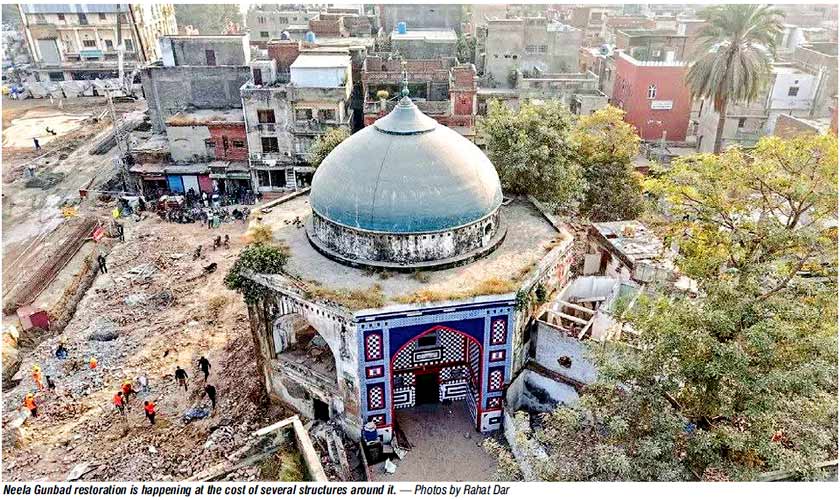
He says “worrying changes are being made around Neela Gunbad, one of Lahore’s most complete heritage sites.” He says the digging near FC College has put its historic boundary wall at risk.
He cites the uprooting of “delicate ornamental plants” from across the city as evidence of the damage. He rubbishes the official claims that trees were not cut at the shrine of Sheikh Musa near the City railway station.
The root of the problem, according to Dr Anwar, is a development philosophy that prioritises vehicular traffic over public welfare. “In some other countries, bicycles are promoted; here, we are promoting a culture of cars that has led to the growing menace of parking plazas and basements.”
He laments the loss of “the Lahore of yesteryear that was shaped by its trees, its clean air, its seasons and its food.
“This is not development,” he says, “this is destruction.”

Syed Faizan Abbas Naqvi, known as Lahore ka Khoji, says that the city is under immense pressure. “More people means more roads, fewer trees and more concrete,” he says, emphasising that Lahore’s fast-growing population is exacerbating its problems.
He strongly advocates for protecting the city’s gardens and historic places. He calls for a “better plan than converting them into parking spaces.” Otherwise, he says, more parks and historic sites will be at risk in the coming years.
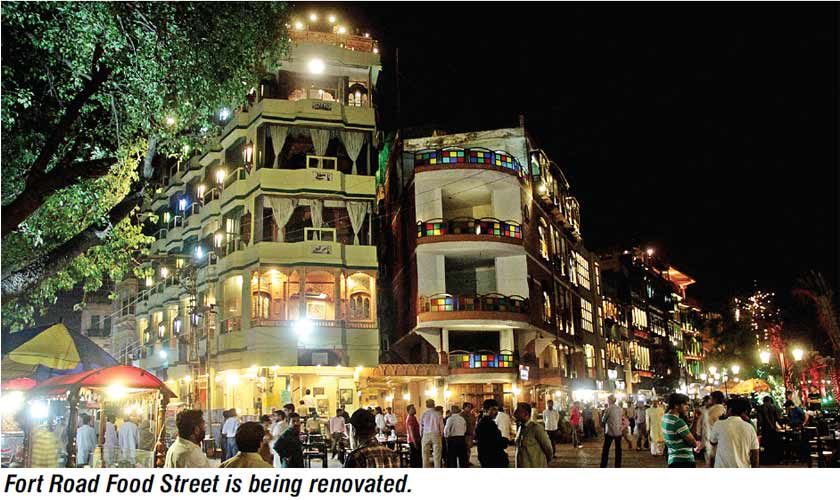
Perhaps, the one good thing to happen to the Walled City of Lahore was the beautification of the Fort Road Food Street. The project included repainting and restoration of the façades of old buildings while giving the street a modern look. It was an instant success.
*****
Hit: Punjab Film Fund
Misses: The recent introduction of a tougher set of conditions for filmmakers seeking financial support under the fund; lack of easy access to the fund
| I |
In 2025, the Punjab government famously set up a film fund. Dr Ahmad Bilal, a film academic and festival organiser, praises the initiative, saying that “film as an art and industry is being officially recognised after all.” However, he cautions that access to the fund is complicated and that this could prevent many film professionals and related artists from benefiting.
He says that art cannot flourish under strict control. He draws an evocative analogy with agriculture: “Crops grow in conducive weather, seasons, and quality soil; likewise, art flourishes vis-à-vis the local languages, cultures and social life. If authorities try to control art, it will wither. Policies should support artists rather than force them into rigid slots.”
Dr Bilal stresses the economic necessity of patronising the arts, saying that many artists, including dancers and performers, rely on their work for income. “If restrictions are placed on them and there is little support, they will be forced to switch lanes to earn a living. This will be a huge loss for the country.”
He attributes these structural issues to a lack of genuine consultation: “There is little or no engagement between the policy makers and the artists as well as technical people working in the field... [which] creates gaps.”
He concludes by linking film to other creative industries such as gaming and maintains that cinema has the potential to significantly lift the nation’s economy, provided that it is properly supported.
******
Hit: Fashion Avenue
Miss: Unlawful parking
| L |
Lahore took a major step towards becoming a people-friendly city in 2025, as the LDA launched large-scale development work under its Livable and Sustainable Cities Project. The flagship initiative sought to revamp public spaces and support sustainable urban living, with key focus on transforming Fashion Avenue in Gulberg into a pedestrian street.
LDA officials called the project a comprehensive overhaul that would benefit businesses, residents and visitors by creating cleaner and safer streets along Hali Road, Zahoor Elahi Road and the Fashion Avenue. The extensive development work focused on sustainability and modern infrastructure, creation of uniform greenbelts and the addition of rainwater harvesting wells to help recharge underground water. It also included shifting electricity and internet cables underground for a cleaner, safer appearance and installing solar-powered streetlights to reduce energy consumption.
The project was supposed to go beyond roads and incorporate sustainability features like new urban trees, improved waste management and cycling tracks. Similar projects were announced for other areas, including Sabzazar Main Boulevard, Johar Town G-1 Market and Tollinton Market.
Despite the positive makeover, scepticism remained. The project’s purpose now faces a critical challenge: enforcement. Waqas Hassan, a resident of Gulberg, notes that the newly built walkways are already being illegally co-opted. “Cars are parked on the footpaths, so people cannot walk easily. If this continues, the idea of a walkable street will fail.”
The LDA maintains that these issues will be addressed once the construction phase is complete. Some critics say that the lack of immediate action threatens to render the effort useless, turning expensive walkways into informal parking lots.
Another point of criticism concerns the timing of the massive construction. As the city struggles to breathe, many are questioning the decision to undertake dust-creating construction work.
The ambitious project’s ultimate success now depends not just on the quality of its construction, but also on the LDA’s ability to ensure that the streets — designed for people — do not become yet another space claimed by cars.
******
Hit: Surveillance cameras
Miss: Privacy
| T |
The Punjab Safe Cities Authority’s comprehensive network of surveillance cameras now covers virtually all of Lahore. This has ignited a crucial public debate over security, privacy and accountability.
The extensive CCTV coverage is welcomed by some as a necessary measure to foster public order. Dr Ayesha Mirza, a communications lecturer at COMSATS University, Lahore, supports the system, arguing that it encourages public responsibility. “Such measures send out a message that rules matter and that change is possible when citizens and the state work together.”
However, the surveillance system faces strong opposition from some civil society groups concerned about its potential for abuse. Aurat March Lahore views the cameras as a two-edged sword saying while they may improve security, they pose a significant risk to privacy. The organisation has warned that constant surveillance could lead to misuse of data, particularly if robust laws and judicial checks are missing or poorly enforced. They stress that marginalised groups, women and activists could face severe harm if footage is leaked, misused or accessed without proper control.
Aurat March says that safety should not come at the cost of personal freedom. They have demanded transparency regarding key operational areas like:
how data is stored and protected;
who has the authority to access the footage; and
how long the collected data is retained.
The PSCA has stated that the system is designed to protect citizens, not spy on them. The Authority officials say the cameras have helped prevent crime, control traffic and ensure swift emergency response. During 2025, the PSCA claimed to have used camera footage to track stolen vehicles, identify suspects, manage traffic during protests and processions and respond quickly to accidents.
The Authority has also highlighted steps taken to improve data protection. It says that access to footage is limited, monitored and recorded, and that data is stored for a fixed period of time.
The Authority point out that the cameras have been placed in public spaces, not private areas, and are used in accordance with legal procedures.
*******
Hits: Electro bus; incentives on switching to green transport
Misses: Acquisition transparency; limited scope
| I |
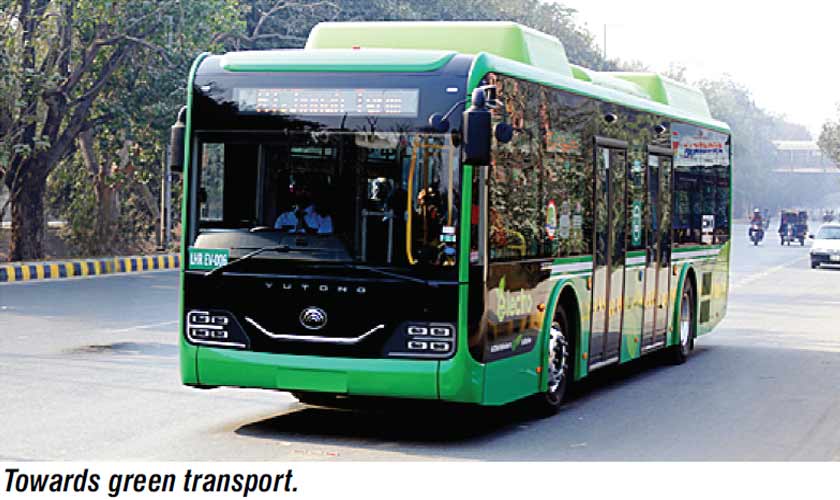
In 2025, Lahore officially entered the era of green transport. With the city frequently battling hazardous smog levels, the provincial government introduced a fleet of zero-emission buses (e-buses), named Electro, to revolutionise urban mobility.
The initiative, which began as a pilot project earlier this year, has seen rapid expansion. As of late 2025, over 67 electric buses are plying the city’s busiest corridors, including the primary route from the Lahore Railway Station to Green Town. Phase II of the project, inaugurated in October, added new routes connecting Raiwind to Jinnah Terminal and extending the network through the Canal Road corridor.
The Electro buses are not just environmentally friendly, but also designed for modern commuter convenience. Each vehicle is equipped with intent connectivity and has dedicated spaces for the differently-abled. The fare is subsidised (Rs 20 per passenger and free travel for students, senior citizens and people with disabilities.)
The government has also launched schemes that incentivise electric two-wheelers. For instance, the Chief Minister’s Green Credit Programme offers a financial incentive of up to Rs 100,000 for citizens who purchase a new e-bike/ scooter and switch from fuel powered vehicles. The CM Punjab Bike Scheme, aimed at students and young professionals, has been revamped to include the option of e-bikes at subsidised rates with easy installment plans. There are zero-interest monthly instalments and full government coverage of the markup and insurance.
While both these schemes were widely praised for being environment-friendly and cost-saving, and student/ women empowerment, the execution faced criticism related to limited scope, administrative delays and concerns about broader EV infrastructure and market development.
******
Hit: Coablation Cancer Treatment Centre
Miss: Clinic on Wheels
| L |
Lahore’s health sector in 2025 was defined by sharp contrasts, battling a pervasive environmental crisis while simultaneously achieving a medical milestone.
The year saw a surge in smog-induced viral diseases. Hospitals saw a significant increase in patients suffering from chest congestion and severe eye and throat infections. The public health emergency was so severe that the use of facemasks came back into vogue.
The government scored a perfect 10 when it set up what is regarded as Pakistan’s first Coablation Cancer Treatment centre at Mayo Hospital.

Coablation therapy is one of the least invasive methods of cancer treatment. However, it is suitable only for certain cancers such as renal cell carcinoma, liver cancer, lung tumours, and breast tumours, and at early stages. At the centre’s inauguration, the chief minister announced covering treatment costs for all deserving patients.
Earlier, Lahore got Clinic on Wheels. However, this initiative drew criticism from some health experts who called it a “joke.” Their argument was that in a city where many hospitals lack comprehensive infrastructure, mobile clinics are not a real solution.
Ahsan Raza is the editor of Minute Mirror. He can be reached at [email protected]