Print Story
X




A year-end assessment of the state of democracy in Pakistan
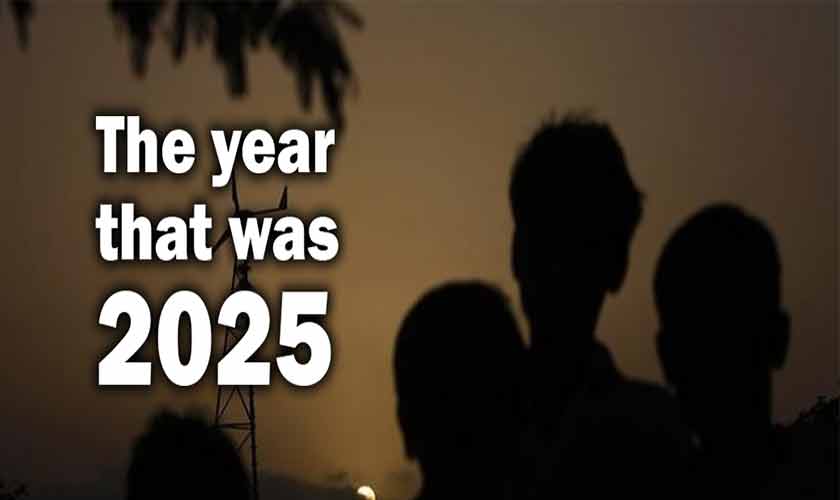
Pakistan’s democratic trajectory stands at a critical juncture. Over the course of the year 2025, what had long circulated as an open secret in political circles hardened into near-consensus: Pakistan is not governed as a full democracy but as a hybrid regime, in which elected institutions coexist uneasily with non-representative power centres. Senior politicians across party lines have now acknowledged this.
This admission raises a foundational question: on what constitutional, theoretical or practical grounds can the current system be still described as democratic?
Until now, Pakistan’s constitution affirmed parliamentary democracy, popular sovereignty and the rule of law. The experience of 2025 has once again demonstrated that democracy cannot be reduced to electoral continuity alone. As Robert A Dahl argued, democracy requires effective participation, informed consent and meaningful control over the political agenda. While elections remain a recurring feature of Pakistan’s political calendar, the year underscored how agenda-setting power frequently lies beyond elected forums. In this sense, Pakistan’s political order closely resembles what Steven Levitsky and Lucan Way describe as competitive authoritarianism: a system in which democratic institutions exist in form but are systematically constrained by unaccountable authority. The growing openness with which ruling elites describe governance as “hybrid” has normalised the subordination of democratic norms to extra-constitutional power, rendering claims of democratic rule increasingly hollow.
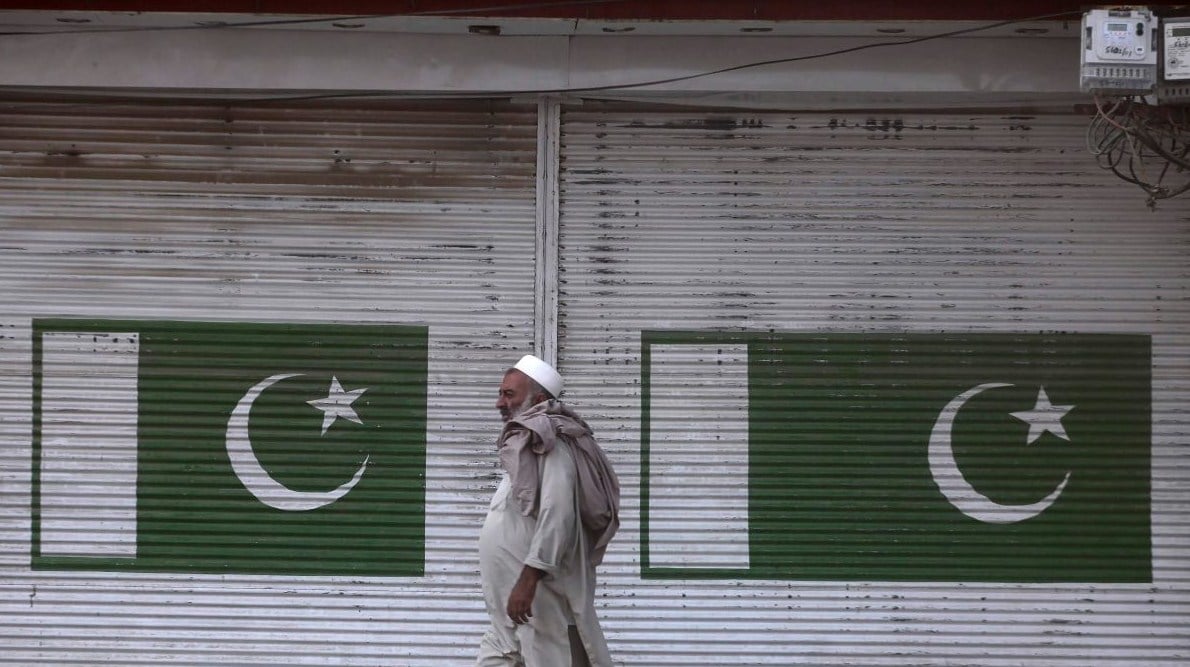
One of the clearest manifestations of this erosion in 2025 was the use of parliamentary majorities to force consequential legislation and constitutional changes. Debate in both the National Assembly and the Senate was frequently truncated, procedural objections overridden, and dissent marginalised. In a country with a long history of constitutional abrogation and military intervention, such practices hollowed out the deliberative spirit that constitutionalism is meant to protect.
John Stuart Mill’s warning against the “tyranny of the majority” found renewed relevance, as did Jürgen Habermas’s insistence that democratic legitimacy arises from reasoned debate rather than numerical dominance. Parliament increasingly functioned less as a forum of accountability and more as an instrument of ratification.
Political pluralism—an essential condition of democracy—continued to shrink throughout the year. Opposition leaders faced disqualification, incarceration, prolonged legal entanglements or political irrelevance through engineered processes. Elections held under such conditions increasingly resemble managed contests rather than genuine mechanisms for alternation of power. Hannah Arendt’s observation that the essence of tyranny lies in the destruction of plurality aptly captures Pakistan’s democratic climate in 2025, where dissent survived formally but was systematically neutralised in practice.
The suppression of media freedom remained one of the most visible indicators of democratic backsliding. Journalists operated under persistent censorship, intimidation, legal coercion and the threat of enforced disappearance. Alexis de Tocqueville regarded a free press as democracy’s most powerful instrument; Pakistan’s managed information environment stood in stark contrast. Absent an independent media, public consent became increasingly manufactured rather than informed, transforming democratic discourse into controlled narration rather than open debate.
Judicial independence also suffered further erosion. Once seen as a potential bulwark against authoritarian drift, the Judiciary faced persistent allegations of selective justice, political engineering and institutional pressure.
Continued economic underperformance, policy reversals, investor distrust and chronic instability, weak rule of law and politicised governance reinforced a vicious cycle in which democratic erosion and economic fragility fed into one another.
Nowhere were the costs of democratic exclusion more visible than in Pakistan’s peripheral regions. Persistent militancy and unrest in Balochistan, Khyber Pakhtunkhwa and the former FATA cannot be reduced to a law-and-order problem. These are deeply rooted in political marginalisation, denial of local autonomy, enforced disappearances and the prolonged absence of credible constitutional governance. Despite the 25th Amendment, in 2025, the former FATA remained emblematic of symbolic rather than substantive integration.
Delayed reforms, weak political ownership and the dominance of security-centric administration kept Mahmood Mamdani’s concept of “decentralised despotism” disturbingly relevant.
Throughout the year, Pakistan demonstrated significant coercive capacity but limited ability to generate democratic legitimacy. As Charles Tilly has warned, states that rely excessively on coercion without consent tend to produce resistance rather than stability. Ted Robert Gurr’s theory of relative deprivation helps explain why suppressed grievances in Pakistan’s peripheries continued to erupt in violence. Security operations produced temporary order at best while underlying political and constitutional deficits remained unresolved.
The routine curtailment of civil liberties in 2025 was not incidental or episodic but structural, embedded within the logic of Pakistan’s hybrid governance. In practice, liberty was increasingly absent from everyday political life. Surveillance, intimidation, selective enforcement of law and prolonged legal uncertainty became normalised features of governance, producing a climate in which citizens adjusted behaviour not through civic engagement but through self-censorship and compliance.
Pakistan’s trajectory in 2025 pointed less toward an illiberal variant of democracy and more toward democracy as a nominal form—a label unmoored from practice.
Democratic citizenship—defined by agency, participation and rights—was steadily transformed into political subjecthood, where individuals are governed objects rather than autonomous participants in collective self-rule.
This erosion of liberty also underscores Amartya Sen’s broader argument linking democracy to human security and welfare. Sen’s insight that accountability mechanisms are essential for protecting citizens from both overt violence and structural neglect remained particularly instructive in 2025. As accountability weakened, so too did protections against economic insecurity, arbitrary detention, and administrative abuse. Civil liberties were treated not as intrinsic democratic rights but as negotiable variables, contingent on political expediency and security imperatives. The result was not merely a constrained democracy but a reordered relationship between state and society, in which coercion increasingly substituted for consent.
The internal weaknesses also influenced Pakistan’s foreign policy posture. Strained relations with Afghanistan, Iran, and India underscored how internal democratic fragility translates into external strategic vulnerability. A state that struggles to generate legitimacy at home finds it difficult to project stability abroad.
While ties with Washington were partially recalibrated around counterterrorism cooperation, economic stabilisation and regional security, the relationship remained overwhelmingly transactional.
Pakistan’s official stance on Gaza revealed another dimension of democratic deficit: the gap between moral rhetoric and policy agency. The state adopted strongly worded positions condemning Israeli actions and expressing solidarity with Palestinians, resonating deeply with public sentiment. Yet this moral clarity was not matched by democratic process. The contrast between Pakistan’s vocal moral posture abroad and its muted response to rights violations at home further strained democratic credibility.
The routine curtailment of civil liberties in 2025 was not an episodic deviation from democratic norms but a structural feature of Pakistan’s hybrid order. Restrictions on speech, assembly and political association were not merely reactive measures justified by security or stability; rather, they reflected an entrenched mode of governance in which control increasingly substituted for consent.
In Pakistan’s political life this year, citizens found themselves navigating a landscape shaped by surveillance, intimidation, selective enforcement of law and pervasive legal uncertainty. Under such conditions, citizenship ceased to function as an active status grounded in rights and participation and approximated instead what political theorists describe as subjecthood: a relationship to the state defined more by compliance than by agency.
This erosion of liberty also carried material and human consequences. Amartya Sen’s insistence on the intrinsic link between democracy and human security remains particularly instructive in this context. For Sen, democratic accountability is not only a moral ideal but also a practical safeguard against suffering, exclusion and systemic neglect. Where mechanisms of accountability weaken human welfare becomes increasingly vulnerable. Social protection and economic justice—even basic security—are rendered contingent on discretion rather than rights, reinforcing patterns of inequality and precarity. The democratic deficit thus translated into a broader crisis of human development, underscoring that political freedoms and material well-being are not separable domains.
By the close of 2025, the characterisation of Pakistan’s political order as democratic had become increasingly difficult to sustain on analytical grounds. What remained was a system that preserved the formal vocabulary and institutional shell of democracy while steadily dismantling its substantive content. Elections continued to occur, but without meaningful deliberation or genuine competition; parliaments functioned without real autonomy; courts operated under contested independence; the media existed without freedom; and provinces remained without effective political inclusion. Fareed Zakaria’s notion of “illiberal democracy” captures part of this condition. Even that framework may understate the depth of recent democratic hollowing.
Pakistan’s trajectory in 2025 pointed less toward an illiberal variant of democracy and more toward democracy as a nominal form—a label unmoored from practice.
Democracy, as democratic theory repeatedly reminds us, is not defined by the mere presence of institutions but by how those institutions function in practice and how power is exercised through them. As the year draws to a close, Pakistan continues to endure as a state, but its democracy—in substantive and normative sense—remains profoundly compromised. Stability achieved without consent has once again proven fragile and order maintained without justice inherently unsustainable. Unless constitutionalism, pluralism and accountability are restored as governing principles rather than rhetorical devices, Pakistan’s hybrid system will continue to privilege control over representation. The cost is not only political but also social, economic and ultimately existential for the democratic promise of the state.
The writer is a professor in the Faculty of Liberal Arts at the Beaconhouse National University, Lahore.