Print Story
X




The success of BISP’s digital wallet initiative may ultimately be measured by whether women feel that the money meant for them truly belongs to them
| P |
akistan remains one of the least digitally integrated economies, marked by low use of digital payments, limited access to formal financial services and wide gaps in access to technology. This digital divide is most visible in women’s financial exclusion. According to the World Bank, around 55 million women in Pakistan remain unbanked. The gender gap in account ownership exceeds 50 percent, among the widest in the region. While digital wallets and mobile banking promise greater inclusion, many women still lack mobile phones, SIMs registered in their names and basic digital literacy.
Data released by the State Bank of Pakistan in June 2025 shows that the country has over 135 million branchless banking accounts. About 31 percent of those are held by women. This exclusion is not just a social failure; it is an economic one as well. Estimates by the GSMA and the World Bank suggest that Pakistan loses up to $17 billion annually in potential GDP due to women’s exclusion from digital connectivity and financial systems. In a country seeking growth and dignity, digitising women’s access to finance is no longer optional; it is essential.
That reality is beginning to shift now. For years, Pakistan’s poorest women remained largely invisible to the digital economy, dependent on middlemen and informal channels to access even basic financial support. This is changing as the Benazir Income Support Programme moves to bring10 million women beneficiaries into the formal digital financial system through direct digital wallet accounts. For the first time, millions of the most marginalised women are being enabled to receive, manage and control cash assistance in their own names - without agents, queues or intermediaries. More than a technological upgrade, the shift marks a quiet but profound change in how dignity, autonomy and economic inclusion are delivered at the margins.
The initiative was formally launched on August 25, when the prime minister inaugurated the rollout of 10 million digital wallets for BISP beneficiaries. Congratulating Senator Rubina Khalid, the BISP chairperson, he described the move as a historic step towards transparency and financial inclusion, linking it to the vision of Shaheed Mohtarma Benazir Bhutto. He noted that direct and secure digital payments strengthen women’s independence, reduce corruption and improve efficiency in social protection delivery.
On the ground, the transformation is quieter but no less significant. At SIM distribution points across the country, women gather in small groups as trained BISP staff explain how the SIM works, what a digital wallet is, how the two are linked, and how money will reach them. These sessions are practical and reassuring. Women are told how biometric verification protects their funds, how a one-time password sent to their phone confirms ownership of their SIMs and how they can collect money from authorised agents of various service providers. For many, this is their first structured introduction to digital finance, delivered face to face, in local languages and focused on everyday use.
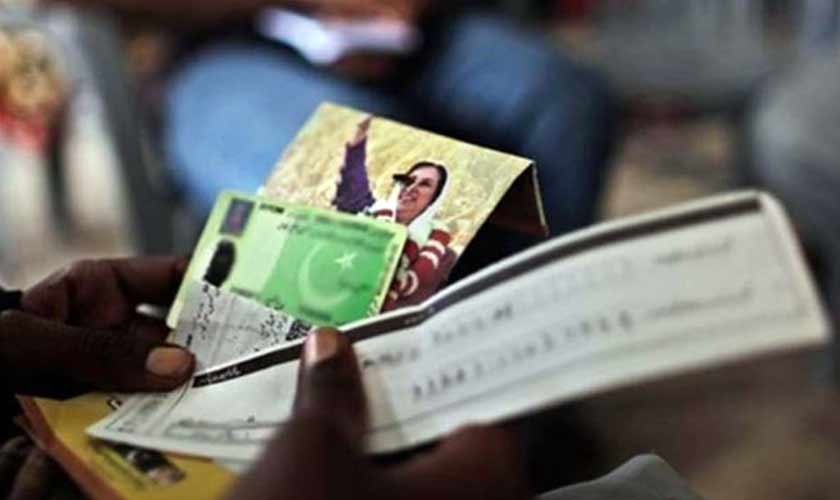
Under the initiative, the BISP is distributing free SIM cards to women beneficiaries as a prerequisite for opening SIM-linked, IBAN-based digital wallets. These SIMs are issued against beneficiaries’ CNICs under the government’s cashless digital economy initiative and are directly linked to their wallet accounts. The accounts offer standard banking functionalities, such as receiving funds, making digital payments and transferring money, but at this stage, do not include debit cards. The aim is full digital functionality without reliance on physical banking infrastructure.
The scale of the rollout is unprecedented. As of December 24, more than 4.2 million women beneficiaries had received free SIMs nationwide, making this one of the largest digital financial inclusion exercises for women anywhere in the world. The Punjab led with 1,873,233 SIMs issued, followed by Sindh (1,112,588) and Khyber Pakhtunkhwa (918,446). Coverage has also expanded steadily in Balochistan (176,416), Azad Jammu and Kashmir (88,756), Gilgit-Baltistan (69,123) and Islamabad (7,716). Officials say the distribution reflects both population size and the logistical challenges of reaching remote districts.
By March 2026, all beneficiaries are expected to have SIMs registered in their names. Those will then be used to activate their digital wallets. By June 2026, the quarterly Benazir Kafaalat instalment will be transferred directly into these wallets, significantly reducing physical interaction in the payment process while strengthening women’s control over their entitlements.
“This programme carries the legacy of Shaheed Mohtarma Benazir Bhutto, who believed that empowering women economically strengthens families and society,” said Senator Rubina Khalid. “By giving women direct access to their assistance and helping them understand how digital wallets work, we are continuing that vision. Financial inclusion for these women is about dignity, confidence and independence.”
She added that the initiative was launched under the direction of President Asif Ali Zardari, who emphasised that BISP beneficiaries should receive their money with dignity, minimal human intervention and full ownership. “The initiative also aligns with the prime minister’s vision of cashless economy and integrating social protection into Pakistan’s digital economy,” she said.
The economic implications extend beyond social protection. The International Monetary Fund, in its 2023 Pakistan country report, observed that well-targeted and digitally delivered cash transfers can help offset inflationary pressures while strengthening the credibility of social safety nets.
Since its launch in 2008, the BISP has grown into one of the world’s largest women-focused social protection programmes. With nearly 10 million women enrolled and a budget of Rs 716 billion this fiscal year, it has become a central pillar of Pakistan’s welfare architecture. The transition to digital wallets reflects the programme’s evolution, from delivering cash to building longer-term financial inclusion.
According to Amir Ali Ahmed, the BISP secretary, the shift addresses a deep structural gap. “This is a female-centric programme at its core,” says Ahmed. “We are creating nearly 10 million accounts in these women’s names, many for the first time. This is one of the largest digital financial inclusion exercises in the world, linking women directly to the formal banking system and strengthening transparency, ownership and financial empowerment,” he says.
Behind the scenes, the rollout depends on institutional coordination. The Ministry of Information Technology and Telecommunication is facilitating nationwide SIM issuance through telecom operators, the Pakistan Telecommunication Authority is providing regulatory oversight and approves authorised agents and devices. The NADRA manages biometric verification and identity validation to prevent duplication and misuse.
Global evidence underscores why these design choices matter. The World Bank’s Global Findex Database 2021 shows that women who receive government payments digitally are more likely to save and less likely to rely on informal intermediaries, especially when accounts are owned and controlled by women. Research by economist Tavneet Suri, published in Science in 2016, found that access to mobile money in Kenya lifted nearly two percent of households out of extreme poverty, with the strongest gains among women-led households.
These findings echo the work of Nobel laureate Amartya Sen, who has long argued that development is about expanding real freedoms. In Development as Freedom, Amartya Sen notes that income controlled by women leads to better outcomes in health, education and household welfare, the very outcomes social protection programmes like the BISP seek to support.
Challenges remain. Infrastructure gaps persist: of Pakistan’s roughly 16,000 ATMs, fewer than 6,000 are biometric-enabled. The socio-economic and educational backgrounds of beneficiaries also pose challenges that the BISP leadership recognises and is addressing through awareness-building both at SIM distribution centres and through mainstream and social media. To bridge access gaps, beneficiaries are being directed to authorised agents equipped with biometric devices, an interim solution as infrastructure continues to expand. Uneven mobile phone ownership means that sustained outreach and handholding will remain critical.
If timelines hold, by mid-2026 millions of women who once organised their days around payment schedules will instead receive a simple message on a phone registered in their own name. In a country where financial exclusion has long mirrored social exclusion, the success of BISP’s digital wallet initiative may ultimately be measured not only in transactions but by whether women feel that the money meant for them truly belongs to them.
The writer is an Islamabad-based journalist, consultant and media trainer with a focus on migration, social protection and skill development. A former Daniel Pearl/AFPP fellow, he shared in The Los Angeles Times’ 2016 Pulitzer Prize for Breaking News. He tweets @AounSahi