Print Story
X




As Pakistan’s longest-running awards platform heads towards a milestone year, the Lux Style Awards continue to reflect both the ambition and unease shaping the entertainment industry.
| A |
s the Lux Style Awards approach their silver jubilee next year, the 2025 edition offered less spectacle and more intro-spection. Held in Karachi at the beautiful Mohatta Palace, the ceremony once again gathered the country’s leading figures from film, television, music, fashion and the introduction of digital content for the first time. Yet beneath the surface glitter, the event revealed deeper conver-sations about scale, credibility and what recognition truly means now in Pakistan’s entertainment industry.
Nearly a quarter century after their inception, the Lux Style Awards continue to occupy a singular space. They are not merely an awards show but a barometer of industry health. This year’s ceremony reflected the pressures shaping that ecosystem, from corporate reca-libration and economic strain to shifting definitions of stardom and merit.
According to industry in-siders, scale is no longer a creative decision alone. It is corporate. As budgets tighten and margins fluctuate, production choices are increasingly dictated by sustainability rather than ambition. The unspoken reality is that prestige is now being negotiated against profitability, a recalibration that many insiders accept but few openly acknow-ledge.
The evening itself carried grandeur but not one that surpassed early years. From digital shows during Covid period to extravagant ceremonies in Malaysia and Dubai, the awards’ history is marked by ambition and occasional chaos. However, an enduring belief has sustained the mythology of the awards that imperfections are tolerable if the cultural value remains intact. What this assumes, however, is that goodwill alone can sustain relevance in a more fragmented and commercially cautious industry.
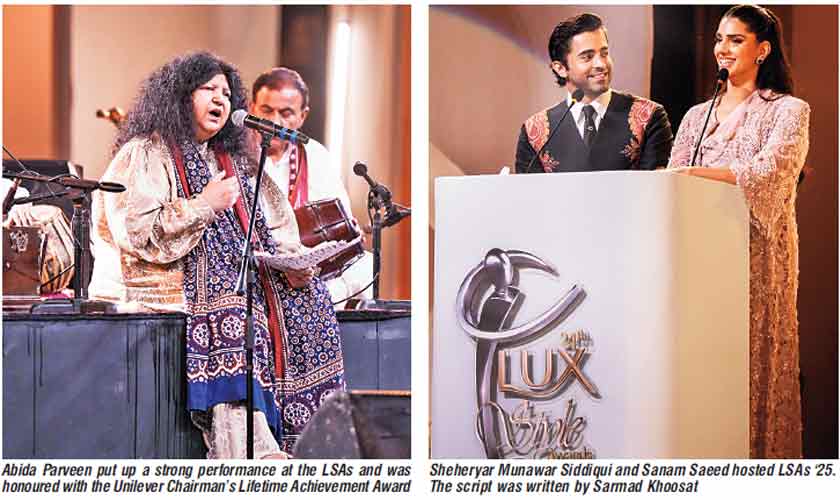
Awards distribution reflected familiar patterns.
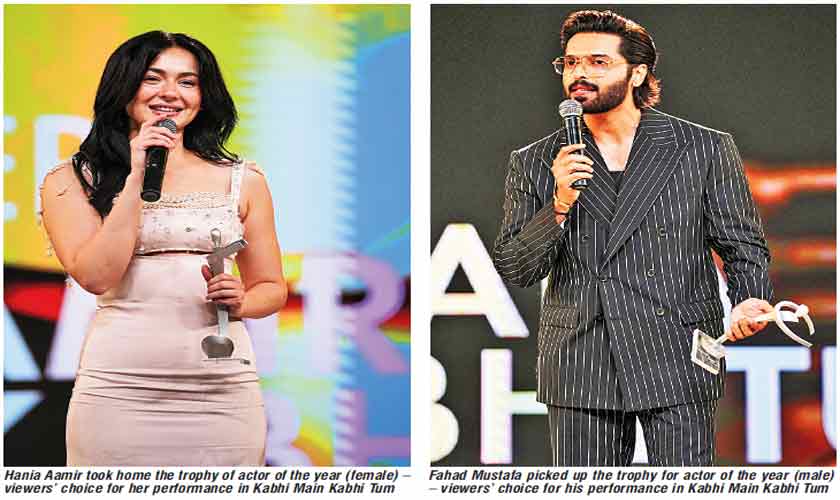
Kabhi Main Kabhi Tum dominated television honours, with Hania Aamir and Fahad Mustafa taking top acting awards and sweeping viewers’ choice categories. Yumna Zaidi won Best Film Actress for Nayab, which also secured multiple film accolades. While these wins were widely celebrated, an underlying tension persisted beneath the applause. When already popular projects dominate, awards risk reinforcing existing hierarchies rather than expanding the creative canon. Popularity and merit quietly blur, especially when viewer voting plays a decisive role.
The introduction of the Digital Content Creators category signalled institutional recognition of shifting consumption habits. Yet its inaugural nature also exposed uncertainty about criteria and long-term integration. The assumption appears to be that digital success can be retrofitted into traditional award structures, a notion that may underestimate how funda-mentally different those ecosy-stems are.
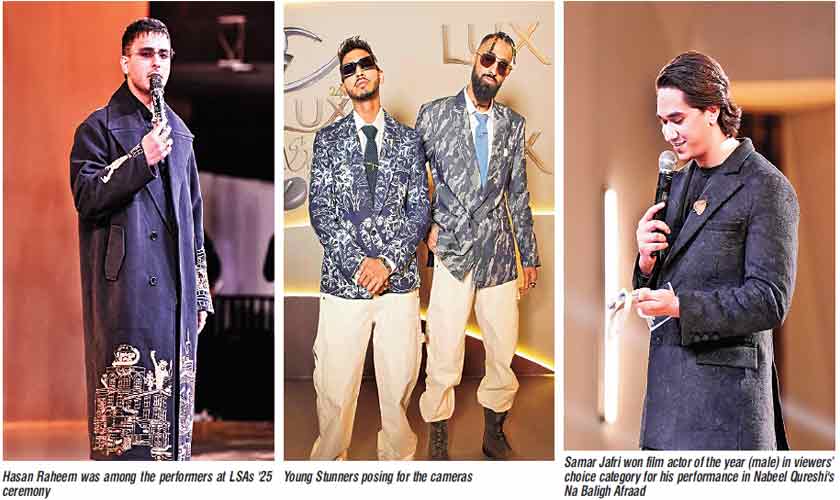
Fashion once again commanded attention. Sanam Saeed, Erica Robin and Mawra Hocane were praised for pol-ished and confident red carpet appearances, while male cele-brities like Sheheryar Munawar, Imran Ashraf and Samar Jafri stood out for refined styling. Criticism of impractical outfits, including restrictive gowns, hinted at a growing fatigue with fashion that prioritises spectacle over comfort. This mirrors a broader recalibration in celebrity culture where performative glam-our is increasingly questioned.
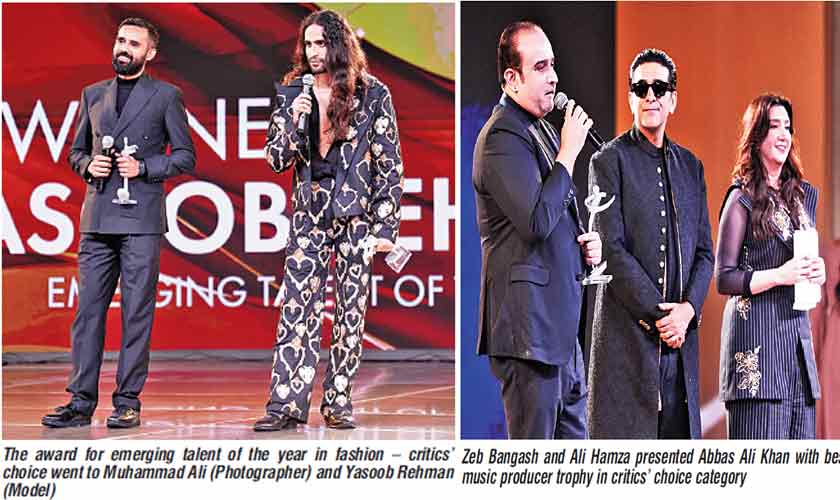
More troubling were concerns around process and commu-nication. Several notable prod-uctions, including The Glass-worker and Taxali Gate, were overlooked entirely. Emerging talent categories also drew scrutiny, particularly where defi-nitions of eligibility remained opaque.
These incidents collectively reinforce a perception that administrative gaps are no longer isolated errors but systemic weaknesses. If the expectation is that films, for instance, will give a portfolio, that idea clearly needs to be thought upon. What worked once upon a time will not work now. A jury needs to nominate, not viewers and not only those who send a portfolio for consi-deration.
Star absences further complicated the narrative. The reported non-attendance of prominent industry figures across industries sparked criticism from within the industry. The expect-ation of star attendance speaks of an unspoken contract at the heart of Lux Style Awards. Visibility is both currency and obligation.
When stars disengage, it challenges the awards’ symbolic authority and exposes the fragile balance between individual brand management and collective res-ponsibility.
Looking ahead, the awards require a degree of reform to restore confidence in the process. Clearer nomination criteria, trans-parent jury processes, advance scheduling and a stronger rehe-arsal culture are essential. None of these suggestions are revo-lutionary.
Their repetition underscores a quieter truth that the challenges facing the awards are less about vision and more about execution.
As the awards move towards their 25th anniversary, the opportunity is not simply to celebrate longevity but to re-assess purpose.
The Lux Style Awards remain a powerful symbol of recognition in Pakistan’s creative industries. Yet prestige today is sustained not by scale alone but by trust.
Trust in process, trust in intention and trust that reco-gnition reflects craft rather than convenience.
In that sense, the 2025 edition was not a failure nor an unqua-lified success. It was a mirror.
One that reflected an industry negotiating its values in real time, balancing glamour with accoun-tability and tradition with change.
Whether the silver jubilee becomes a turning point will depend on how seriously those reflections are taken into account.
Lux Style Awards 2025 – Winners List
Film
Film of the Year (Viewers’ Choice) – Kattar Karachi
Film Actor of the Year – Female (Viewers’ Choice) – Yumna Zaidi for Nayab
Film Actor of the Year – Male (Viewers’ Choice) – Samar Jafri for Na Baligh Afraad
Film Director of the Year (Critics’ Choice) – Umair Nasir Ali for Nayab
TELEVISION
Viewer’s Choice:
Actor of the Year (Female): Hania Aamir for Kabh Main Kabhi Tum
Actor of the Year (Male): Fahad Mustafa for Kabhi Main Kabhi Tum
Play of the Year – Kabhi Main Kabhi Tum
Best TV Long Serial: Baby Baji Ki Bahuein
Best Original Soundtrack – ‘Chal Diye Tum Kahan’ for Kabhi Main Kabhi Tum
Critic’s Choice:
Best Ensemble Play: Zard Patton Ka Bunn
TV Play of the Year: Khaie
Emerging Talent of the Year – Khushhal Khan for Dunyapur
TV Play Writer of the Year – Mustafa Afridi for Zard Patton Ka Bunn
TV Director of the Year – Saif e Hassan for Zard Patton Ka Bunn
MUSIC
Viewer’s Choice:
Song of the Year – Coke Studio for ‘Jhol’
Emerging Artist of the Year: Junaid Kamran Siddique for ‘Sada Ashna’
Critic’s Choice:
Music Producer of the Year – Abbas Ali Khan for Mera Sara Tu
DIGITAL
Content Creator of the Year (Viewers’ Choice) – Rehan Nazim & Rabya Kulsoom (Ron & Coco)
Beauty Influencer of the Year (Viewers’ Choice) – Hira Faisal
Digital Trendsetter of the Year (Viewers’ Choice) – Aidah Sheikh
FASHION
Fashion Brand of the Year – Viewers’ Choice: HSY
Fashion Model of the Year (Female) – Critics’ Choice: Erica Robin
Fashion Model of the Year (Male) – Critics’ Choice: Yasser Dar
Fashion Photographer of the Year – Critics’ Choice: Ayaz Anis Khan
Fashion Stylist of the Year – Critics’ Choice: Hafsa Farooq
Lux Change Makers Award: Sultana Siddiqui
Unilever Chairman’s Lifetime Achievement Award: Abida Parveen