Print Story
X




Migratory bird populations continue to decline due to climate change, illegal hunting and a range of anthropogenic changes.
| O |
ver recent decades, Pakistan has witnessed a severe decline in wintering water birds. Species like the northern pintail and greater flamingo are now far less common; threatened birds such as the sociable lapwing are increasingly rare.
Compounded by climate change, illegal hunting and a range of anthropogenic changes, this stark drop is diminishing the ecological richness of the region’s migratory bird population.
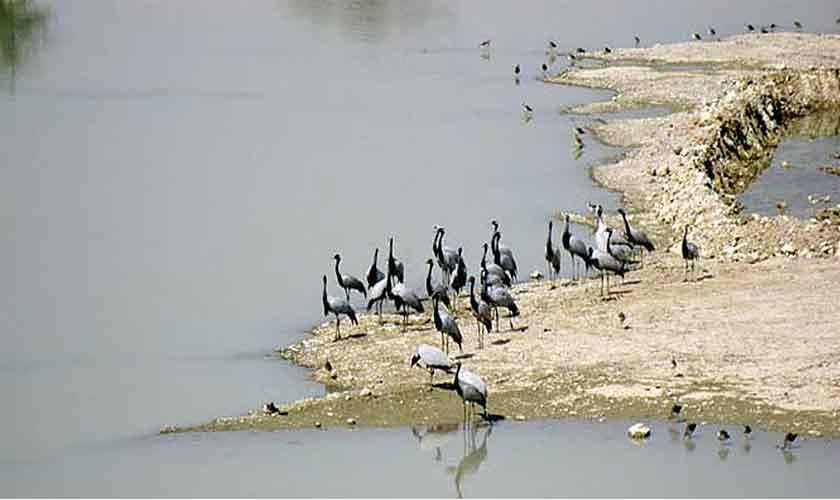
Every autumn, the skies above Pakistan come alive with the great avian migration. From the vastness of the Eurasian Arctic, a flurry of wings brings northern breeders to the warmer wetlands of South Asia. The elegant common teal and northern pintail arrive from Siberian marshes. The striking ruddy shel-duck flies in from the Central Asian steppes. In a breathtaking journey, the bold bar-headed goose crosses the towering Himalayas from its Tibetan plateau breeding grounds. They are joined by the stately common crane from northern Eurasian grasslands and tiny travellers like the yellow-browed warbler from Siberian taiga forests. Fleets of waders—ruffs, sandpipers and plovers—descend from the Arctic tundra.
While many of these birds settle in Pakistan and neighbouring countries for the winter, some shorebirds use the wetlands as a vital pit stop before continuing their epic journey to destinations in the Middle East and Africa, all to return north with the promise of spring.
Studies over the past few decades indicate a marked decline in both the abundance and diversity of bird species visiting Pakistan and the South Asian region. Long-term data from the Asian Water-bird Census and International Water-bird Census reveal steady reductions in migratory water-bird numbers across major wetlands.
Muhammad Jamshed Iqbal Chaudhry, the WWF research and conservation senior manager, says: “In several key sites, the number of wintering water-birds has fallen by 30-60 per cent compared to records from the 1980s and 1990s.” Species like the northern pintail, common teal, Eurasian coot and greater flamingo are now observed in much lower numbers. Globally threatened species like the sociable lapwing, white-headed duck and ferruginous duck are increasingly rare, he says.
Migration timing is a crucial cue for breeding and matching peak food availability; even slight shifts can disrupt this balance. “Rising temperatures are advancing spring arrivals and delaying autumn departures for many migratory bird species,” says Chaudhry. Higher temperatures, erratic rainfall and prolonged dry spells are disrupting the natural cycles for insects, plankton and fish that are primary food sources for many wetland and coastal birds.
“In many areas, warmer conditions cause insect emergence and plankton blooms to occur earlier. When birds arrive at wetlands that have already passed their peak productivity; they experience a ‘trophic mismatch,’ resulting in low fat deposition and breeding failures,” he says.
Many wetland sanctuaries have become degraded due to reduced rainfall and declining river flows. They are either drying up or have turned into saline basins, leading to the displacement of large bird populations, he says. He identifies sanctuaries in Rasool, Marala and Ucchali as those facing chronic challenges of encroachment, uncontrolled fishing and water diversion. This not only shrinks the overall wetland area but also reduces aquatic plant growth and diminishes fish, insects and other organisms that the birds depend on, he says. Such wetlands also fail to provide adequate nesting and roosting sites for ducks, cranes and waders. Together, these factors create a chain of ecological imbalances, forcing birds to travel farther in search of food, leading to higher mortality and poorer physical condition. Such disruptions are among the leading causes of global decline in migratory water-bird populations.
Studies over recent decades indicate a marked decline in both the abundance and diversity of bird species visiting the South Asian region.
The shrinking wetlands also trigger potential disease catastrophes by disrupting ecological balances that regulate pathogens and their hosts. “Scientific research shows that wetland degradation alters the population of mosquitoes, snails, rodents and other vector populations, allowing opportunistic species like Culex and Anopheles mosquitoes to proliferate.
Moreover, the crowding of migratory birds into the few remaining wetlands enhances the risk of zoonotic diseases like avian influenza, West Nile virus, malaria and Japanese encephalitis,” he says. The resulting overcrowding leads to reduced breeding success and localised extinctions. Cumulatively, they cause long-term water-bird decline, critically weakening the ecological integrity and biodiversity of the entire flyway.
The threat of illegal hunting compounds these environmental pressures. It has triggered severe population declines by reducing adult survival, displacing birds from historic wetlands and forcing shifts in traditional migratory routes and stopover sites.
“Poaching, market seizures and illegal hunting disproportionately target waterfowl and wetland birds, especially ducks (e.g., common teal, northern shoveler, gadwall, common pochard, northern pintail), geese (e.g., greylag and bar-headed goose), large water-birds such as ruddy shelduck and cranes (principally demoiselle and Eurasian/ common crane) and a variety of waders (e.g., ruff, sandpipers and plovers).” The list also includes high-value targets like houbara bustard, migratory raptors and gulls, Chaudhry says.
The primary hotspots are the major Indus wetlands and barrage reservoirs of the upstream/ downstream Indus reaches of the Chashma-Taunsa complex and those of Mangla and Marala in the east. The impunity with which they operate continues downstream along the Indus to Kotri (near Hyderabad) and Keti Bunder (Thatta) in Sindh.
To illustrate the decline, Mahrban Ali Brohi, a zoologist with the Zoological Survey of Pakistan, cites his own survey. It “recorded around 100,000 ducks at Chashma in 2014; the number has dropped to 8,000 in January 2025.” Sirinda Lake in Lasbela, Balochistan, is a sanctuary for the great stone-curlew. The bird is relentlessly hunted by local and Middle Eastern hunters throughout the season.
In Sindh, Manchar Lake, once the subcontinent’s largest freshwater lake (up to 500 square kilometres), was historically a host to vast bird populations. According to Brohi, it was described by renowned ornithologist Salim Ali in 1924 as “having very large numbers of ducks and coots.” However, the lake turned saline after the Main Nara Valley Drain polluted it with saline agricultural runoff from Sindh and Balochistan. This was further compounded by drought (1996-2003) which destroyed the terrestrial and aquatic flora, killing fish.
The toxicity was significantly reversed by the major flood events in 2010, 2022, and subsequently in 2025, improving the flora, fisheries and bird population, the zoologist said. “The bird population has rebounded over the last 5-6 years, with counts reaching around 25,000 in 2024.”
Now “the biggest threat to birds in the lake is posed by aggressive, illegal hunting and trapping.” Some of these birds are openly sold in Bubak and Bhan Syedabad towns, says Brohi, highlighting the brazen nature of the illegal trade. Zoological Survey of Pakistan officials says Tharparkar has been an exception. The seasonal wetland becomes a true sanctuary for 7-8 months, as the local community—a majority Hindu population—views wildlife as part of the community. They protest illegal hunting, apprehend poachers and ensure a secure habitat until the birds depart for their Central Asian abodes.
Another noted exception is Langh Lake, a migratory and resident bird sanctuary in Larkana district thanks to Wildlife Department’s efforts. Once an ideal tourist resort, the lake is known for its rich birdlife. It is home to over 50 species of migratory and resident birds, including a large number of fish-eaters like herons and kingfishers.
Sanctuaries at Chashma, Taunsa, Guddu and Sukkur barrages hold hope. For those who remember their former glory, the loss is deeply personal. Farmer Khudabux Brohi says hunters at Manchhar operate from dawn to dusk, their relentless gunfire scaring away ducks. This decimation contrasts with the vivid memories of anglers like Khurram Matin, who recalls a time when “the skies would darken with wings” and the water held “a living carpet” of birds.
Vanishing wetlands, polluted waters and unchecked hunting pose a far broader threat than climate change alone. Examples of Tharparkar and Langh Lake shows that protection works.
The writer is a senior The News staffer in Karachi.