Print Story
X

| T |
he recent floods havebeen followed by another round of uninformed debate on the need for new dams. Large dams have long been misconstrued as a solution to all Pakistan’s river water problems. The supporters of the dam lobby include a chunk of the engineering fraternity.Some of them have claimed that dams can help fight floods.
Global experience of large dams has widened the scope of this debate. Arguments abound both in favour and against large dams. Every country, river and flood is unique.As such there can be no generic prescription for flood control. Prescribing a therapy warrants correct diagnosis.
Some TV anchors and talk show participants, lacking an understanding of the unique features of Pakistan’s geography, have suggested that a dam at Kalabagh could have averted downstream flood. A careful analysis will show that such a dam could not have averted or attenuated these floods.
Since July 20, Giglit Baltistan received a series of heavy rain spells causing flash floods and tragic death of scores of tourists. However, the area is located 600 kilometers away from the proposed location of the dam. Similarly Buner, where more than 300 people were killed by ferocious flash floods, is 300 kilometresaway from the dam site. Catastrophic floods of the Punjab rivers also have no geographic connection to the dam. Straight line distances between the Kalabagh dam site and the Marala barrage on the Chenab River and Balloki barrage on Ravi River are 273 kms and 216 kms. Elevation of the two barrages is 26 meters and 18 meters below the proposed KalabaghDam site. Even rudimentary knowledge of geography should suffice lead to the conclusion that the dam is irrelevant the Punjab floods. A dam of any size on the Indus river could not have helped those impacted by the devastating floods of Sutlej, Ravi and Chenab Rivers.
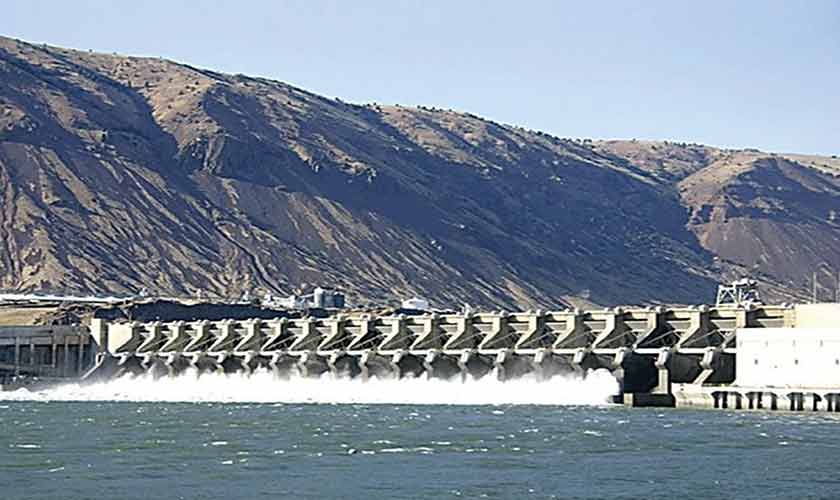
The recent Punjab floods have actually raised new questions about the role of dams. The floods that pummeled the plains of the Punjab were triggered by spillover of the three dams in India. Bhakra dam on Sutlej River, Pong Dam on Beas River and TheinDam on Ravi River have a capacity of 9.7 million acre foot (MAF), 4.4 MAF and 1.9 MAF, respectively. These dams, with a total absorption capacity of 16 MAF, could not contain the floods. These dams not only failed to prevent the flood, they actually caused a deluge due to abrupt discharge of water. Abrupt flow from Thein Dam tossed gates of Madhupur barrage located only 14 kilometres from the border on Ravi River. In 1992, spillover from ManglaDam had destroyed several villages in the vicinity of Jhelum River when it failed to absorb high flow. In thesecases, the dams actually worsened a disaster in the downstream areas.
Catastrophic floods of the Punjab rivers have no geographic connection to the magical dam. Straight line distances between the Kalabagh Dam site and the Marala barrage on the Chenab River and Balloki barrage of the Ravi River is 273 km and 216 km, respectively.
Two years ago, Libya’s town of Derna experienced a catastrophic flood when Mansour Dam and BeladDam were shattered by mighty flows. More than 11,000 people were killed and a quarter of the city was wiped out. Collapse of MachhuDam of Indian Gujarat in 1979 is another example. Excessive rain trounced dam’s right embankment creating a water wall of 30 feet height that submerged Morbi industrial town downstream, killing several thousand people.
This year, the government of the Punjab had to cause controlled explosions on August 27 to save Qadirabad barrage as Chenab flows surpassed its designcapacity. Had there been a 1 MAF dam near Chiniot, could it have sustained such a ferocious flow (over 1 million cusecs)? Dams are not designed to handle gushing inflows of massive volume. Dam safety requires diligently regulated inflows in the reservoir. In a normal flow regime for Tarbela Dam, only one foot per day level is allowed to rise when dam reaches an elevation of 1,540 feet. Topography of the Punjab plains does not have potential sites for constructing large dams on Ravi, Chenab and Sutlej Rivers.
BhashaDam on which work was inaugurated in 1998 by the then prime minister Nawaz Sharif has yet to be completed. Its cost estimate has escalated from Rs 479 billion to Rs 1,050 billion.DasuDam has been delayed by 10 years. Its cost has increased from Rs 480 billion to Rs1,750 billion. Construction on the NaiGajDam on KhirtahrHills had commenced in 2009. Itis still incomplete.Its cost has increased from Rs 17 billion to Rs 60 billion.
The Neelum Jhelum hydel power dam has been another ignominious failure. The auditor general of Pakistan recently declared theprojecta failure in terms of its objectives, planning and execution, calling it a waste of Rs507 billion. The report bemoaned that “it neither secured Pakistan’s water rights nor delivered the designed energy output. Its multiple tunnel faults and collapses have raised serious questions about thequality of workon a project of national importance.”
Our development planners should shun concrete and steel based solutions and focus instead on nature-based flood management methods. The debate on flood management needs a fresh approach.
The writer is a civil society professional; [email protected]