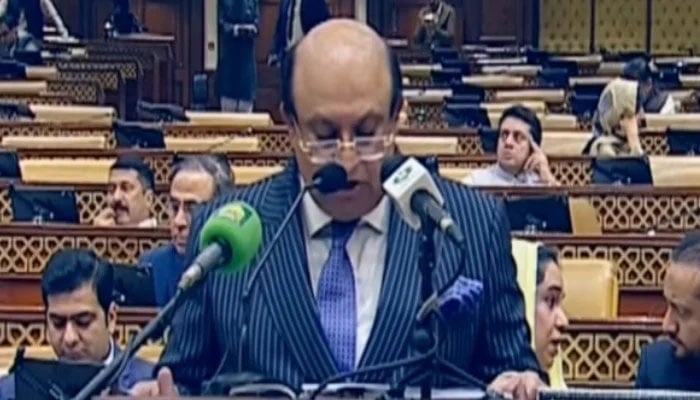
The Punjab government presented a self-proclaimed Rs5.903 trillion ‘budget of hope’ for FY2026-27 on Monday, around 10.7 per cent higher than the outgoing year’s budget. It proposes a Rs752 billion development budget/ Annual Development Programme (ADP), significantly lower than the Rs1,450 billion in the current fiscal, a 7.0 per cent increase in the salaries of government employees and a 3.5 per cent increase in pensions. The budget also prioritises social sectors, with R750 billion proposed for education and Rs500 billion for health. The proposed outlay for agricultural development, however, has been trimmed by a quarter but the budget also includes allocations of Rs2.47 billion for the Kisan Card Programme, Rs6.75 billion for Kisan Card Phase Two, Rs1 billion for Livestock Card Phase Two and Rs300 million for the Chief Minister Parwaz Card International Placement Programme. On the revenues side of things, the Punjab Revenue Authority has been assigned a revenue collection target of Rs528.5 billion, representing a 55 per cent increase, while the Excise Taxation and Narcotics Control Department has been given a target of Rs124 billion, up 77 per cent, with Rs461 billion to be collected in non-tax revenues. The government also expects to receive Rs4.39 trillion under the NFC, up 8.1 per cent from the current fiscal, and has opted to hike some existing tax measures and to expand the tax base, without introducing any new tax measures.
On the face of it, the budget of the largest province seems to follow some of the patterns seen in the federal budget. Development spending has been compressed, but relief is coming through the higher outlay and the lack of new tax measures. The substantial allocation for education, while encouraging, allocates just Rs63.3 billion for development expenditures. One could argue that all of this is necessary if the Punjab government is to achieve its surplus spending target of Rs91 billion and still send Rs546 billion to the federal government under national strategic requirements, the largest of any province. While an overall higher outlay and increased salaries and pensions are nothing to scoff at, some may say that calling this a ‘budget of hope’ might be a step too far. Nothing would instil more hope in the people of Punjab, and really all of Pakistan, than new schools, hospitals and better infrastructure. How does all of this come about if development spending is compressed?
Another persistent theme in economic discourse has also been how provinces must play a bigger role when it comes to raising revenues and Punjab has certainly tried to do so with this budget and that too without new tax measures. The Punjab chief minister has also said that this budget aims at delivering relief through the province’s own resources. If the province does indeed live up to this promise of relief, while still meeting higher revenue targets and sending money to the centre, that would be a big step forward. It would show that provinces can indeed be trusted with finances and move away from excessive reliance on the centre for revenue. And that might be the biggest hope this budget has to offer.