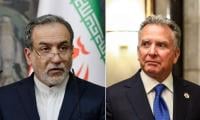
Deputy Prime Minister and Foreign Minister Ishaq Dar has said upcoming phase of US-Iran negotiations may be more challenging, although he remains optimistic that the two sides can eventually reach a final agreement.
In an interview with an Arab news outlet, Dar said Tehran would reduce its uranium enrichment levels instead of sending its enriched uranium stockpiles out of the country, adding that the United States had initially pushed for those reserves to be transferred abroad.
He said three technical working groups would be established to address the nuclear file, frozen assets and issues relating to Lebanon as part of the broader negotiations.
Dar also revealed that vessels passing through the Strait of Hormuz would be allowed to transit for 60 days without any additional tariffs under the understanding reached, paying only standard navigation or service charges.
According to the deputy prime minister, US President Donald Trump personally oversaw the negotiations between Washington and Tehran, while Saudi Arabia, Qatar, Egypt and the United Arab Emirates supported the mediation efforts.
Describing the arrangement as positive, Dar said the agreement contained “no negative points” and voiced optimism that the ongoing diplomatic process would ultimately lead to a comprehensive settlement despite the challenges that may arise in the next stage.
The United States and Iran made "encouraging progress" at the first round of talks aimed at reaching a final peace deal, mediators said on Monday, although tension persisted over Lebanon and the Strait of Hormuz.
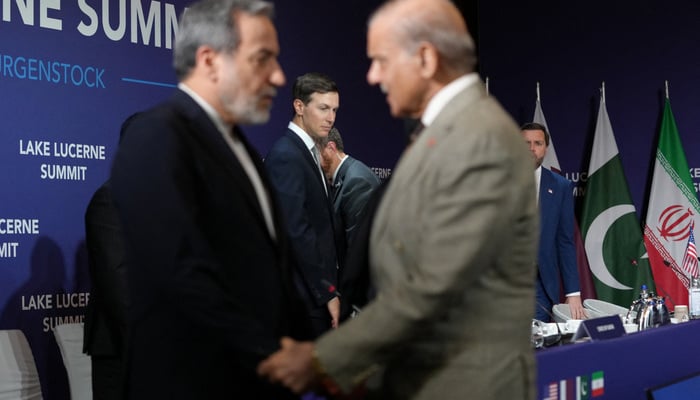
A joint statement from mediating nations Pakistan and Qatar said the US and Iran agreed to a roadmap towards a final deal within 60 days. Technical talks will continue for the rest of the week in the Qatari-owned Swiss mountain resort of Buergenstock, according to the statement, which was released by the Qatari foreign ministry.
They also agreed on a mechanism to end fighting in Lebanon between US ally Israel and Iran-aligned Hezbollah, and opened a communications line to help ensure safe passage for commercial ships through the strait, a vital global oil supply route.
The parties agreed to a mechanism to end the fighting in Lebanon and opened a communications line to help ensure safe passages for commercial ships through the contested strait, the statement said.
US Vice President JD Vance said that a first round of US-Iran talks in Switzerland had laid a good foundation for reaching a final deal on ending the Middle East war.
Pakistan, he said, would continue to play an honest and sincere role in promoting dialogue and diplomacy aimed at achieving a peaceful and lasting resolution.
PM Shehbaz Sharif commended the leadership of both the United States and Iran for their continued commitment to constructive engagement.
He also thanked friendly and brotherly countries for their support in advancing what he described as a historic diplomatic process.
The prime minister expressed special gratitude to Qatar for its critical role in creating conditions that enabled the negotiations to move forward.
He also thanked the Swiss government for facilitating and hosting the talks.