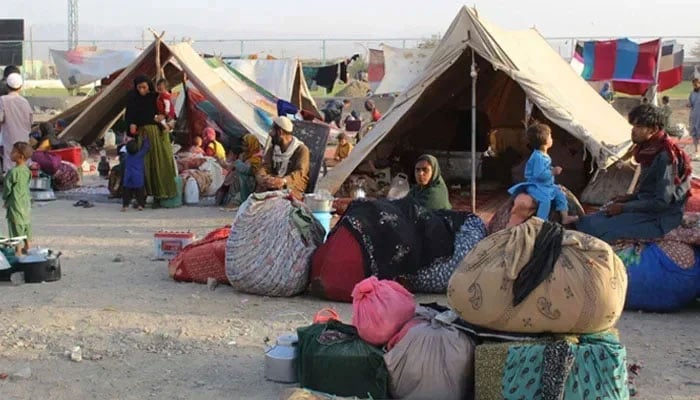
World Refugee Day, observed annually on June 20, is meant to honour the resilience and courage of those who have been forced to flee their homes because of war, persecution, violence and disaster. Yet each passing year makes the occasion less a commemoration and more an indictment of a world that continues to produce staggering displacement while failing to address its root causes. The latest figures released by the UN refugee agency present a sobering picture. Nearly 118 million people around the world remain forcibly displaced, including more than 41 million refugees, around 69 million internally displaced persons and some nine million asylum seekers. Although 2025 saw a slight decline in overall displacement levels for the first time in more than a decade, the numbers remain historically high and millions continue to live in exile, while many of those who returned to countries such as Afghanistan, Syria and Sudan did so under conditions that remain fragile and uncertain.
The theme for this year’s World Refugee Day is ‘Until Everyone Is Safe’. The fact is that a world that allows conflicts to rage unchecked, permits civilians to become collateral damage and tolerates the erosion of international humanitarian norms cannot claim to be secure. From Sudan to Myanmar to Gaza and beyond, the continuing failure of the international community to prevent or resolve conflicts is creating new waves of human suffering and displacement. Even more troubling is the fact that humanitarian assistance is shrinking just as the needs of displaced populations continue to grow. International funding for refugee support has fallen sharply, forcing aid agencies to cut programmes and services for some of the world’s most vulnerable people. Too often, refugees are viewed through the narrow lens of burden-sharing rather than human dignity. Political debates in many countries reduce them to statistics, security concerns or economic liabilities. Lost in these discussions are the stories of families torn apart by war, children growing up in camps, and generations condemned to uncertainty through no fault of their own.
Pakistan’s own experience offers an important reminder of this reality. For nearly five decades, the country has hosted millions of Afghan refugees, making it one of the world’s largest refugee-hosting nations. Prime Minister Shehbaz Sharif has rightly called upon the international community to support both refugees and the countries that host them. Pakistan’s hospitality has often come despite significant economic challenges of its own. While discussions on refugee management and repatriation are legitimate, they must be guided by principles of safety, dignity and international responsibility-sharing rather than expediency alone. The refugee question is not confined to cross-border movement. Internal displacement remains one of the least discussed humanitarian crises globally. Wars, climate-related disasters and environmental degradation continue to uproot millions within their own countries. Pakistan is no stranger to this phenomenon. The devastating floods of 2010 and 2022, earthquakes and other disasters displaced countless families, many of whom struggled for years to rebuild their lives. As climate change intensifies, forced displacement is likely to become an even more pressing challenge for vulnerable countries. Governments need to confront the political failures that create refugees in the first place. The world has become accustomed to discussing displacement as a permanent feature of modern life. It should not be. Every refugee statistic represents a person who once had a home, a livelihood and a sense of belonging. Until everyone is safe, the refugee crisis remains a collective failure.